China's manufacturing boom cannot fix its domestic demand crisis: Report

Synopsis
China's headline 4.6% growth masks a deepening contradiction: state-driven manufacturing in EVs and batteries is surging, but household spending, private investment, and property values are all falling. A new report warns that no economy can indefinitely substitute industrial output for consumer confidence — and Beijing's top-down playbook may be making the gap harder to close.
Key Takeaways
China's economy grew 4.6% in the first nine months of 2026 , but underlying demand indicators remain weak.
Fixed-asset investment contracted 7.2% , property investment fell 20.6% , and retail sales growth slowed to 1.1% in September.
President Xi Jinping 's strategy prioritises technological self-reliance and strategic industries such as EVs and batteries , but critics argue it ignores household and private-sector insecurities.
The report warns that manufacturing strength cannot indefinitely compensate for weak household consumption.
The Communist Party's Fifth Plenum recently doubled down on Party governance and discipline, raising questions about Beijing's willingness to pivot to demand-side stimulus.
China's economic recovery faces a fundamental contradiction embedded in President Xi Jinping's development strategy — ramping up advanced manufacturing even as weak domestic demand, subdued private investment, and a prolonged property market downturn continue to drag on broader growth, according to a new report by Nepal Aaja. The findings, flagged on 4 November 2026, underscore a structural fault line that headline growth numbers may be masking.
Growth Numbers Hide a Deeper Weakness
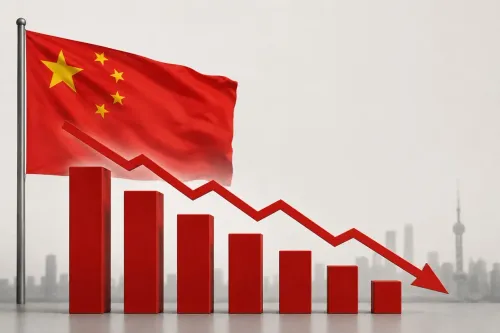
China's economy expanded 4.6% in the first nine months of 2026, but the underlying indicators tell a less comfortable story. Fixed-asset investment contracted 7.2%, property investment fell a steep 20.6%, and retail sales growth slowed to just 1.1% in September 2026. These figures suggest that manufacturing output is doing the heavy lifting — but cannot do it indefinitely.
The report notes that China's headline growth figures 'can obscure the unevenness of its recovery,' with strategic industries such as electric vehicles and batteries registering major gains even as households and local economies remain under strain.
Xi's Strategy: Technological Self-Reliance Over Consumer Confidence
According to the report, Xi Jinping's administration has increasingly prioritised technological self-reliance, strategic industries, and state-led investment — accompanied by tighter Communist Party oversight — while sidelining the concerns of households and private businesses. The Communist Party's Fifth Plenum recently reinforced this direction, emphasising Party governance and discipline as leadership faces growing calls for more equitable distribution of economic benefits.
Critics argue this approach is structurally misdirected. The report asserts that the sectors being prioritised are 'not necessarily addressing the insecurities holding back households, private businesses and local economies.' Stronger central oversight may help enforce decisions and curb waste, but it cannot restore the private confidence and consumer spending that underpin sustainable demand.
The Property Downturn's Lasting Shadow
A key driver of household caution is the prolonged slump in China's property market. According to the report, 'households that feel less secure about their assets have reasons to save rather than spend, while local governments facing financial pressure have less room to support services and stimulate economic activity.' The state's redirection of investment towards new industries cannot quickly replace the confidence and spending that a healthier property market once helped sustain.
This dynamic — forced saving amid asset-price uncertainty — is a well-documented trap in post-bubble economies, and China's version is complicated further by the scale of local government debt and constrained fiscal space at the provincial level.
What Needs to Change, According to the Report
The report argues that China's economic problems require economic incentives and restored public confidence, rather than top-down directives from the centre. It warns that no country can rely indefinitely on manufacturing strength to compensate for weak household consumption. While industrial expansion and domestic economic recovery are often conflated in official messaging, the report insists the two must not be 'misconstrued to be the same.'
China also faces an external dimension: intensifying US-China technological competition has made self-reliance in semiconductors and advanced manufacturing a strategic imperative. But the report cautions that meeting geopolitical objectives through industrial policy does not automatically translate into the kind of broad-based recovery that Chinese households and businesses need.
What Comes Next
With the Fifth Plenum signalling continued emphasis on Party-led governance, analysts will be watching whether Beijing pivots toward demand-side stimulus — such as direct household support or property market stabilisation measures — or doubles down on supply-side industrial policy. The gap between the two approaches is widening, and so, reportedly, is the pressure on Xi Jinping's government to show that its model can deliver growth that is felt, not just measured.
Point of View
But its timing is pointed: Beijing is celebrating EV and battery export milestones just as domestic retail sales growth touches 1.1% — barely above stagnation. The contradiction between supply-side triumphalism and demand-side distress has been visible for years, yet the Fifth Plenum's emphasis on Party discipline over economic liberalisation suggests the leadership either does not see the gap or has chosen to live with it. What the report quietly flags — without fully spelling out — is that the property market's collapse has destroyed the primary mechanism through which Chinese households built and spent wealth. No amount of EV output replaces that transmission channel. Until Beijing addresses household balance sheets directly, the manufacturing-demand contradiction will keep widening.
NationPress
4 Nov 2026
Frequently Asked Questions
What is the main economic contradiction in China's growth strategy?
China is aggressively expanding advanced manufacturing — particularly in EVs and batteries — while simultaneously suffering from weak household consumption, falling property investment, and subdued private-sector activity. A new report argues these two trends work against each other, and manufacturing gains alone cannot substitute for genuine domestic demand recovery.
What do China's latest economic indicators show?
China grew 4.6% in the first nine months of 2026, but fixed-asset investment contracted 7.2%, property investment dropped 20.6%, and retail sales growth fell to just 1.1% in September 2026. These figures point to continued weakness beneath the headline growth number.
Why is China's property downturn so significant?
The property sector was historically the primary vehicle through which Chinese households accumulated and spent wealth. Its prolonged slump has made households feel less financially secure, pushing them to save rather than spend, and has also squeezed local government finances, reducing their capacity to support services and stimulate local economic activity.
What does the report say China needs to do?
The report argues China must rely on economic incentives and restored public confidence rather than top-down central directives. It stresses that industrial expansion and domestic economic recovery are not the same thing, and that sustained growth requires addressing the insecurities holding back households and private businesses.
What did the Communist Party's Fifth Plenum signal about China's direction?
The Fifth Plenum recently emphasised Party governance and discipline, suggesting Beijing intends to maintain centralised control over economic policy rather than liberalise. Critics argue this approach may enforce decisions and curb waste but cannot restore the private-sector confidence and consumer spending needed for a broad-based recovery.