Will Lula's Visit to India Strengthen Economic and Strategic Partnerships?
Synopsis
Brazilian President Lula's visit to India marks a pivotal moment in India-Brazil relations. With a focus on deepening economic and strategic partnerships, this visit could reshape the dynamics of the Global South. Discover the insights from experts on how this visit is set to strengthen ties between these two influential nations.
Key Takeaways
Lula's visit signals a shift in Brazil-India relations.
The partnership aims to enhance economic and strategic collaboration.
14 ministers and 150 business leaders accompany Lula.
Digital infrastructure is a major focus area.
Cultural ties are strengthening, with growing interest in yoga and Ayurveda.
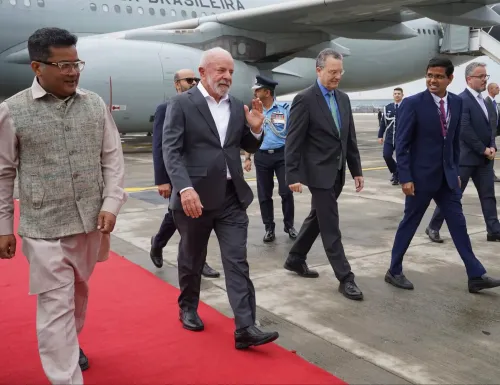
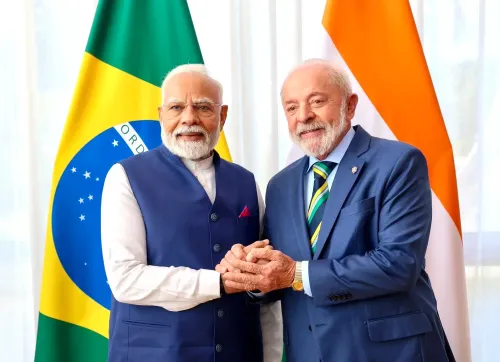
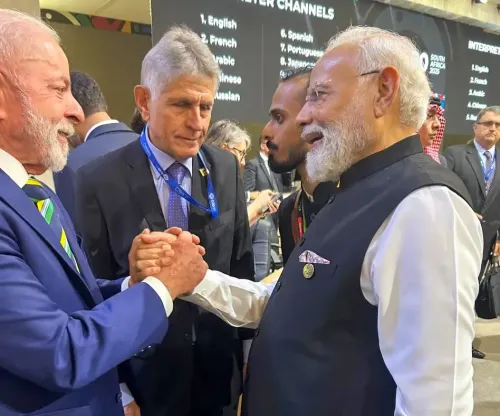
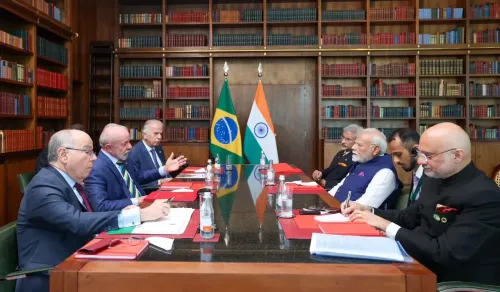
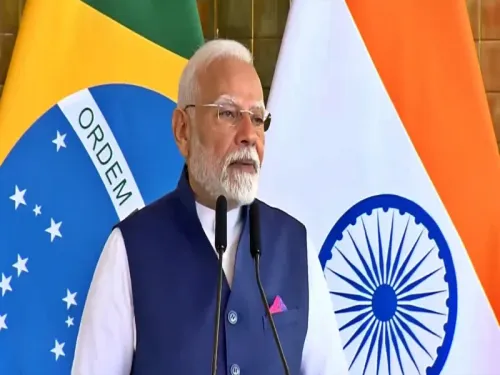
Washington, Feb 19 (NationPress) Brazilian President Luiz Inacio Lula da Silva's journey to India for the AI Impact Summit, followed by a comprehensive state visit, represents a calculated effort by the two largest democracies in the Global South to enhance their relationship beyond mere multilateral cooperation and into a more profound economic and strategic partnership, according to a senior economist based in the US who specializes in India-Brazil relations.
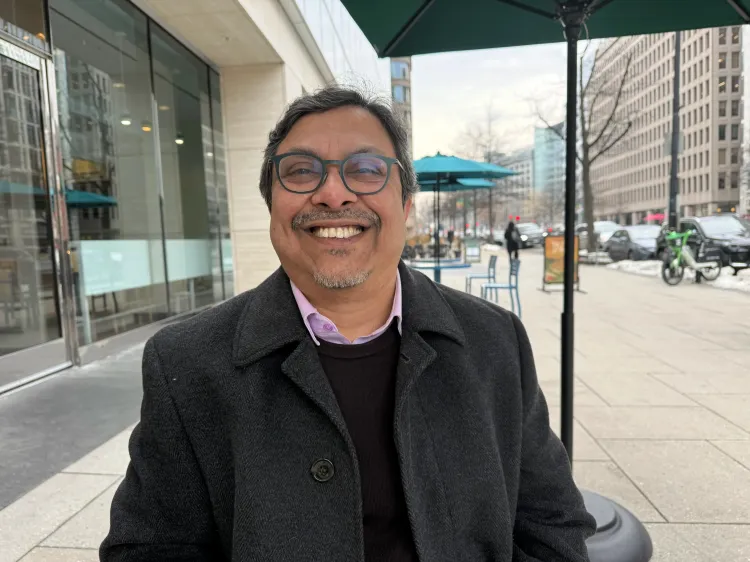
Dr. Anit Mukherjee, Senior Fellow at ORF America, remarked on the significance of this visit during an interview with IANS on Wednesday (local time). He pointed out that Prime Minister Narendra Modi had traveled to Rio de Janeiro the previous year for the BRICS summit, followed by a state visit.
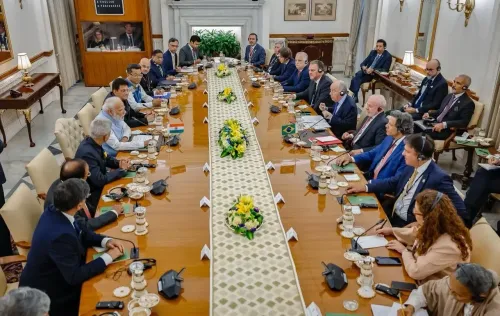
Lula's delegation includes 14 cabinet ministers and approximately 150 business leaders, indicating that the Brazil-India relationship extends beyond coordination within frameworks like G20 or BRICS, and is evolving into a robust partnership in trade, investment, manufacturing, services, and various other domains.
Mukherjee acknowledged that the relationship has not always been strong. He noted, "Historically, the partnership between Brazil and India has faced challenges." However, he identified the early 2000s as a pivotal moment. "When President Lula took office in 2001, he envisioned uniting the three major developing countries: Brazil, India, and South Africa," he explained. This vision culminated in IBSA and later, BRICS, establishing a solid foundation of trust through high-level exchanges.
The two nations now possess a more comprehensive economic agenda. "Brazil and India, as the largest democracies in the Global South, are both expanding economies with substantial young populations and significant technical capabilities," he stated.
Mukherjee described Brazil as an agricultural powerhouse and spotlighted Embraer as the world's third-largest civilian aircraft manufacturer. He highlighted that Indian conglomerates like Bajaj and Mahindra have established factories in Brazil for manufacturing motorcycles and tractors. Additionally, Indian IT firms such as TCS and Infosys maintain strong connections with the Brazilian market.
As for digital public infrastructure, Mukherjee noted that India boasts the Unified Payments Interface, the largest instant payment system globally, while Brazil has a similar setup called PIX. Together, these systems are projected to facilitate nearly 1 billion transactions daily, akin to the transaction volumes of MasterCard and Visa.
Discussing cultural exchanges, he mentioned that the Indian community in Brazil comprises around 4,000 non-resident Indians, a number that is on the rise. Cultural ties are also evident, with practices like yoga and Ayurveda gaining popularity in Brazil.
Both nations are significant players in BRICS and the G20, frequently aligning on issues of development finance, trade reform, and priorities for the Global South. Their partnership has seen growing trade over the last decade across sectors like agriculture, energy, pharmaceuticals, automobiles, and information technology, as they strive to diversify supply chains and enhance South-South cooperation amid changing geopolitical dynamics.
Point of View
It's crucial to recognize that Lula's visit to India is not merely ceremonial; it signals a pivotal shift in international relations within the Global South. Strengthening ties between Brazil and India can lead to enhanced collaboration in trade, investment, and cultural exchanges, ultimately benefiting both nations and their young populations.
NationPress
29 Sept 2026
Frequently Asked Questions
What is the significance of Lula's visit to India?
Lula's visit is significant because it aims to strengthen the economic and strategic partnership between Brazil and India, moving beyond multilateral cooperation to a more robust bilateral relationship.
What are the key areas of cooperation between Brazil and India?
Key areas of cooperation include trade, investment, manufacturing, digital infrastructure, and cultural exchanges, particularly in agriculture and technology.
How many ministers and business leaders are accompanying Lula?
Lula is accompanied by 14 cabinet ministers and approximately 150 business leaders, showcasing the importance of this visit.
What is the role of digital public infrastructure in Brazil and India?
Both countries are developing advanced digital public infrastructure, with India's Unified Payments Interface and Brazil's PIX system expected to facilitate nearly 1 billion transactions daily.
How do cultural ties play a role in India-Brazil relations?
Cultural ties are growing, with practices like yoga and Ayurveda gaining popularity in Brazil, fostering a deeper connection between the two nations.