Is Maduro's Arrest Legally Justified? Insights from a US Constitutional Expert
Synopsis
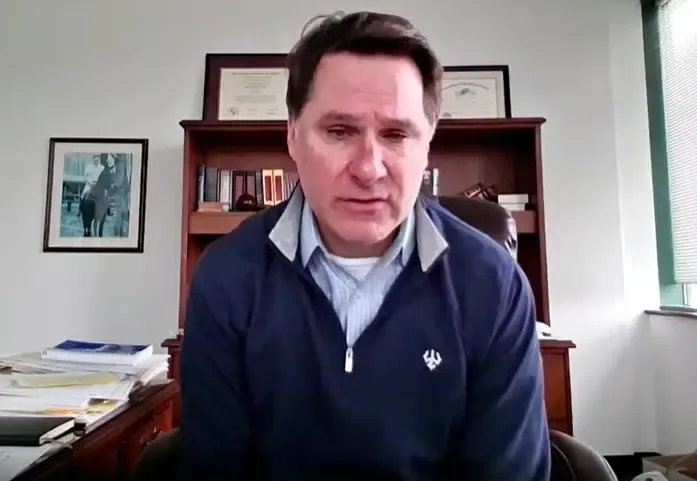
In a revealing interview, constitutional expert Michael O’Neill argues that the United States is justified in arresting Nicolas Maduro. He discusses the legal basis for the action and its implications, highlighting the bipartisan stance on Maduro's illegitimacy. Will this case redefine international norms?
Key Takeaways
The U.S. acted within its legal rights in arresting Maduro.
Maduro is viewed as a criminal fugitive , not a legitimate leader.
Bipartisan consensus exists regarding Maduro's status.
Legal proceedings will follow standard U.S. criminal justice protocols.
If convicted, Maduro could face significant prison time.
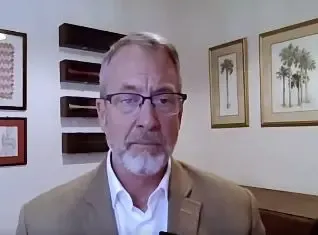
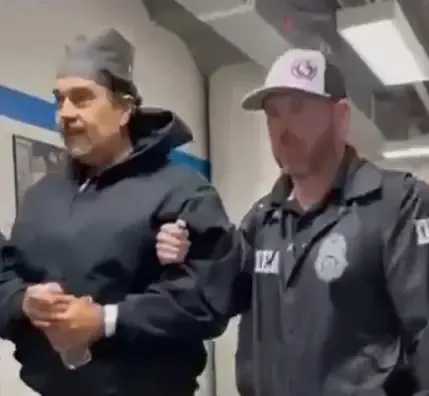
Washington, Jan 7 (NationPress) The United States executed its constitutional and legal powers in detaining Venezuela’s Nicolas Maduro, and any legal challenges to this action are expected to falter in US courts, as stated by Michael O’Neill, a prominent legal and constitutional authority.
In an exclusive discussion with IANS, O’Neill emphasized that the apprehension of Maduro should be regarded as the lawful capture of a criminal fugitive, not as the detention of a foreign head of state, given Washington’s longstanding stance that Maduro is not the legitimate leader of Venezuela.
“From a constitutional viewpoint, the president possesses clear authority under Article II to ensure that the laws of the United States are correctly enforced,” O’Neill remarked, referring to President Donald Trump. “When a grand jury has issued an indictment against an individual such as Nicolas Maduro, who is perceived by the United States as the leader of a narco-terrorist organization, there exists an obligation to apprehend that individual and deliver him to justice.”
Maduro was indicted by US federal prosecutors in 2020 and now faces trial in the Southern District of New York. O’Neill pointed out that the legal interpretation regarding Maduro’s status is bipartisan, highlighting that the Biden administration also does not regard him as Venezuela’s legitimate president and had previously offered a $25 million reward for information leading to his capture.
“Maduro is not recognized by the United States as a sovereign leader,” O’Neill commented. “Instead, he is perceived as the head of the Cartel de los Soles, involved in extensive drug trafficking and other serious crimes that directly impact US interests.”
Responding to inquiries about sovereignty and international norms, O’Neill referenced the 1989 US operation against Panamanian leader Manuel Noriega, whose conviction was subsequently upheld by US courts. “This is not without precedent,” he stated. “The Noriega case is directly applicable, and courts heavily rely on precedent when evaluating these matters.”
O’Neill expressed that arguments based on sovereign immunity are unlikely to succeed. “Sovereign immunity generally applies to leaders who are acknowledged as legitimate heads of state,” he clarified. “That recognition simply does not exist in Maduro’s case, and courts are often hesitant to override the executive branch’s decisions concerning foreign affairs.”
He added that while Maduro’s legal team is anticipated to present such defenses, the onus will be on the former Venezuelan leader to substantiate his claims. “Judges are inclined to defer to the US government’s stance on recognition,” O’Neill said.
Regarding the use of military resources in the operation, O’Neill affirmed that such support was justified. “Utilizing military assets to safeguard federal law enforcement officials executing a lawful arrest warrant is entirely fitting,” he noted, especially given the associated risks.
In response to a query, O’Neill stated that the case will follow the usual US criminal justice procedure. “Maduro will receive full due process,” he assured. “He will have qualified legal representation, access to evidence, and a jury trial.”
If found guilty, O’Neill indicated that Maduro could face decades behind bars, akin to Noriega. “This will be an extended legal journey,” he remarked, noting that pretrial motions, trial processes, and appeals could span several years.
Despite the wider geopolitical discourse, O’Neill emphasized that the fundamental issue is legal. “When you distill it down, this revolves around enforcing US criminal law against an individual indicted for serious offenses,” he asserted. “On that front, the government’s case is firmly established.”
Point of View
It is crucial to understand that the arrest of Nicolás Maduro is not just a legal matter; it holds significant geopolitical implications. The U.S. government’s actions reflect a broader strategy against perceived threats to national security. This case will be closely monitored as it unfolds within the American judicial system.
NationPress
16 Oct 2026
Frequently Asked Questions
What charges does Maduro face?
Maduro has been indicted on charges related to drug trafficking and is viewed as a leader of a narco-terrorist organization.
How does the U.S. justify Maduro's arrest?
The U.S. justifies the arrest by arguing that it has a constitutional obligation to enforce its laws against individuals indicted for serious crimes.
What is the historical precedent for such actions?
The operation against Manuel Noriega in 1989 serves as a historical precedent for the U.S. detaining foreign leaders accused of serious crimes.
What legal protections will Maduro receive?
Maduro will have access to legal representation, evidence, and a jury trial as part of the U.S. criminal justice process.
What implications does this have for international law?
This case could influence international norms regarding the arrest of foreign leaders, especially those not recognized as legitimate.