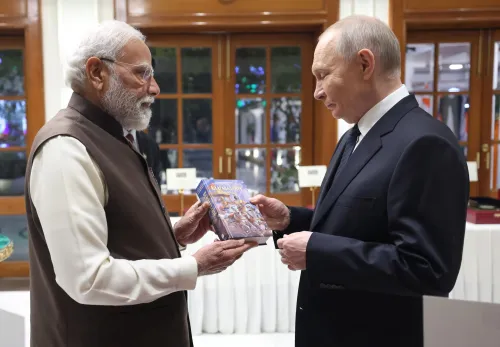
PM Modi gifts Putin Russian Thirukkural at BRICS Summit in Delhi
Synopsis
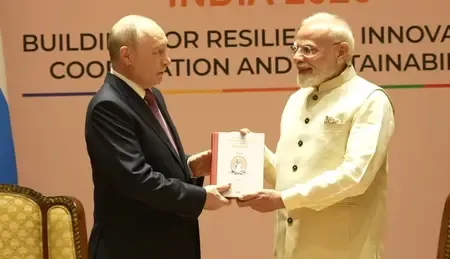
At the 18th BRICS Summit in New Delhi, PM Modi gifted Putin a Russian translation of the Thirukkural — following a Russian Bhagavad Gita in December 2025. The gesture is part of a deliberate cultural diplomacy arc that traces back to a 2019 SCO initiative to translate Indian literary works into Russian, Chinese, and English.
Key Takeaways
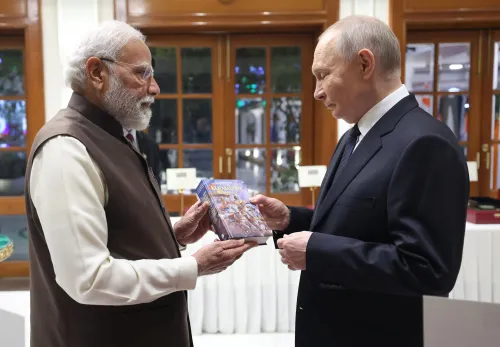
PM Modi gifted President Putin a Russian translation of the Thirukkural at the 18th BRICS Summit in New Delhi .
In December 2025 , Modi had gifted Putin a Russian edition of the Bhagavad Gita during an earlier India visit.
The cultural outreach traces back to the 2019 SCO Summit in Bishkek, where Modi initiated translation of 10 Indian literary works into Russian, Chinese, and English.
Former Sahitya Akademi Secretary K.
Sreenivasan credited Modi with creating global space for Indian literature and languages.
The translated books were released during India's 2020–2021 SCO chairmanship , held virtually due to the pandemic.
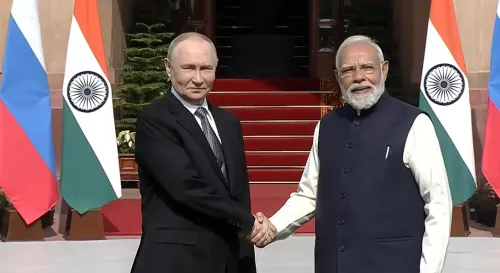
Prime Minister Narendra Modi on Friday presented President Vladimir Putin with a Russian translation of the Thirukkural during the 18th BRICS Leaders' Summit in New Delhi, continuing his broader effort to spotlight India's literary and cultural heritage on the global stage. The gesture underscored Modi's long-running cultural diplomacy strategy, which has seen Indian classical texts gifted to world leaders at high-profile multilateral gatherings.
A Pattern of Cultural Diplomacy
The gift is not an isolated act. According to 'Modi Story' — an initiative that chronicles the Prime Minister's work and outlook through accounts of people familiar with his life — Modi has consistently used diplomatic engagements to showcase India's civilisational legacy. In a social media post on Saturday, the initiative noted that the Thirukkural, a timeless Tamil composition on ethics, politics, and love authored by the celebrated poet-philosopher Thiruvalluvar (also referred to as Valluvar), now reaches Russian-speaking audiences through this translated edition.
Notably, during President Putin's earlier visit to India in December 2025, Prime Minister Modi had gifted him a Russian edition of the Bhagavad Gita. The two gestures together signal a deliberate effort to bridge Indian philosophical thought with Russia's literary traditions.
SCO Translation Initiative and Its Origins
Modi's cultural outreach traces back to the 2019 Shanghai Cooperation Organisation (SCO) Summit, held in Bishkek, Kyrgyzstan, where he reportedly spearheaded an initiative to translate 10 modern Indian literary works into Russian, Chinese, and English. The objective was to ensure that regional literature reached global audiences beyond India's borders.
K. Sreenivasan, former Secretary of the Sahitya Akademi, recalled the process in a video shared alongside the social media post. 'He (PM Modi) has created space for Indian culture, Indian literature, Indian languages, (where) though we're creating excellent literary works, we're not able to showcase it before the world,' Sreenivasan said.
He added that in 2020, the Ministry of External Affairs and the Ministry of Culture were contacted, and a list of 10 books was finalised for translation into the three languages. The translated works were eventually released during India's SCO chairmanship in 2020–2021 — a period when the summit was held virtually owing to the pandemic.
The Thirukkural's Global Significance
The Thirukkural, composed of 1,330 couplets divided across three sections — virtue, wealth, and love — is one of the most translated non-religious works in the world. It occupies a foundational place in Tamil literature and has been rendered into dozens of languages over the centuries. Gifting its Russian edition to Putin carries symbolic weight: it positions Indian classical wisdom as a living export, not merely a historical artefact.
Why It Matters
This comes amid India's intensifying multilateral engagement under the BRICS framework, where cultural soft power complements strategic and economic negotiations. By weaving heritage into summit-level interactions, Modi has consistently sought to frame India not just as a rising economic power but as a civilisational state with exportable intellectual traditions.
'PM Modi's cultural diplomacy is a masterclass in putting Indian heritage front and centre on the world stage!' the Modi Story post stated. Whether this translates into deeper people-to-people ties between India and Russia remains to be seen, but the symbolic messaging is unmistakable.
The 18th BRICS Leaders' Summit continues in New Delhi, with discussions on trade, security cooperation, and multilateral governance reform expected in the coming sessions.
Point of View
And that pipeline still lacks the scale to match the ambition.
NationPress
28 Oct 2026
Frequently Asked Questions
What did PM Modi gift President Putin at the BRICS Summit?
PM Modi gifted President Putin a Russian translation of the Thirukkural, a celebrated Tamil literary work by Thiruvalluvar, during the 18th BRICS Leaders' Summit in New Delhi.
Why is the Thirukkural significant?
The Thirukkural is a timeless Tamil composition of 1,330 couplets covering ethics, politics, and love. It is one of the most translated non-religious works in the world and holds a foundational place in Tamil literature and philosophy.
Has PM Modi gifted Putin Indian texts before?
Yes. During President Putin's India visit in December 2025, PM Modi gifted him a Russian edition of the Bhagavad Gita, making the Thirukkural the second major Indian classical text presented to the Russian President.
What was PM Modi's SCO translation initiative?
At the 2019 SCO Summit in Bishkek, PM Modi spearheaded an initiative to translate 10 modern Indian literary works into Russian, Chinese, and English. The translated books were released during India's SCO chairmanship in 2020–2021.
Where is the 18th BRICS Summit being held?
The 18th BRICS Leaders' Summit is underway in New Delhi, India, with discussions covering trade, security cooperation, and multilateral governance reform.