PM Modi visits Yangi Uzbekistan Monument, hails Uzbek aspirations in Tashkent
Synopsis
PM Modi opened his fourth state visit to Uzbekistan not at a summit table but at a monument — laying a wreath at the Yangi Uzbekistan landmark alongside President Mirziyoyev. The optics matter: Central Asia is a quiet but growing front in India's strategic outreach, and this visit, anchored in culture and connectivity, signals New Delhi's intent to deepen that bet.
Key Takeaways
PM Narendra Modi arrived in Tashkent on 29 August for a two-day State Visit — his fourth trip to Uzbekistan .
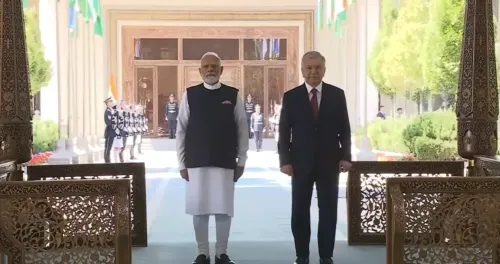
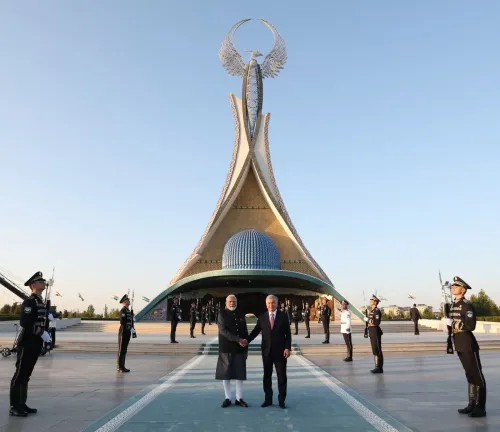
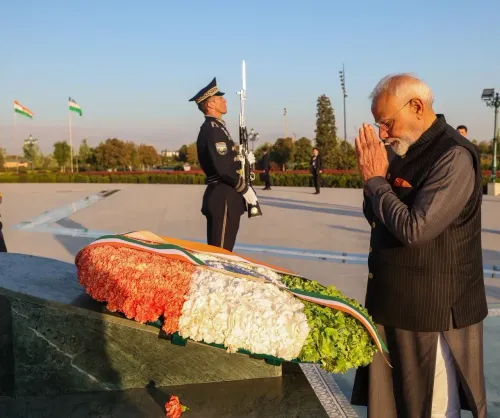
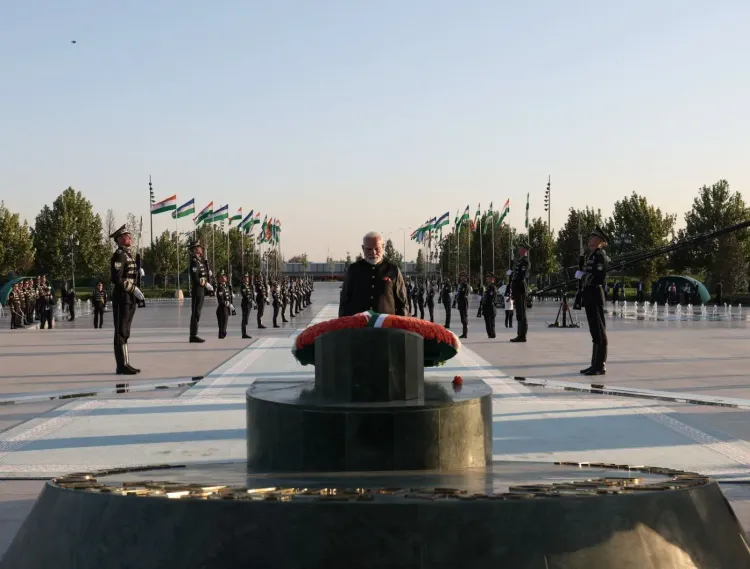
Modi laid a wreath at the Yangi Uzbekistan Monument alongside President Shavkat Mirziyoyev .
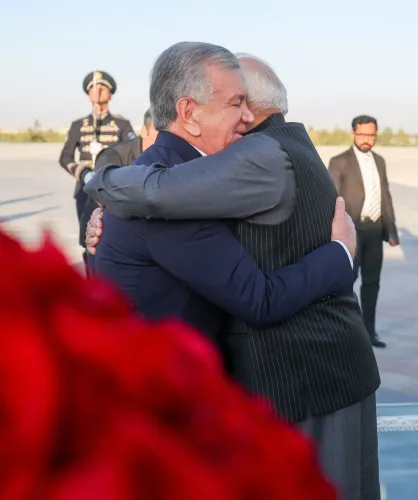
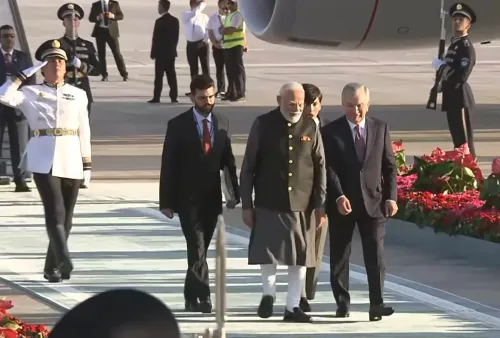
President Mirziyoyev personally received Modi at Tashkent airport , a gesture officials linked to 12 years of growing bilateral ties.
Delegation-level talks will cover trade, digital connectivity, defence, and energy , aligning Viksit Bharat 2047 with Uzbekistan-2030 .
Modi is also scheduled to visit the Shastri Memorial and the Mahatma Gandhi Centre at Tashkent State University of Oriental Studies.
Prime Minister Narendra Modi on Saturday, 29 August visited the Yangi Uzbekistan Monument in Tashkent alongside Uzbekistan President Shavkat Mirziyoyev, laying a wreath and calling the landmark a symbol of the Uzbek people's aspirations and progress. The visit marked the ceremonial opening of Modi's two-day State Visit to the Central Asian nation — his fourth trip to Uzbekistan.
At the Monument
Both leaders walked through Yangi Uzbekistan Park, examining artwork representing Uzbek culture and history. “The Yangi Uzbekistan Monument reflects the aspirations and progress of the Uzbek people. Glad to begin my visit by coming here,” Modi said in a post on X after the wreath-laying ceremony.
A Warm Airport Welcome
In a notable diplomatic gesture, President Mirziyoyev personally travelled to Tashkent airport to receive Modi — a protocol distinction that officials said underscores the depth of bilateral ties built over the past 12 years. “Landed in Tashkent to a warm welcome by President Shavkat Mirziyoyev. Grateful to him for the special gesture,” Modi posted on X upon arrival.
Agenda for the State Visit
Modi is scheduled to hold delegation-level talks with President Mirziyoyev, with discussions expected to cover trade and investment, digital connectivity, defence, and energy cooperation. The two sides will also work toward aligning India's Viksit Bharat 2047 vision with Uzbekistan's national development roadmap, Uzbekistan-2030. In his pre-departure statement, Modi described the India-Uzbekistan Strategic Partnership as having seen “significant advancement in recent years.”
Cultural Stops on the Itinerary
Beyond the bilateral talks, Modi is set to visit the Shastri Memorial — a reference to former Prime Minister Lal Bahadur Shastri, who passed away in Tashkent in 1966 — and the Mahatma Gandhi Centre at Tashkent State University of Oriental Studies. Modi described these stops as “a tribute to the close cultural and people-to-people ties” that bind India and Uzbekistan. This is the fourth such high-level visit by an Indian prime minister to Uzbekistan, reflecting a steady cadence of engagement with Central Asia that has grown markedly since 2014.
What Comes Next
The delegation-level talks are expected to produce joint statements and potentially new agreements across the identified sectors. Outcomes from the visit will be watched closely for progress on connectivity corridors linking India to Central Asia, a strategic priority for New Delhi as it seeks to reduce dependence on Pakistan-routed trade routes.
Point of View
Energy supply lines, and a counterweight to Chinese influence in the region. The cultural stops — Shastri Memorial, Gandhi Centre — are soft-power anchors that mainstream coverage tends to treat as ceremonial. They are not. They are the long game.
NationPress
14 Oct 2026
Frequently Asked Questions
Why did PM Modi visit the Yangi Uzbekistan Monument?
PM Modi visited the Yangi Uzbekistan Monument in Tashkent on 29 August as the opening act of his two-day State Visit to Uzbekistan. He laid a wreath there alongside President Mirziyoyev and described the monument as reflecting the aspirations and progress of the Uzbek people.
What is the significance of Modi's visit to Uzbekistan?
This is PM Modi's fourth visit to Uzbekistan, signalling sustained high-level engagement with Central Asia. The visit aims to advance cooperation in trade, digital connectivity, defence, and energy, and to align India's Viksit Bharat 2047 vision with Uzbekistan's national development plan, Uzbekistan-2030.
What will PM Modi and President Mirziyoyev discuss?
The two leaders are scheduled to hold delegation-level talks covering trade and investment, digital connectivity, defence, and energy cooperation. Joint outcomes and potentially new bilateral agreements are expected by the end of the two-day visit.
What is the Shastri Memorial in Tashkent?
The Shastri Memorial in Tashkent commemorates former Indian Prime Minister Lal Bahadur Shastri, who passed away in the city in January 1966 after signing the Tashkent Declaration. PM Modi is scheduled to visit it as part of his cultural itinerary, alongside the Mahatma Gandhi Centre at Tashkent State University of Oriental Studies.
How long have India and Uzbekistan maintained their current level of ties?
According to reports, the India-Uzbekistan bilateral relationship has grown significantly over the past 12 years. The two countries share a Strategic Partnership, and President Mirziyoyev personally receiving Modi at the airport was cited as a reflection of that deepening friendship.