PM Modi in Tashkent: Fourth Uzbekistan visit signals deepening bilateral ties
Synopsis
Modi's fourth visit to Uzbekistan — marked by a rare personal airport reception from President Mirziyoyev — is more than a diplomatic courtesy call. With talks spanning defence, digital connectivity, and duelling national visions (Viksit Bharat 2047 and Uzbekistan-2030), India is methodically deepening its Central Asian footprint ahead of the 26th SCO Summit in Bishkek.
Key Takeaways
PM Narendra Modi arrived in Tashkent on 29 August for a two-day State Visit — his fourth trip to Uzbekistan.
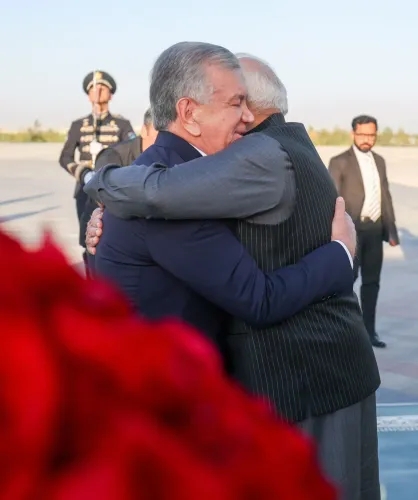
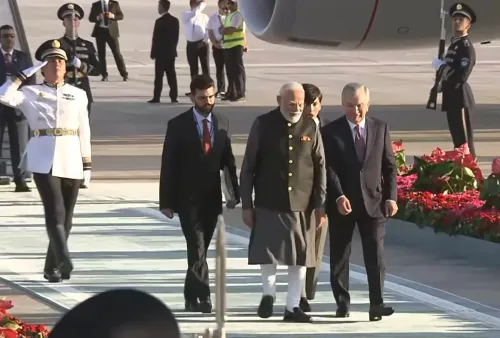
President Shavkat Mirziyoyev personally received Modi at Tashkent airport , underscoring 12 years of growing bilateral ties.
Delegation-level talks will cover trade, investment, digital connectivity, defence, and energy .
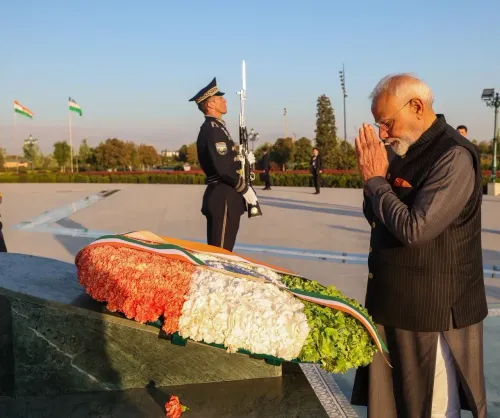
Modi will visit the Shastri Memorial and the Mahatma Gandhi Centre at Tashkent State University of Oriental Studies.
After Tashkent, Modi travels to Bishkek for the 26th SCO Summit , marking 25 years of the organisation.
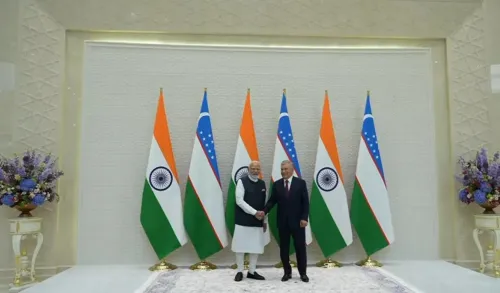
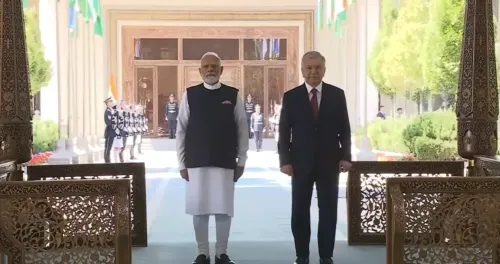
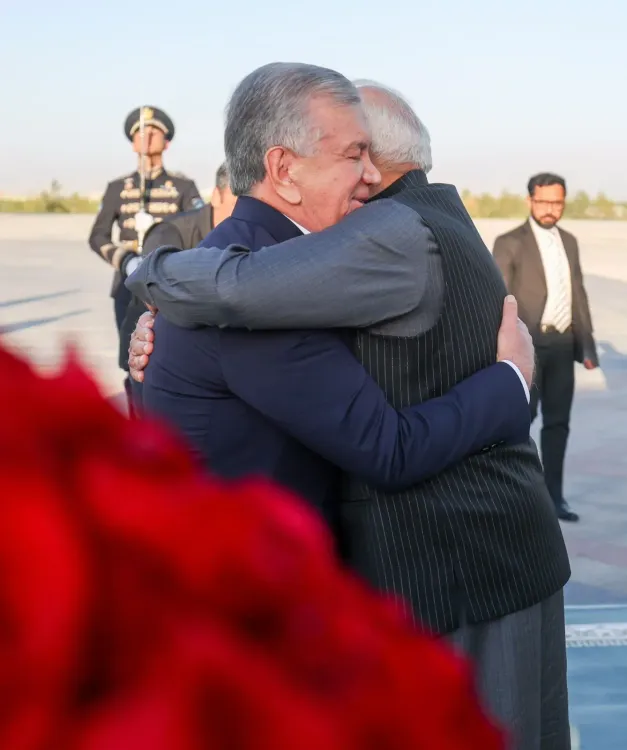
Prime Minister Narendra Modi arrived in Tashkent on Saturday, 29 August for a two-day State Visit to Uzbekistan, his fourth trip to the Central Asian nation, underscoring the growing depth of India-Uzbekistan ties over the past decade. In a notable diplomatic gesture, Uzbekistan President Shavkat Mirziyoyev personally travelled to the airport to receive the Prime Minister.
A Warm Reception at Tashkent Airport
Mirziyoyev's airport reception — unusual in its personal nature — was widely read as a signal of the closeness the two countries have cultivated over 12 years. Modi acknowledged the gesture publicly, posting on X: 'Landed in Tashkent to a warm welcome by President Shavkat Mirziyoyev. Grateful to him for the special gesture. This is my fourth visit to Uzbekistan, reflecting the depth and growing momentum of our bilateral relations.'
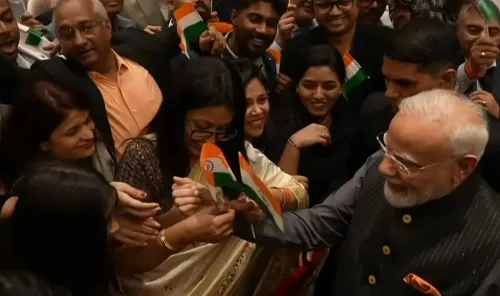
Ordinary Uzbek citizens also expressed enthusiasm ahead of the visit. 'We Uzbek people are very happy to hear the news of your arrival. We wish that the friendly ties between the two countries keep on growing… Jai Hind, Jai Bharat, Jai Uzbekistan,' one Uzbek woman said before Modi's arrival.
Key Agenda: Trade, Defence, and Digital Connectivity
During the visit, Modi is scheduled to hold delegation-level talks with President Mirziyoyev, with the discussions expected to advance cooperation across trade and investment, digital connectivity, defence, and energy. The two sides will also work toward aligning their respective national development blueprints — India's Viksit Bharat 2047 and Uzbekistan's Uzbekistan-2030 vision.
In his departure statement before leaving India, Modi said: 'In recent years, India-Uzbekistan Strategic Partnership has seen significant advancement. I look forward to my discussions with President Mirziyoyev on further deepening our cooperation in trade and investment, digital connectivity, defence, energy, and on advancing our shared visions of Viksit Bharat and Yangi Uzbekistan.'
Cultural Diplomacy: Shastri Memorial and Gandhi Centre
Beyond the diplomatic agenda, Modi is also scheduled to visit the Shastri Memorial and the Mahatma Gandhi Centre at the Tashkent State University of Oriental Studies. He described these visits as 'a tribute to the close cultural and people-to-people ties' binding the two nations — a nod to the historical significance of Tashkent, where former Prime Minister Lal Bahadur Shastri signed the 1966 peace declaration with Pakistan before his death in the city.
History of India-Uzbekistan Engagement
Modi's previous visits to Uzbekistan came in 2015, 2016, and 2022, with the latter two tied to Shanghai Cooperation Organisation (SCO) summits. Mirziyoyev had reciprocated with a State Visit to India in 2018 and also participated in the Vibrant Gujarat Global Summit in 2019. The bilateral relationship was elevated to a Strategic Partnership and has since seen consistent high-level engagement across multilateral and bilateral platforms.
Next Stop: Bishkek for the 26th SCO Summit
After concluding his Tashkent engagements, Modi will travel to Bishkek, Kyrgyzstan, at the invitation of President Sadyr Zhaparov, to attend the 26th SCO Summit — a milestone gathering marking 25 years of the organisation. The back-to-back visits place India firmly at the centre of Central Asian diplomatic activity this week.
Point of View
New Delhi is quietly building its own web of partnerships through the SCO framework and bilateral channels. The Viksit Bharat-Uzbekistan 2030 alignment is an attempt to give that engagement an economic spine, but the real test will be whether trade volumes and defence cooperation move beyond MoUs. The Shastri Memorial visit is also a pointed reminder that India's historical connection to Tashkent predates the current geopolitical competition — and Modi is clearly keen to keep that narrative alive.
NationPress
13 Oct 2026
Frequently Asked Questions
Why is PM Modi visiting Uzbekistan in August 2025?
PM Modi is on a two-day State Visit to Uzbekistan beginning 29 August to hold delegation-level talks with President Shavkat Mirziyoyev on trade, investment, defence, digital connectivity, and energy. It is his fourth visit to the country, reflecting the depth of the India-Uzbekistan Strategic Partnership.
How many times has PM Modi visited Uzbekistan before?
This is Modi's fourth visit to Uzbekistan. His previous trips were in 2015, 2016, and 2022 — the last two in connection with SCO Summits held in the country.
What will PM Modi and President Mirziyoyev discuss?
The two leaders are expected to advance cooperation in trade and investment, digital connectivity, defence, and energy. They will also work on aligning India's Viksit Bharat 2047 vision with Uzbekistan's Uzbekistan-2030 national development plan.
What is the significance of the Shastri Memorial visit in Tashkent?
The Shastri Memorial in Tashkent marks the site where former Prime Minister Lal Bahadur Shastri signed the 1966 India-Pakistan peace declaration and subsequently passed away. Modi's visit there is intended as a tribute to India-Uzbekistan cultural and historical ties.
Where does Modi travel after Tashkent?
After concluding his State Visit to Uzbekistan, Modi will travel to Bishkek, Kyrgyzstan, to attend the 26th SCO Summit at the invitation of President Sadyr Zhaparov. The summit marks 25 years of the Shanghai Cooperation Organisation.