US Congressman Tim Moore calls India 'natural ally', eyes tech and nuclear ties
Synopsis
A sitting US congressman went beyond diplomatic pleasantries at the Capitol Hill Summit 2026 — Tim Moore named nuclear energy and AI as the twin pillars of a deeper US-India alliance, backed by over $1 billion in Indian American investment in his own state. With China competition sharpening Washington's strategic calculus, Moore's remarks signal that India's democratic credentials are now a concrete legislative selling point, not just a talking point.
Key Takeaways
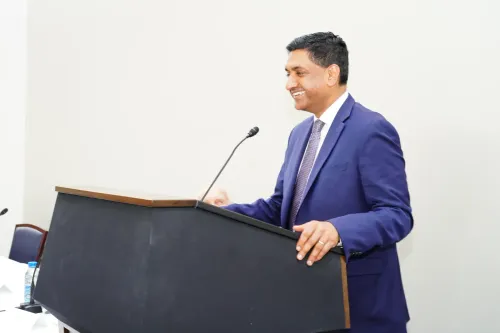
Congressman Tim Moore called India a 'natural ally' at the Capitol Hill Summit 2026 in Washington on 19 May 2026 .
Indian American companies have invested over $1 billion in North Carolina , creating thousands of jobs, particularly in the Research Triangle region.
Moore highlighted nuclear energy , small modular reactors , AI , and data centres as priority areas for US-India cooperation.
He framed the partnership against intensifying global competition with China , citing India's stable democratic governance.
Moore urged Indian Americans to engage directly with elected officials on visa and immigration issues.
Moore was elected to the US House of Representatives in 2024 after a decade as Speaker of the North Carolina House .
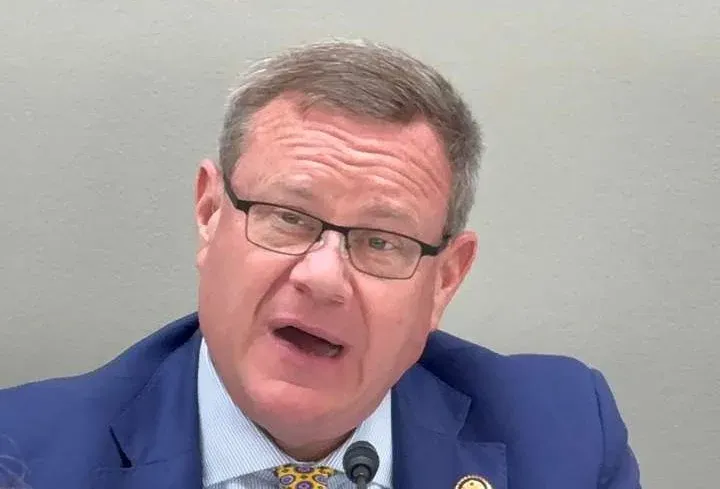
US Congressman Tim Moore on 19 May 2026 described India as a 'natural ally' of the United States and urged deeper bilateral cooperation in technology, energy, and advanced manufacturing, speaking at the Capitol Hill Summit 2026 organised by the US-India Friendship Council in Washington. Moore, a Republican representing North Carolina's 14th Congressional District, said shared democratic values and expanding economic ties made the US-India relationship a long-term strategic priority.
Key Remarks at the Capitol Hill Summit
Moore drew a direct line between democratic governance and strategic alignment. 'India and the United States are joined together as two democracies,' he said. 'India is absolutely one of the prime countries to do that with.' He pointed to North Carolina's growing Indian American community and the state's expanding business links with India as personal evidence of the partnership's depth.
Moore noted that Indian American companies have invested over $1 billion in North Carolina, generating thousands of jobs — particularly in the Research Triangle region's technology and university sectors. 'North Carolina's relationship with the Indian American community is really one that a lot of other states would probably be jealous of,' he said.
Nuclear Energy and AI as Pillars of Future Cooperation
Moore singled out nuclear energy and small modular reactor (SMR) technology as among the most promising areas for US-India collaboration. 'My belief is that nuclear power actually solves this problem a lot for both countries,' he said. 'India is a natural partner on that.' He argued that both nations face surging energy demand driven by expanding economies and the rapid build-out of artificial intelligence infrastructure.
On AI specifically, Moore struck an urgent note. 'We can't, as Americans, afford to fall behind in any kind of technological advancement,' he said. 'Right now AI is that thing.' He also identified data centres, energy infrastructure, and STEM education as sectors offering major bilateral opportunity, saying, 'The growth in STEM has been a natural home to so many.'
Strategic Context: China Competition and Democratic Alignment
Moore framed the US-India partnership explicitly against the backdrop of intensifying global competition with China. He cited India's stable democratic governance as a decisive factor in its rising importance as both a strategic and economic partner. 'You have a stable government, you have a similar framework of being a democracy,' he said. This comes amid broader bipartisan momentum in Washington to deepen ties with New Delhi across defence, trade, and technology supply chains.
Indian Americans, Visa Issues, and Political Engagement
Moore also addressed concerns around visa and immigration challenges facing Indian students and professionals in the US. He encouraged the Indian American community to build direct relationships with elected representatives. 'Getting to know your member of Congress is extremely important on these issues,' he said. Moore recalled hosting India's ambassador to the US during independence anniversary celebrations while serving as Speaker of the North Carolina House of Representatives — a role he held for a decade before his election to the US House of Representatives in 2024. 'It was more than symbolic,' he said. 'It was a true recognition of the contributions that the community has made.'
As Washington recalibrates its global alliances, Moore's remarks reflect a growing congressional consensus that India's democratic credentials and economic trajectory make it an indispensable partner — one whose full potential in areas like nuclear energy and AI remains largely untapped.
Point of View
Not just a foreign-policy talking point. What the speech does not address is the friction point that most directly affects Indian nationals in the US: the chronic backlog in employment-based green cards, which no amount of congressional goodwill has yet resolved. Until that structural issue is tackled legislatively, the 'natural ally' framing risks remaining aspirational rather than operational.
NationPress
3 Oct 2026
Frequently Asked Questions
What did Congressman Tim Moore say about India at the Capitol Hill Summit 2026?
Congressman Tim Moore described India as a 'natural ally' of the United States at the Capitol Hill Summit 2026 on 19 May 2026, calling for deeper cooperation in technology, energy, and advanced manufacturing. He cited shared democratic values and India's stable governance as key reasons for strengthening the bilateral partnership.
Why did Moore highlight nuclear energy for US-India cooperation?
Moore identified nuclear energy and small modular reactor technology as areas where both countries face similar challenges — surging energy demand from growing economies and expanding AI infrastructure. He said India is a 'natural partner' on nuclear power and that it could address energy needs for both nations.
How much have Indian American companies invested in North Carolina?
According to Moore, Indian American companies have invested over $1 billion in North Carolina, generating thousands of jobs particularly in the Research Triangle region's technology and university sectors.
How did Moore address visa and immigration concerns for Indian Americans?
Moore acknowledged visa and immigration challenges facing Indian students and professionals in the US and encouraged the Indian American community to build direct relationships with their elected congressional representatives, calling it 'extremely important on these issues.'
Who is Tim Moore and what is his political background?
Tim Moore is a Republican US Congressman representing North Carolina's 14th Congressional District. He was elected to the US House of Representatives in 2024 after serving for approximately a decade as Speaker of the North Carolina House of Representatives.