Pakistan Army Chief Munir urged to introspect impact of his actions, not just issue threats
Synopsis
A detailed analysis in Eurasia Review by retired Indian Army officer Nilesh Kunwar argues that Pakistan's self-promoted Field Marshal Asim Munir — shielded by a constitutional amendment granting him lifelong legal immunity — has deepened instability at home through election manipulation, reckless Afghan airstrikes, and a brutal crackdown in Balochistan, while deflecting blame onto India and Afghanistan for failures of his own making.
Key Takeaways
Retired Indian Army officer Nilesh Kunwar has urged Field Marshal Asim Munir to introspect on the adverse impact of his decisions on Pakistan , in an analysis published in Eurasia Review .
Munir allegedly used the 27th Constitutional Amendment to promote himself to Field Marshal and secure lifelong immunity from legal prosecution.
According to Pakistan Institute of Peace Studies (PIPS) , Khyber Pakhtunkhwa accounted for 71 per cent of Pakistan's terrorism-related incidents in 2025 .
Pakistan's airstrikes on alleged TTP sanctuaries in Afghanistan are criticised as strategically counterproductive, likely pushing Kabul and TTP closer.
The armed struggle in Balochistan has intensified, with allegations of enforced disappearances and extrajudicial killings under Munir's command.
Freedom of expression has reportedly been further curtailed in Pakistan-occupied Jammu and Kashmir (PoJK) , with fresh unrest reportedly brewing in the region.
Pakistan Army Chief Field Marshal Asim Munir must reflect on the adverse consequences of his decisions on Pakistan rather than celebrating selective statistics and issuing threats, according to an analysis published in Eurasia Review. The report, authored by retired Indian Army officer Nilesh Kunwar, offers a detailed critique of Munir's consolidation of power and its ripple effects on Pakistan's internal security and civil liberties.
Munir's Consolidation of Power
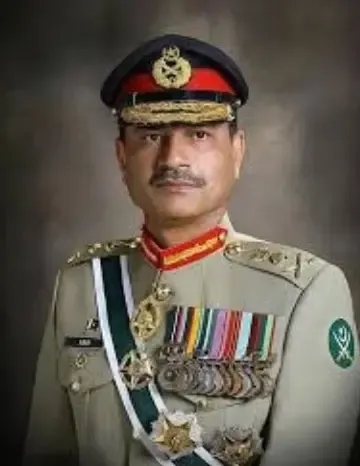
According to the Eurasia Review analysis, Munir allegedly manipulated Pakistan's General Elections in 2024 to install a government of his choosing after becoming Army Chief. He subsequently promoted himself to the rank of Field Marshal — reportedly through the 27th Constitutional Amendment — which critics argue subverted Pakistan's constitutional framework.
'Thanks to the 27th constitutional amendment, Pakistan's self-promoted Field Marshal has by the virtue of being nominated as the Chief of Defence Forces (CDF) become the de facto overall commander of Pakistan's armed forces. This amendment also provides him lifelong immunity against legal prosecution which is something unheard of in a democracy since it confers unfettered authority on the CDF sans any accountability,' Kunwar wrote.
Afghanistan Airstrikes and the Durand Line Dilemma
Kunwar's analysis also questions the strategic rationale behind Pakistan's airstrikes targeting alleged Tehreek-e-Taliban Pakistan (TTP) sanctuaries inside Afghanistan. Even if Islamabad's claims about Kabul providing sanctuary to TTP terrorists are accurate, the analysis argues that such military strikes would 'achieve precious little in military terms' and would instead push Kabul and the TTP closer together, compounding instability along the Durand Line.
Terrorism and Balochistan: A Worsening Picture
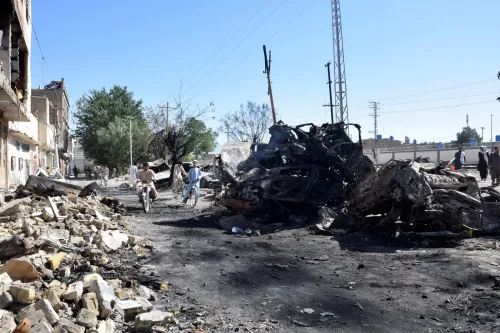
According to data from the Pakistan Institute of Peace Studies (PIPS), Khyber Pakhtunkhwa province accounted for 71 per cent of all terrorism-related incidents in Pakistan in 2025. Meanwhile, the armed struggle in Balochistan has intensified, with Munir's year-old pledge to 'beat the hell out of these terrorists very soon' reportedly yielding little result.
The report further alleges that under Munir's leadership, security forces have resorted to enforced disappearances and extrajudicial killings of Baloch civilians — charges that human rights organisations have repeatedly raised against Pakistan's military establishment.
Crackdown on Free Expression in PoJK
The analysis notes that freedom of expression — already severely restricted across Pakistan — has been further curtailed in Pakistan-occupied Jammu and Kashmir (PoJK) under Munir's watch, with the report warning that renewed unrest is brewing in the region as a result.
The Accountability Deficit
Kunwar's concluding argument is pointed: rather than deflecting blame onto India and Afghanistan for Pakistan's terrorism failures, Munir should engage in honest introspection. 'While concealing the Pakistan army's abysmal failure to wipe out terrorism by blaming India and Afghanistan for the same may serve as a temporary diversion, Field Marshal Munir may like to reflect on Abraham Lincoln's seminal observation — 'you can't fool all the people all the time',' Kunwar wrote.
The analysis arrives at a moment of heightened scrutiny of Pakistan's civil-military balance, and signals growing concern — even among regional observers — about unchecked military authority in Islamabad.
Point of View
But it is wearing thin domestically too. The question is not whether Munir will introspect — it is whether any institution in Pakistan retains the authority to compel him to.
NationPress
23 Oct 2026
Frequently Asked Questions
Who is Field Marshal Asim Munir and why is he under scrutiny?
Asim Munir is Pakistan's Army Chief who reportedly used the 27th Constitutional Amendment to promote himself to Field Marshal and secure the role of Chief of Defence Forces with lifelong immunity from prosecution. Critics argue this consolidation of power has undermined democratic accountability in Pakistan.
What does the Eurasia Review analysis say about Munir's actions?
The analysis, authored by retired Indian Army officer Nilesh Kunwar, argues that Munir manipulated Pakistan's 2024 General Elections, launched strategically counterproductive airstrikes in Afghanistan, and oversaw a crackdown in Balochistan — all while blaming India and Afghanistan for Pakistan's internal security failures.
What is the terrorism situation in Pakistan under Munir's watch?
According to the Pakistan Institute of Peace Studies (PIPS), Khyber Pakhtunkhwa accounted for 71 per cent of Pakistan's terrorism-related incidents in 2025. The armed struggle in Balochistan has also intensified despite Munir's earlier pledge to eliminate the threat quickly.
Why are Pakistan's airstrikes in Afghanistan considered counterproductive?
The Eurasia Review analysis argues that even if Kabul is sheltering TTP terrorists, airstrikes inside Afghanistan would achieve little militarily and would instead push the Afghan government and TTP closer together, worsening instability along the Durand Line.
What is the situation in Pakistan-occupied Jammu and Kashmir under Munir?
According to the analysis, freedom of expression in Pakistan-occupied Jammu and Kashmir (PoJK) has been further curtailed under Munir's leadership, and fresh unrest is reportedly brewing in the region as a result of these restrictions.