Musk warns G20 of AI power crunch, predicts 15 GW shortfall by 2027
Synopsis
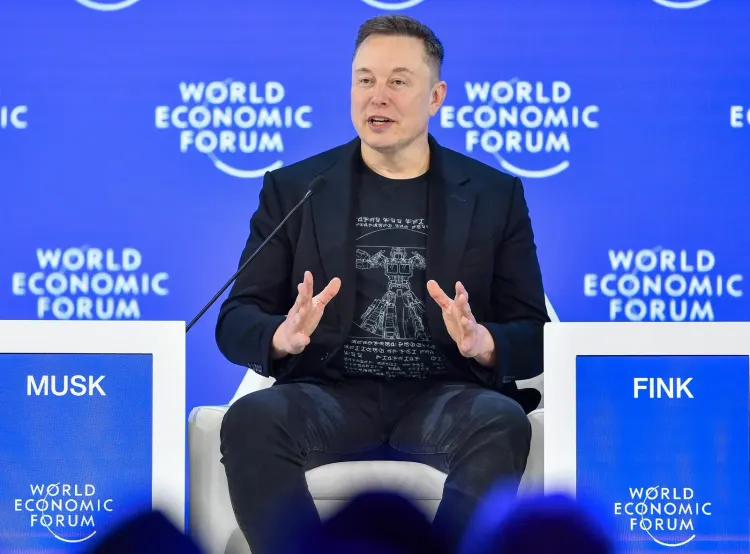
Elon Musk told G20 leaders in Chapel Hill that the world faces a 15 gigawatt AI power shortfall as early as 2027 — not a distant risk, but an imminent infrastructure crisis. His pitch: countries that build power fast can win the AI investment race. The warning doubles as a business case, and that tension is worth watching closely.
Key Takeaways
Elon Musk warned a G20 session in Chapel Hill on 1 September of a looming AI-driven electricity crisis.
Analysts cited by Musk project a 15 gigawatt power shortfall for AI chips by 2027 .
AI chip production is rising at 40–50% annually; power capacity outside China grows at only 10–20% per year.
Musk projected AI could add $20 trillion to $30 trillion to the global economy annually.
He forecast more than 1 billion humanoid robots within 10 years , each producing five times a human worker's output.
G20 members reached consensus on the Carolina Principles , a policy framework for responsible emerging-technology deployment.
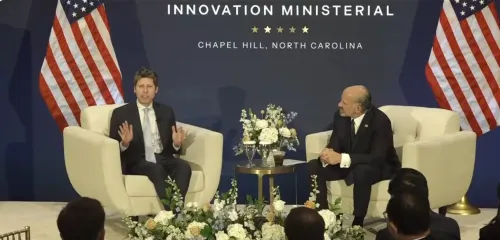
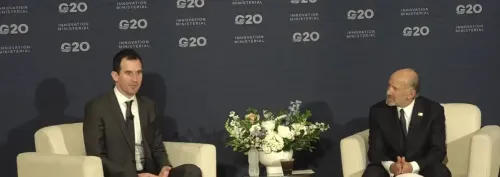
Elon Musk has warned G20 economies of a looming electricity crisis driven by Artificial Intelligence, telling a G20 session on emerging technologies in Chapel Hill, United States, on 1 September that the world could face a significant power deficit as early as next year as AI chip production races well ahead of energy capacity.
The Power Shortfall Warning
'There will be a significant power shortfall next year, so not like the distant future,' Musk told the G20 session. He cited analysts closely tracking the sector as projecting 'at least a 15 gigawatt shortfall of power in 2027 for AI chips.' The Tesla and SpaceX chief executive said AI chip production was expanding at roughly 40 to 50 per cent annually, while available power capacity outside China was growing at only 10 to 20 per cent a year. 'So obviously the faster rising thing will eventually overwhelm the slower rising thing,' he said.
An Opportunity for Emerging Economies
Musk argued that the energy gap also represents a significant opening for nations willing to invest in electricity infrastructure. 'This creates an opportunity, I think, for countries around the world, if they're interested in AI data centres, to construct a lot of power and offer that to AI companies,' he said. Such facilities would, he added, generate tax revenues and hosting fees for the countries that build them — a pitch that carries particular relevance for G20 members still scaling their grid capacity, including India.
AI's Economic Promise and Regulatory Caution
Musk projected that AI could expand the global economy by 20 to 30 per cent, or approximately $20 trillion to $30 trillion annually. He predicted that by next year, AI software would reach what he called 'Stockfish-level' capability — a reference to the chess programme that can defeat the world's strongest players — making it effectively impossible for humans to compete with AI in software development. He extended similar projections to engineering and other digital disciplines.
On regulation, Musk urged governments to adopt a framework where new technologies are 'default legal as opposed to default illegal,' contrasting that approach with the European Union, where he argued high regulatory barriers were slowing technological progress. He also called on governments to direct support toward start-ups rather than established corporations, comparing large businesses to dominant trees that crowd out younger growth.
The Carolina Principles and G20 Consensus
Musk's remarks came as G20 members reached consensus on what were described as the Carolina Principles for emerging technology — a policy framework intended to guide the development and deployment of new technologies while supporting economic growth. The Group of 20 brings together 19 countries, the European Union, and the African Union, collectively accounting for the majority of global economic output, trade, and population.
The Humanoid Robot Forecast
Beyond AI software, Musk forecast sweeping economic disruption from humanoid robots. He said robots would eventually manufacture other robots, creating what he described as a recursive production effect — slow at first, then rapidly accelerating. 'If you say like 10 years from now, I would say there are well over a billion humanoid robots,' he said. He estimated each robot could produce five times the output of a human worker, adding: 'The billion humanoid robots will be more productive than all humans combined.'
Point of View
Attributed to unnamed analysts, was not independently verified at the session. More telling is the regulatory argument: his 'default legal' framing is a direct lobbying position against EU-style oversight, delivered from a multilateral platform. G20 governments, including India, should parse the investment pitch from the policy prescription — they are not the same thing.
NationPress
17 Oct 2026
Frequently Asked Questions
What did Elon Musk warn at the G20 session?
Musk warned that the world faces a significant electricity shortage driven by AI demand, with analysts projecting at least a 15 gigawatt power shortfall for AI chips by 2027. He said AI chip production is growing at 40–50% annually while power capacity outside China is expanding at only 10–20% a year.
What are the Carolina Principles announced at the G20?
The Carolina Principles are a policy framework agreed upon by G20 members to guide the development and deployment of emerging technologies while supporting economic growth. They are intended to provide governments with a common approach to governing new technologies such as AI.
How much could AI add to the global economy, according to Musk?
Musk projected that AI could increase the global economy by 20 to 30 per cent, equivalent to roughly $20 trillion to $30 trillion annually. He also predicted AI software would surpass human capability in software development as early as next year.
What opportunity did Musk see for countries in the AI power crunch?
Musk argued that countries willing to rapidly expand electricity generation could attract major AI data centre investments, earning tax revenues and hosting fees. He framed energy infrastructure buildout as a competitive advantage in the global AI race.
What did Musk say about humanoid robots?
Musk forecast that more than one billion humanoid robots could exist within ten years, with each unit producing approximately five times the output of a human worker. He described a recursive manufacturing effect where robots would eventually build other robots, accelerating production exponentially.