For the First Time, NASA Astronauts Take iPhones to the Moon on Artemis II Mission
Synopsis
NASA's Artemis II mission marks a historic moment as astronauts carry personal iPhones into deep space, revolutionizing crew equipment and documentation. This groundbreaking move allows for unique photography opportunities during their lunar flyby.
Key Takeaways
NASA astronauts are taking personal iPhones into deep space for the first time.
The Artemis II mission marks a significant upgrade in crew equipment.
Smartphones will capture moments without bulky cameras.
Live imagery of the Moon will be recorded during the flyby.
Wi-Fi connectivity at the International Space Station will allow photo sharing.
New Delhi, April 2 (NationPress) In a groundbreaking development, NASA astronauts on the Artemis II mission are taking their personal iPhones to deep space for the very first time. This marks a significant shift in the way the US space agency equips its astronauts for crewed missions beyond the confines of Earth's orbit.
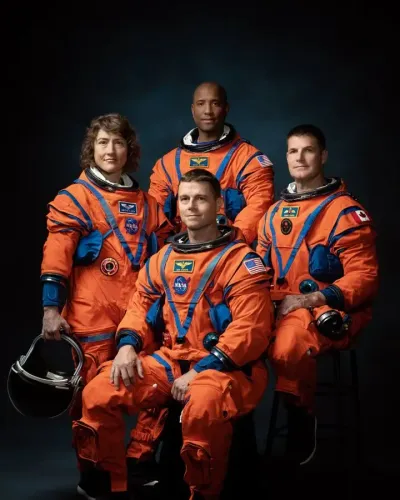
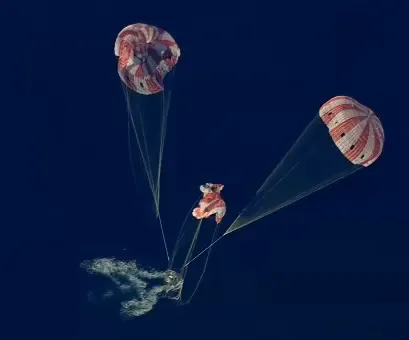
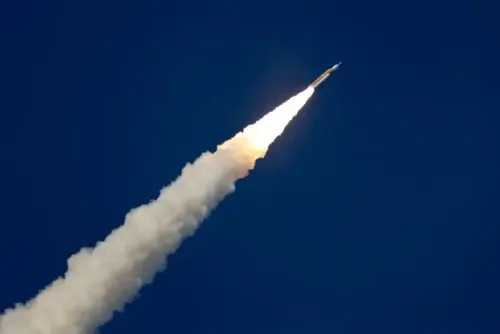
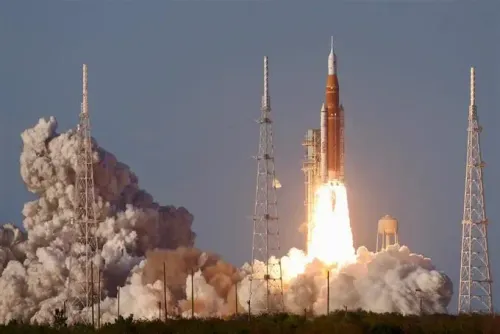
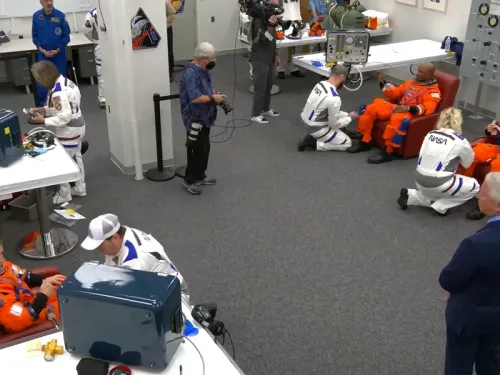
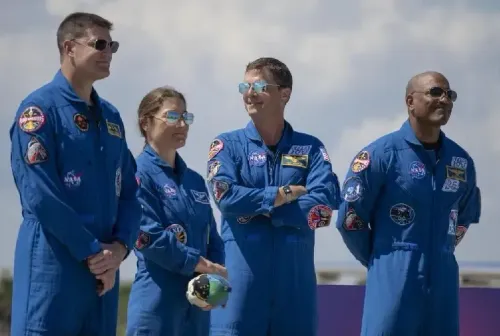
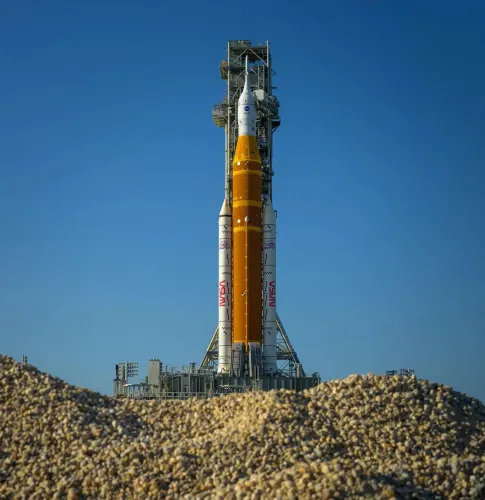
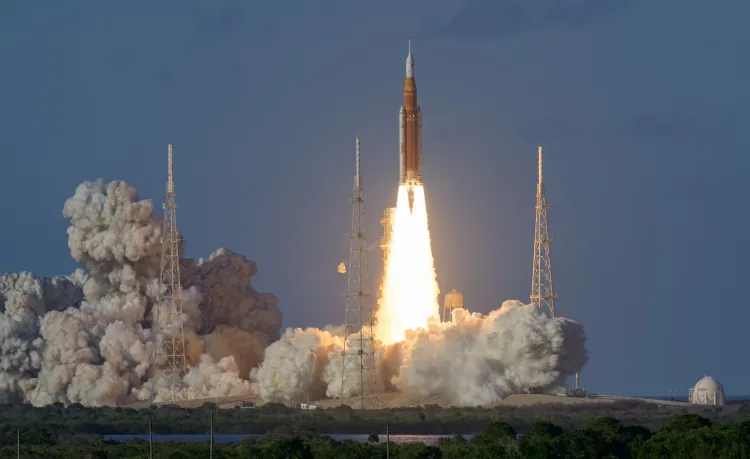
The crew, consisting of Commander Reid Wiseman, Pilot Victor Glover, and Mission Specialists Christina Koch and Jeremy Hansen, launched aboard the Orion spacecraft mounted on the Space Launch System rocket from Kennedy Space Center in Florida. They are embarking on an unprecedented 10-day journey that will take them around the Moon and back.
This initiative to permit personal smartphones was revealed earlier this year by NASA Administrator Jared Isaacman as part of a wider effort to modernize crew gear and simplify mission documentation processes.
This innovative approach enables astronauts to capture candid moments without the need for cumbersome, government-issued cameras.
“We are providing our teams with the tools necessary to document special experiences for their families and share inspiring visuals with the public,” Isaacman stated on X in February.
He also mentioned that rapidly qualifying contemporary hardware for space missions would benefit NASA's future lunar and orbital endeavors.
The iPhones will remain in Aeroplane mode during the deep space segment of their voyage to prevent interference with spacecraft systems, effectively functioning as high-quality cameras. When passing the International Space Station, the astronauts will be able to connect to the station's Wi-Fi to send photos and emails, although voice calls will not be feasible.
The Artemis II mission is set to be humanity's first crewed flight close to the Moon in over five years. During their lunar flyby, the crew will record live footage of the lunar surface, observe previously unseen features, and experience a partial solar eclipse from their unique perspective in deep space.
Point of View
It is essential to highlight the significance of NASA's Artemis II mission, particularly in its innovative approach to crew equipment. The inclusion of personal smartphones reflects a modernization of space exploration, showcasing how technology can enhance the experience for astronauts and inspire future generations.
NationPress
5 Oct 2026
Frequently Asked Questions
Why are astronauts taking iPhones on the Artemis II mission?
Astronauts are allowed to take iPhones to modernize crew equipment and document their experiences more effectively, capturing moments without bulky cameras.
How will the iPhones be used during the mission?
The iPhones will remain in Aeroplane mode to avoid interference but will function as high-quality cameras. Astronauts can connect to Wi-Fi at the International Space Station to send photos and emails.
What is the significance of the Artemis II mission?
Artemis II is humanity's first crewed flight near the Moon in over five years, allowing astronauts to capture live imagery and observe unique lunar features.
Who are the crew members on the Artemis II mission?
The crew includes Commander Reid Wiseman, Pilot Victor Glover, Mission Specialist Christina Koch, and Mission Specialist Jeremy Hansen.
What are the expected outcomes of the mission?
The mission aims to enhance our understanding of the Moon and provide insights into future lunar and orbital exploration.