Nepal asks UN to delay LDC graduation to 2030 over economic risks
Synopsis
Nepal has become the second country after Bangladesh to ask the UN to delay its LDC graduation — this time by four years to 2030. With projected growth at just 2.3% and potential job losses of up to 35% from losing trade preferences, Kathmandu is signalling that the milestone of 'development progress' could come at a steep economic cost.
Key Takeaways
Nepal formally requested the UN on 13 May 2025 to defer its LDC graduation from November 2026 to November 2030 .
The request was sent by Foreign Minister Sishir Khanal to the Chair of the UN Committee for Development Policy (CDP) .
Nepal cited potential employment losses of up to 35 per cent from losing duty-free and quota-free market access .
The World Bank projects Nepal's GDP growth at just 2.3 per cent for fiscal year 2025/26 .
Nepal is the second country after Bangladesh to seek a graduation deferral in the current cycle.
Nepal's per capita income stands at USD 1,535 , above the USD 1,306 UN graduation threshold.
Nepal has formally requested the United Nations to postpone its scheduled graduation from the Least Developed Country (LDC) category, seeking a deferral from November 2026 to November 2030, citing mounting economic vulnerabilities, incomplete transition preparations, and the cascading effects of global disruptions. The request, sent on 13 May 2025, makes Nepal the second country after Bangladesh to seek a delay in LDC graduation.
The Formal Request
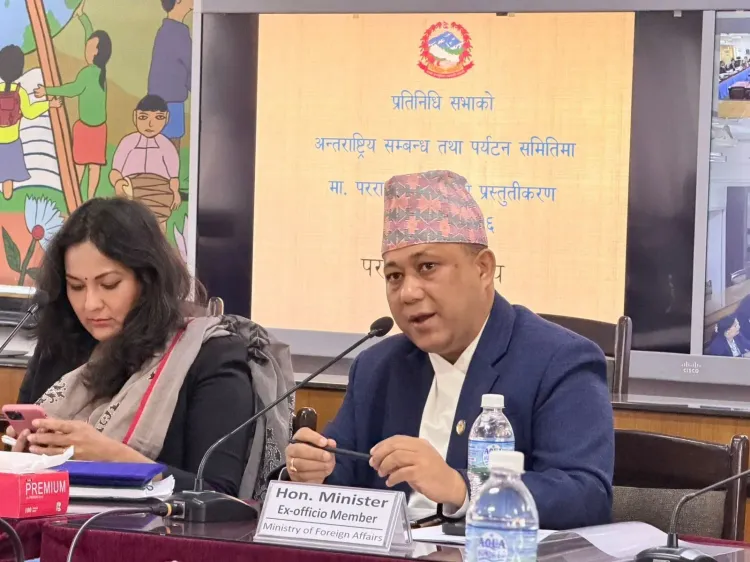
Foreign Ministry spokesperson Lok Bahadur Poudel Chhetri confirmed at a regular press briefing that Foreign Minister Sishir Khanal had written to the Chair of the UN Committee for Development Policy (CDP) on 13 May, formally seeking the postponement. The request is grounded in five distinct areas of concern raised by the government, spanning trade vulnerabilities, pandemic recovery, geopolitical shocks, and climate risks.
Five Reasons Behind the Request
Nepal's first concern centres on the economic fallout from regional conflicts in West Asia and disruptions to global supply chains, which have pressured remittance inflows and trade. The World Bank projects Nepal's economic growth at just 2.3 per cent for fiscal year 2025/26, ending in mid-July — a figure the government cited as evidence of a challenging environment.
Second, the government flagged the anticipated loss of duty-free and quota-free market access available to LDCs in developed countries. Chhetri warned that 'Nepal's manufacturing and processing sectors remain vulnerable and could face significant setbacks, with potential employment losses estimated at up to 35 per cent due to the loss of duty-free and quota-free market access.'
Third, Nepal said implementation of its Smooth Transition Strategy — the roadmap designed to prepare the country for post-LDC conditions — had been delayed, leaving critical groundwork incomplete. Fourth, the government stressed that Nepal's economy has not fully recovered from the Covid-19 pandemic, with ongoing geopolitical tensions and climate change compounding the challenge. Fifth, Nepal pointed to tensions involving the United States and Iran in West Asia, which have reduced remittance flows from Nepali migrant workers while pushing up food, fertiliser, and energy costs, with knock-on effects on tourism.
Nepal's LDC Graduation History
Nepal first met two of the three UN graduation criteria — the Human Assets Index (HAI) and the Economic and Environmental Vulnerability Index (EVI) — in 2018, but fell short of the income threshold at the time. Following the devastating 2015 earthquakes, the country had already chosen to defer graduation to guard against economic reversal. In 2021, the UN Committee for Development Policy formally recommended Nepal for graduation and granted a five-year preparatory period in recognition of Covid-19's impact.
Nepal has since also met the Gross National Income (GNI) threshold. Under the UN's 2024 Triennial Review criteria, a country must have a GNI per capita of at least USD 1,306, an HAI score of 66 or above, and an EVI score of 32 or below. According to the National Statistics Office, Nepal's per capita income for 2025/26 is projected at USD 1,535 — unchanged from the previous fiscal year.
Regional and Global Context
Nepal is one of three countries scheduled to graduate from the LDC category in November 2026, alongside Bangladesh and Lao PDR. The Solomon Islands is set to graduate in 2027, followed by Cambodia and Senegal in 2029. Bangladesh formally requested a three-year deferral in February 2025, making it the first to seek a postponement in the current graduation cycle.
By the end of 2025, eight countries had completed LDC graduation: Botswana, Cabo Verde, Maldives, Samoa, Equatorial Guinea, Vanuatu, Bhutan, and Sao Tomé and Príncipe, according to United Nations records. Nepal's private sector has been among the most vocal opponents of proceeding with the scheduled graduation, arguing the country lacks the structural resilience to absorb the loss of LDC-specific trade preferences.
What Happens Next
The UN Committee for Development Policy will now consider Nepal's request. A decision in Nepal's favour would extend the country's access to concessional trade terms and development financing for an additional four years. The outcome is likely to set a precedent for how the UN handles similar requests from Lao PDR, which has not yet formally sought a deferral but faces comparable economic pressures.
Point of View
The graduation criteria — designed to measure progress — may be capturing a snapshot rather than resilience. The fact that both Nepal and Bangladesh, two of the three countries due to graduate in 2026, have now sought deferrals raises a harder question: whether the UN's transition support mechanisms are calibrated for the real-world volatility these economies face. Without a more flexible and responsive graduation framework, the LDC exit process risks penalising countries for progress they cannot yet sustain.
NationPress
7 Oct 2026
Frequently Asked Questions
Why has Nepal requested a delay in its LDC graduation?
Nepal has requested a deferral of its LDC graduation from November 2026 to November 2030, citing five key concerns: the economic impact of West Asian conflicts on remittances, anticipated loss of duty-free and quota-free trade access, delays in implementing its Smooth Transition Strategy, incomplete recovery from the Covid-19 pandemic, and rising food and energy costs. The government estimates potential employment losses of up to 35 per cent in manufacturing if trade preferences are withdrawn.
What is LDC graduation and what does it mean for Nepal?
LDC graduation is the process by which a country exits the United Nations' Least Developed Country category after meeting thresholds on income, human assets, and economic vulnerability. For Nepal, graduation would mean losing preferential trade benefits — including duty-free and quota-free market access in developed countries — that currently support its manufacturing and export sectors.
Which other countries are seeking to delay their LDC graduation?
Bangladesh formally requested a three-year deferral in February 2025, making it the first country in the current graduation cycle to do so. Nepal is the second. Bangladesh, Lao PDR, and Nepal are all scheduled to graduate in November 2026; Lao PDR has not yet made a formal deferral request.
Has Nepal met the UN criteria for LDC graduation?
Yes. Nepal has met all three UN graduation criteria — the Human Assets Index, the Economic and Environmental Vulnerability Index, and the Gross National Income threshold. Its projected per capita income of USD 1,535 for 2025/26 exceeds the UN's 2024 Triennial Review threshold of USD 1,306. Nepal first met two of the three criteria in 2018.
What happens next after Nepal's deferral request?
The UN Committee for Development Policy will review Nepal's formal request and decide whether to grant the postponement. If approved, Nepal would retain LDC-specific trade preferences and development financing until November 2030, giving the government additional time to implement its Smooth Transition Strategy and strengthen economic resilience.