Nepal confirms citizen killed in Saudi attacks, 3 others hurt

Synopsis
A Nepali citizen has been killed and three others injured in recent attacks in Saudi Arabia. It is at least the second Nepali death linked to the Saudi-Houthi conflict since October. With a Houthi drone now hitting Riyadh's financial district, the danger to Gulf migrant workers has moved from remote oil fields to the capital itself.
Key Takeaways
Nepal's Ministry of Foreign Affairs confirmed on 26 November 2026 that a Nepali citizen was killed in recent attacks in Saudi Arabia.
Three other Nepalis were injured; one has recovered and two are still undergoing treatment.
A Houthi-attributed drone strike on 24 November hit a tower in Riyadh's King Abdullah Financial District , injuring at least 11 people , including two Indians .
Nepali worker Bharat Mahato was killed on 21 October by debris from an intercepted drone at Saudi Aramco's Shaybah oil field .
More than 1.7 million Nepalis live in West Asia, most of them migrant labourers.
Nepal's Ministry of Foreign Affairs on Thursday, 26 November 2026, confirmed that a Nepali citizen was killed in recent attacks in Saudi Arabia. The Ministry said three other Nepali nationals were injured. The confirmation came in a statement issued in Kathmandu amid the ongoing Saudi-Houthi conflict, which has increasingly put foreign workers in the Gulf kingdom at risk.
The ministry did not identify the deceased. It also did not say when or where the fatal incident took place.
What Nepal's Foreign Ministry Said
In its statement, the ministry said: “We are deeply saddened by the tragic loss of a Nepali citizen in the recent attacks in the Kingdom of Saudi Arabia and remain concerned for the three other Nepali nationals injured in the attacks.”
On the condition of the injured, it added: “One of them has since recovered, while the other two are currently undergoing medical treatment.”
The ministry offered condolences to the bereaved family and wished the injured a speedy recovery. It also stressed that civilians and public infrastructure must not be targeted under any circumstances. “Nepal urges maximum restraint and calls on all concerned to adopt peaceful means for settling disputes and resolving conflicts,” the statement said.
Drone Strike on Riyadh Financial District
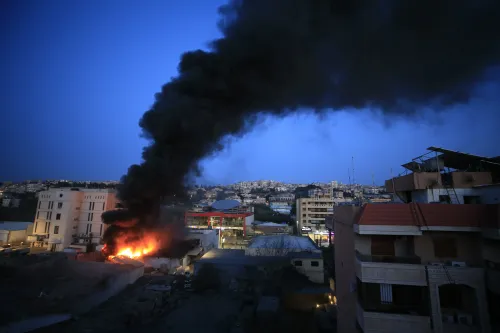
The statement follows a series of attacks inside Saudi Arabia and growing security concerns across the region. On 24 November, a drone attack hit a tower in Riyadh's King Abdullah Financial District. The attack was attributed to Yemen's Houthi movement.
According to media reports citing Saudi authorities, the strike injured at least 11 people. Those hurt reportedly included three Nepalis, two Indian nationals and four Egyptian nationals. Saudi Arabia's Civil Defence blamed the Houthi movement for the attack.
After the strike, the Civil Defence released a picture of the landmark tower. The building houses the headquarters of the Saudi Public Investment Fund, the country's sovereign wealth fund. It is one of the tallest skyscrapers in Saudi Arabia, and it appeared to have sustained damage around the middle of its facade.
It remains unclear whether the Nepali citizen's death is linked to the 24 November attack.
Second Nepali Fatality in Weeks
This is at least the second Nepali death in Saudi Arabia linked to the conflict in recent weeks. On 21 October, Nepali worker Bharat Mahato was killed after debris from an intercepted drone fell at Saudi Aramco's Shaybah oil field.
The two incidents differ in an important way. The October death occurred at a remote energy installation, which has long been a target in the conflict. The Riyadh strike, by contrast, hit a commercial hub in the capital. That suggests the threat now reaches places where migrant workers live and work every day, not just oil infrastructure.
Impact on Nepali Migrant Workers
The latest developments have renewed concerns about the safety of Nepalis living and working in Saudi Arabia. The kingdom is one of the main destinations for Nepali migrant workers.
According to the ministry, more than 1.7 million Nepalis live in West Asia, including Saudi Arabia. Most of them work as migrant labourers. Remittances from these workers are a key source of income for many households in Nepal, so any lasting deterioration in Gulf security directly affects families back home.
Indian nationals were also among those injured in Riyadh. This shows that workers from across South Asia are exposed to the same risks. Attention will now turn to whether Kathmandu issues travel or safety advisories for its citizens and whether it seeks further details from Saudi authorities on the deceased worker.
Point of View
Where South Asian workers are concentrated. Nepal's statement is notable for what it leaves out: no name, no location and no date for the death. That kind of opacity tends to frustrate families and erode trust in labour-sending governments. With 1.7 million Nepalis in West Asia, and Indians also among the injured, Kathmandu and New Delhi need coordinated evacuation and advisory protocols. Condolence statements alone will not protect these workers.
NationPress
26 Nov 2026
Frequently Asked Questions
What did Nepal confirm about the attacks in Saudi Arabia?
Nepal's Foreign Ministry confirmed on 26 November 2026 that a Nepali citizen was killed and three others were injured in recent attacks in Saudi Arabia. One of the injured has recovered, while two are still undergoing treatment.
Was the Nepali citizen killed in the Riyadh drone attack?
This is not yet clear. The ministry did not identify the deceased or say when and where the fatal incident occurred, so it is unknown whether the death is linked to the 24 November drone attack in Riyadh.
What happened in Riyadh's King Abdullah Financial District?
On 24 November, a drone attack attributed to Yemen's Houthi movement struck a tower in Riyadh's King Abdullah Financial District, injuring at least 11 people. The tower houses the headquarters of the Saudi Public Investment Fund.
Were any Indians injured in the Saudi attack?
Yes. Two Indian nationals were among those injured in the 24 November Riyadh drone attack, according to media reports citing Saudi authorities. Four Egyptian nationals and three Nepalis were also hurt.
How many Nepalis live in West Asia?
According to Nepal's Foreign Ministry, more than 1.7 million Nepalis live in West Asia, including Saudi Arabia. Most of them work as migrant labourers.