Nepal's Political Parties Unite to Boost Tourism Before Elections
Synopsis
As Nepal approaches its Parliamentary elections, major political parties are prioritizing tourism recovery, pledging reforms to attract foreign visitors and restore pre-Covid levels. This commitment aims to revitalize the nation’s economy and enhance its international appeal.
Key Takeaways
Political Commitment: Major parties are prioritizing tourism recovery.
Ambitious Goals: Plans to double tourist numbers and spending in five years.
Aviation Safety: Focus on improving safety standards and removing from the EU air safety list.
Infrastructure Improvements: Development of tourism infrastructure is a priority.
International Relations: Efforts to secure more air routes with India.
New Delhi, Feb 26 (NationPress) In the lead-up to the March 5 Parliamentary elections in Nepal, prominent political parties are voicing their worries that the nation—once a favored global tourism hotspot—has struggled to reach its pre-Covid visitor levels. As a result, they have committed to enhancing tourist arrivals to the country, according to media sources.
"Nepal has averaged just over 1 million tourists annually in the past three years, with numbers still not reaching the pre-Covid benchmarks of 2019. Industry experts point to frequent air crashes, inadequate highway infrastructure, and insufficient international marketing as significant obstacles," reported The Kathmandu Post on Thursday.
The report highlighted that four major political parties have made tourism a focal point in their election manifestos, vowing to implement extensive reforms in aviation safety, diplomatic initiatives to secure more air access routes with India, and ambitious goals to double both tourist numbers and spending within a five-year period.
A shared element among these commitments is the determination to remove Nepal from the European Commission’s air safety list and to increase international flights from the nation’s two recently inaugurated international airports.
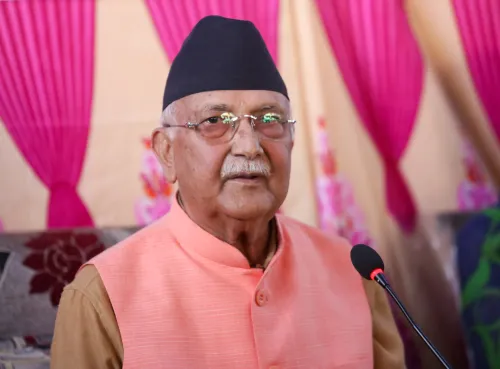
The CPN-UML, under the leadership of former Prime Minister Oli, has placed a strong emphasis on developing tourism infrastructure, promoting the market, expanding air services, bolstering internal security, and opening new destinations to achieve a doubling of tourist arrivals within five years, asserting that "tourist safety comes first."
The Nepali Communist Party, led by Oli’s predecessor Pushpa Kamal Dahal, has vowed to implement technical reforms for both Nepal Airlines and private carriers, alongside legal measures aimed at securing removal from the European Commission’s air safety list. Meanwhile, the Nepali Congress has highlighted wellness and spiritual tourism within its manifesto.
The newly-established Rastriya Swatantra Party (RSP) has promised to double both the number of tourists and their average spending in the next five years, proposing necessary technical and policy reforms.
Previous reports noted that data from the Nepal Tourism Board in January indicated that the country had achieved a 97 percent recovery rate in tourist arrivals compared to pre-Covid figures last year.
In figures, 1,158,459 visitors were recorded arriving by air between January and December 2025, compared to 1,147,548 arrivals noted in the previous year, as per the Board.
This included 292,438 Indian nationals who arrived in Nepal by air in 2025, which is an eight percent decline from the preceding year.
Notably, in 2019, before the pandemic impacted the country, Nepal welcomed a total of 1,197,191 tourists via air. Indian visitors continue to dominate international arrivals, especially during significant festivals and events, the Board stated in a separate announcement.
"India remains Nepal’s primary source market, accounting for 25–30 percent of total international arrivals. Remarkably, January 2026 saw a 30 percent increase in Indian arrivals compared to January 2025, showcasing growing interest and renewed travel confidence," it revealed.
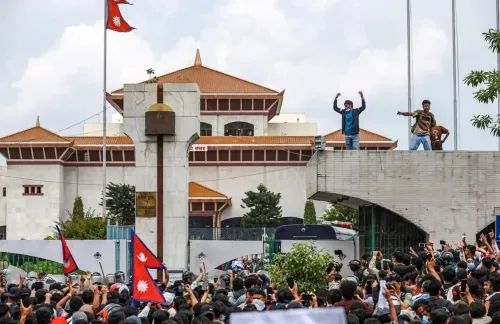
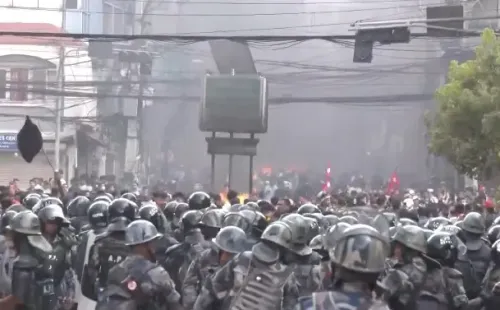
Earlier statements from Deepak Raj Joshi, CEO of the Nepal Tourism Board, in January, attributed the drop in Indian visitors to the Gen Z protests of September last year, which resulted in the ousting of the K.P. Oli-led government and led to the loss of 77 lives.
However, he indicated to the media earlier this year that overall tourist numbers were "promising in 2025" despite the political turbulence, with the country recording a 1 percent increase in global tourist arrivals by air.
Reiterating that India remains the largest source of foreign visitors to Nepal, he noted that Indian tourists constituted 35.2 percent of total arrivals in 2025, the highest globally.
Among the top five nations contributing to Nepal’s tourism after India last year were the United States with 112,316 visitors, China with 58,684, the United Kingdom with 57,545, and Bangladesh with 49,357 arrivals.
Point of View
The commitment of Nepal's political parties to enhance tourism signifies a critical opportunity for economic recovery. Prioritizing tourism infrastructure and safety aligns with the nation's long-term goals of re-establishing itself as a premier global destination, reflecting a responsible approach to governance.
NationPress
20 Sept 2026
Frequently Asked Questions
What are the main goals of Nepal's political parties regarding tourism?
The political parties aim to double tourist arrivals and spending within five years, improve aviation safety, and enhance international flight access.
How did Covid-19 affect Nepal's tourism?
Covid-19 resulted in a significant drop in tourist numbers, with arrivals failing to return to pre-pandemic levels, impacting the economy.
Who are the key political players in this tourism initiative?
The key players include CPN-UML, Nepali Communist Party, Nepali Congress, and Rastriya Swatantra Party.
What challenges does Nepal face in tourism recovery?
Key challenges include recurring plane crashes, poor highway infrastructure, and inadequate international marketing.
What was the status of tourism in Nepal as of January 2025?
As of January 2025, Nepal achieved a 97% recovery in tourist arrivals compared to pre-Covid figures.