Netanyahu vows to topple Iran's regime, eliminate Hamas and Hezbollah
Synopsis
In his most sweeping declaration of war aims yet, Netanyahu told Israel's Shin Bet on 17 September that Israel would topple Iran's government, eliminate Hamas, and keep pressing Hezbollah — calling Israel the strongest superpower in the Middle East and warning Iran that any attack 'will suffer a blow it cannot even imagine.'
Key Takeaways
Benjamin Netanyahu vowed on 17 September 2026 to topple Iran's government , eliminate Hamas , and continue operations against Hezbollah .
He warned: 'No one is immune' — referring to those involved in the Hamas-led October 7, 2023 attack.
Netanyahu declared Israel the 'strongest superpower in the Middle East' and told enemies: 'Do not try us.' He acknowledged Iran is currently refraining from attacking Israel, but warned it would face an unimaginable blow if it did.
The remarks follow a 6 September address at a Rosh Hashanah toast where Netanyahu said the end of Iran's regime was near.
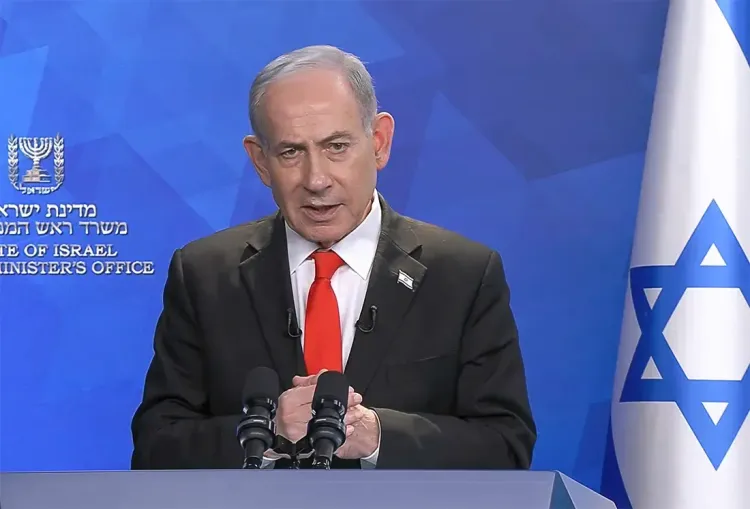
Israeli Prime Minister Benjamin Netanyahu on Thursday, 17 September 2026, declared that Israel would bring down Iran's government, eliminate Hamas, and press on with its campaign against Hezbollah — the most sweeping statement of war aims he has made in a single address since the conflict began nearly three years ago.
What Netanyahu Said
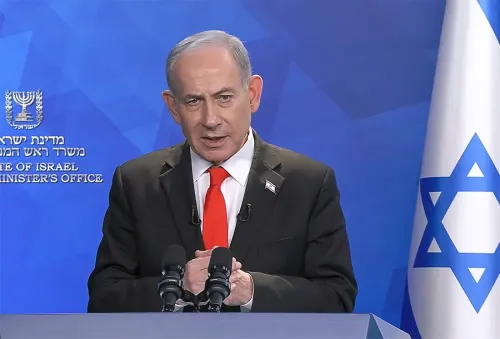
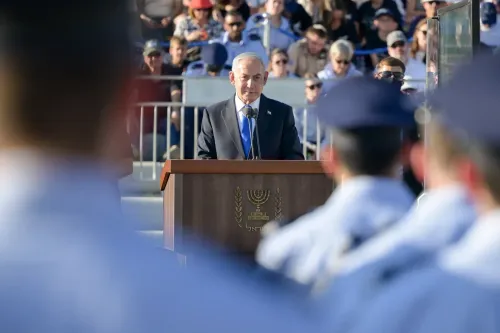
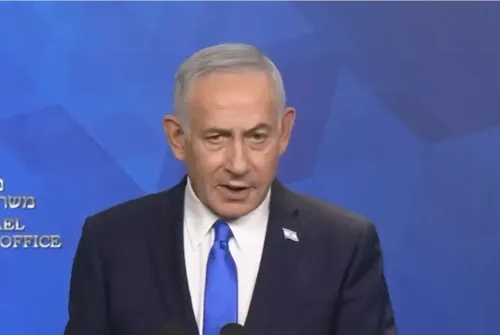
Speaking at a ceremony honouring members of Israel's Shin Bet domestic security agency, Netanyahu said: 'We will eliminate Hamas, and first and foremost we will defeat the regime in Iran. We will topple it. It will fall.' He also warned that Israel would continue pursuing every individual involved in the Hamas-led October 7, 2023 attack on Israel, adding bluntly: 'No one is immune.'
The remarks follow similar comments made on 6 September, when Netanyahu — at a Rosh Hashanah toast during a government meeting — declared that 'the end of the regime in Iran is near' and that it was 'fighting for its life.'
The Rosh Hashanah Address: Key Claims
At the government meeting earlier this month, Netanyahu described a series of what he called 'tremendous accomplishments' made possible by joint decisions around the cabinet table, the courage of Israeli fighters, and what he characterised as the resilience of the Israeli people. He said Israel and the United States had together neutralised an existential threat, including 'pushing away atomic bombs and ballistic missiles' and striking 'the Iranian axis with immense power.'
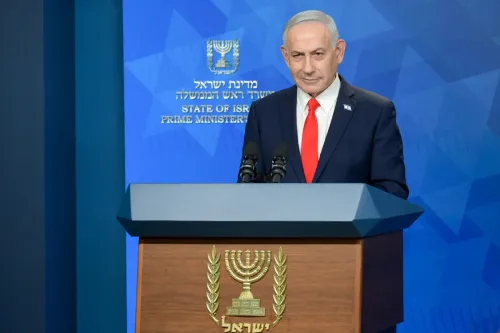
He went on to warn Iran directly: 'Of course, it could err and make the mistake of attacking us anyway. It will suffer a blow it cannot even imagine,' according to the Israeli Prime Minister's Office.
Israel as the 'Strongest Superpower in the Middle East'
In one of his most assertive statements of the conflict, Netanyahu positioned Israel at the apex of regional power. 'I say to our enemies: Do not try us. This people knows how to unite in moments of testing, and right now it is the strongest superpower in the Middle East, and some say even beyond,' he said. The framing marks a notable rhetorical escalation, presenting Israel not merely as a state under siege but as a dominant regional force.
Context and Broader Significance
The declarations come as Israel is approaching the third year of continuous military operations following the October 2023 Hamas attack — one of the deadliest in Israel's history. Netanyahu's simultaneous reference to Iran, Hamas, and Hezbollah underscores Israel's framing of these as a single, interconnected strategic threat — what he has called the 'Iranian axis.' Notably, Netanyahu acknowledged that Iran was currently refraining from attacking Israel, while warning it understands the consequences of doing otherwise. Critics have argued that such sweeping vows raise the risk of further regional escalation, though the Israeli government has consistently maintained that pre-emption and deterrence are one and the same in this context.
With Rosh Hashanah as a backdrop and no ceasefire in sight, Netanyahu's statements signal that Israel has no intention of scaling back its multi-front campaign in the near term.
Point of View
Eliminate Hamas, and pursue every October 7 participant represent the most expansive statement of Israeli war aims since the conflict began — and the ambiguity is deliberate. Declaring Iran's regime doomed costs nothing diplomatically in the short term while reinforcing domestic resolve ahead of Rosh Hashanah. But the claim that Israel has already 'pushed away atomic bombs' is unverified and potentially inflates public expectations of what has actually been achieved. The broader risk is that rhetorical maximalism — 'strongest superpower in the Middle East, and some say beyond' — narrows the space for any eventual negotiated settlement, making off-ramps harder to construct when they are needed most.
NationPress
17 Sept 2026
Frequently Asked Questions
What did Netanyahu say about Iran on 17 September 2026?
Netanyahu declared at a Shin Bet ceremony that Israel would defeat and topple Iran's government, saying: 'We will topple it. It will fall.' He also warned that if Iran made the mistake of attacking Israel, it would suffer a blow it could not imagine.
What are Israel's stated war objectives under Netanyahu?
According to Netanyahu's 17 September address, Israel's objectives include eliminating Hamas, toppling Iran's government, continuing operations against Hezbollah, and pursuing every individual involved in the October 7, 2023 Hamas-led attack on Israel.
What did Netanyahu say at the Rosh Hashanah government meeting on 6 September?
At the Rosh Hashanah toast on 6 September, Netanyahu said the end of Iran's regime was near and that it was fighting for its life. He credited joint cabinet decisions and Israeli-US cooperation for what he called tremendous accomplishments, including neutralising ballistic missile and nuclear threats from Iran.
How has Netanyahu described Israel's regional standing?
Netanyahu called Israel the 'strongest superpower in the Middle East' — and suggested some consider it even beyond that — while warning adversaries not to test the country's resolve or military capability.
Is Iran currently attacking Israel, according to Netanyahu?
Netanyahu acknowledged on 17 September that Iran was refraining from attacking Israel, adding: 'It knows why.' However, he cautioned that Iran could still 'err' and launch an attack, and that if it did, it would face a devastating response.