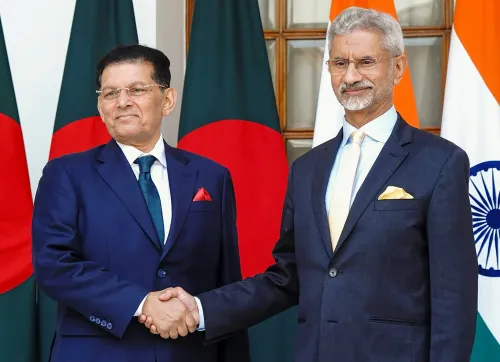
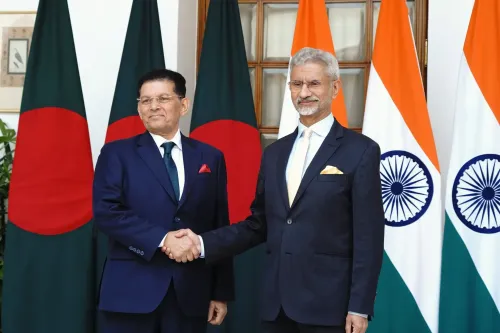
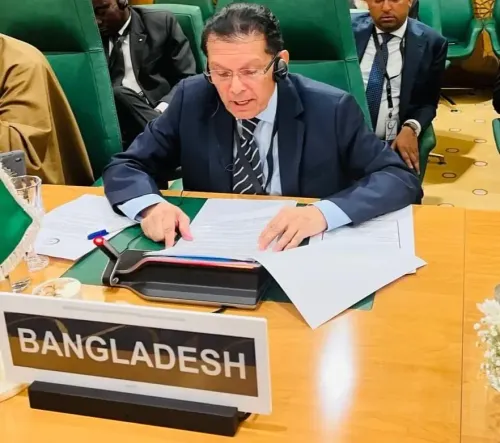
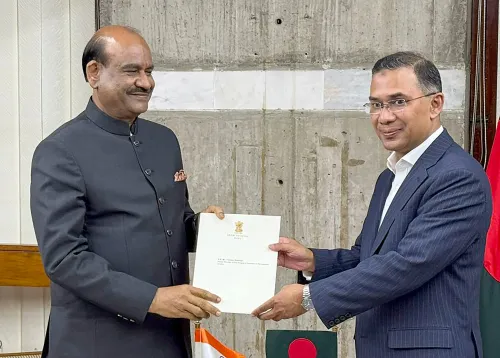
Will the New BNP Government Strengthen Ties with India?

Synopsis
In an insightful interview, Zillur Rahman discusses the enduring ties between India and Bangladesh, emphasizing the BNP government's approach to maintaining a constructive relationship despite evolving policy priorities. Discover how strategic autonomy and diplomatic balance will shape the future of these nations.
Key Takeaways
Enduring Connections: India and Bangladesh have deep historical ties.
BNP's Role: The new BNP government may shift policy priorities but aims for constructive relations.
Pragmatic Approach: Bangladesh seeks a balance between sovereignty and cooperation.
China's Influence: Careful management of Chinese engagement is essential.
Future Dynamics: Strategic autonomy will guide Bangladesh's foreign policy.
Colombo, Feb 22 (NationPress) Zillur Rahman, a prominent Bangladeshi journalist and President of the Centre for Governance Studies in Dhaka, stated in a unique interview with a reputable think-tank that India and Bangladesh possess enduring historical, economic, and strategic connections.
He pointed out that while policy focuses might change under the Bangladesh Nationalist Party (BNP)-led administration, the long-term bond between India and Bangladesh is anticipated to stay positive.
During his discussion with the Sri Lanka-based think-tank Trinco Centre for Strategic Studies (TCSS), Zillur Rahman expressed, "India and Bangladesh are intertwined through profound historical, economic, and strategic relationships. Although policy priorities may alter under the BNP, the enduring association is expected to continue constructively. Bangladesh Prime Minister Tarique Rahman will need to balance domestic nationalist expectations with the tangible advantages of robust regional collaboration."
"Some challenges might emerge concerning border management, trade, or infrastructure initiatives, yet both nations maintain strong institutional and interpersonal ties that facilitate dialogue. I anticipate Dhaka will pursue a practical approach: upholding collaboration in trade, energy, and connectivity while asserting Bangladesh's sovereignty and domestic priorities," he added.
In response to inquiries about Islamabad's possibly renewed engagement, especially with Jamaat-e-Islami, whose ideology is more aligned with Pakistan, the Bangladeshi journalist underlined that while "historical and ideological connections might open avenues for engagement between Pakistan and specific political actors in Bangladesh", the nation’s foreign policy is primarily dictated by strategic and economic factors.
Regarding whether such engagement could divert Dhaka from its long-standing partnership with India, he stated, "Pakistan's involvement is improbable to fundamentally alter Dhaka's enduring collaboration with India, given the substantial interdependence in trade, energy, and regional security."
"What is more likely is targeted engagement on particular matters, without changing Bangladesh's overarching regional alignment. Dhaka's leadership is expected to maintain pragmatic diplomacy: balancing relations with various partners while safeguarding national interests and sovereignty," Rahman added.
When discussing the rising concerns regarding China's increasing influence in South Asia and the geopolitical hurdles that Bangladesh faces, he noted that the nation is progressively navigating a multipolar world order, where maintaining strategic autonomy is essential.
"China's economic and infrastructure involvement presents opportunities, especially in connectivity and investment, but it necessitates careful management to prevent over-reliance. Concurrently, ties with the US, Europe, and regional neighbors remain significant. The new government will have to balance these partnerships judiciously, preserving sovereignty while capitalizing on foreign investment and diplomatic backing," Rahman concluded during his discussion with TCSS.
Point of View
It is crucial to recognize the importance of maintaining a balanced perspective on international relations. The enduring connection between India and Bangladesh, facilitated by the new BNP government, requires careful navigation of domestic and regional challenges, ensuring national interests remain at the forefront while fostering constructive partnerships.
NationPress
17 Sept 2026
Frequently Asked Questions
What is the significance of the BNP government in Bangladesh?
The BNP government is expected to influence Bangladesh's foreign policy, particularly in its relationship with India, emphasizing the need for strategic balance and cooperation.
How might Bangladesh manage its relationship with China?
Bangladesh aims to leverage China's economic opportunities while maintaining strategic autonomy to prevent over-dependence, balancing ties with other nations.
Will Pakistan's engagement affect Bangladesh's ties with India?
While Pakistan's engagement might open dialogues, it is unlikely to fundamentally disrupt Bangladesh's longstanding cooperation with India due to deep interdependence.