Nielsen names India its global innovation hub; 75% of R&D now from Bengaluru

Synopsis
Nielsen has quietly turned its India operations into something far more consequential than a cost centre — with 75% of global innovation now flowing out of Bengaluru, a 5,000-strong workforce, and AI slashing manual ad-tracking labour from 10–20% down to just 2–3%, the company's India bet is redefining what a 'global innovation hub' actually looks like in 2026.
Key Takeaways
Nielsen has designated India as its primary global innovation engine, with Bengaluru as its largest hub.
More than 5,000 employees — roughly half of Nielsen's worldwide workforce — are based in India.
Approximately 75% of Nielsen's global innovation now originates from India.
AI and large language models have raised machine contribution in advertising intelligence from 80–90% to 97–98% , reducing the need for over 1,000 manual processors .
The addition of DoubleVerify is expected to further expand Nielsen's India footprint.
India ranks among Nielsen's top ten growth-potential markets globally, driven by rapid market growth rather than current revenue size.
US-based media analytics firm Nielsen has positioned India as its primary global innovation engine, with more than 5,000 employees in the country — approximately half its worldwide workforce — and Bengaluru serving as its largest hub, according to a report published on 17 October 2026. Roughly 75 per cent of Nielsen's global innovation now originates from India, a significant concentration that underscores the country's growing role beyond conventional back-office support.
India as a Global Innovation Centre, Not a GCC
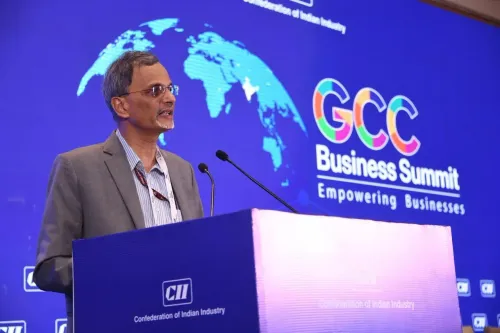
Nielsen's Chief Technology Officer Anil Goel has drawn a deliberate distinction between the company's India operations and the typical global capability centre (GCC) model. According to Goel, unlike traditional GCCs where India-based teams work under overseas counterparts, Nielsen's local teams lead products, make decisions, and work directly with global clients. The intent, he said, is to make India the company's 'global innovation centre' — a fundamentally different mandate from cost-arbitrage outsourcing.
AI Reshaping Advertising Intelligence
Artificial intelligence has made a substantial impact on Nielsen's advertising intelligence business, which tracks ad expenditure across television, radio, print, magazines, and outdoor media in 30–40 major markets, including India and the United States. Goel noted that the company previously relied on a combination of automation and manual processing, with more than 1,000 employees filling gaps that technology could not resolve. The deployment of AI and large language models has increased machine contribution in those areas from 80–90 per cent to 97–98 per cent, dramatically reducing manual intervention and accelerating throughput.
DoubleVerify Addition to Expand India Footprint
Nielsen expects its India presence to expand further following the addition of DoubleVerify, a firm focused on advertising verification and brand safety. Goel also highlighted India's technology-heavy workforce as a structural advantage that is broadening the scope of innovation based out of the country. He cited the rapid growth rate of the Indian market as a key reason it ranks among the company's top ten growth-potential markets globally, even though other markets currently outperform India in revenue terms.
New Measurement Challenges in an AI-First Media World
The rise of AI-powered consumer tools — including ChatGPT, Gemini, and Claude, as well as autonomous AI agents — is reportedly complicating traditional methods of measuring media consumption. As audiences fragment across platforms and increasingly rely on AI to surface content, firms like Nielsen face a structural challenge: the old metrics of reach and frequency were designed for a broadcast-era media stack, not an AI-intermediated one. This comes amid a broader industry conversation about whether existing audience measurement frameworks can keep pace with the speed of platform evolution.
Point of View
At least in pockets, by genuine product ownership. When a US firm routes 75% of its global R&D through Bengaluru and has its local teams closing deals directly with global clients, the label 'capability centre' no longer applies. The harder question is whether India's talent ecosystem can sustain this at scale as AI compresses the manual-work layer that once employed thousands. The DoubleVerify integration will be the first real test of whether Nielsen's India-led innovation model can absorb complexity or whether it begins to buckle under its own ambition.
NationPress
17 Oct 2026
Frequently Asked Questions
Why has Nielsen designated India as its global innovation hub?
Nielsen has positioned India as its primary global innovation engine because approximately 75% of its global innovation now originates from the country, supported by a workforce of over 5,000 employees — roughly half its worldwide headcount. Chief Technology Officer Anil Goel cited India's technology-heavy talent base and rapid market growth as key drivers.
How is Nielsen using AI in its operations in India?
Nielsen has deployed artificial intelligence and large language models to automate its advertising intelligence business, which tracks ad spend across TV, radio, print, magazines, and outdoor media in 30–40 markets. AI has increased machine contribution in those workflows from 80–90% to 97–98%, significantly reducing the need for manual processing.
What is the difference between Nielsen's India model and a traditional GCC?
Unlike traditional global capability centres where India-based teams operate under overseas counterparts, Nielsen's India teams lead product development, make autonomous decisions, and work directly with global clients, according to Goel. The company describes this as a 'global innovation centre' model rather than a conventional GCC.
How will the addition of DoubleVerify affect Nielsen's India presence?
Nielsen expects the integration of DoubleVerify — a firm specialising in advertising verification and brand safety — to further expand its India footprint. Goel indicated the addition would broaden the scope of work managed from India and deepen its innovation mandate.
Is India among Nielsen's top revenue-generating markets?
India does not currently rank at the top in revenue terms — other markets outperform it on that metric. However, Nielsen considers India among its top ten growth-potential markets globally, driven by the rapid pace of market expansion rather than current revenue size.