Nine drugmakers pledge $19.6 billion for US manufacturing under Trump push
Synopsis
Nine pharmaceutical companies have pledged $19.6 billion to build or expand US manufacturing, with the Trump administration tying the deals to medicine price cuts and national security. The event produced three different cumulative industry totals — $638 billion, $640 billion, and $668 billion — from three different officials, a discrepancy that went unexplained.
Key Takeaways
Nine pharmaceutical companies committed a combined $19.6 billion for US manufacturing and operations, announced at the White House on 1 September .
BeiOne Medicines pledged nearly $11 billion in US research, development, and manufacturing through 2029 .
UCB announced a $2 billion manufacturing facility in Georgia , its largest-ever such investment.
CSL committed $1.5 billion in Illinois to onshore plasma-derived therapy production.
Three administration officials cited three different cumulative industry totals: $638 billion (Lutnick), $640 billion (Trump), and $668 billion (Kennedy) — with no explanation offered for the gaps.
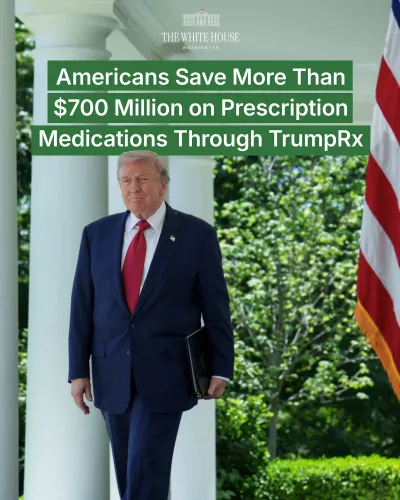
The pledges were paired with agreements for companies to reduce medicine prices for American patients.
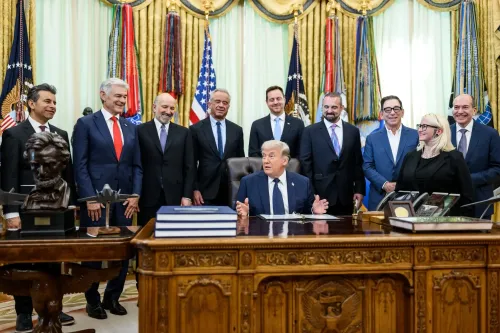
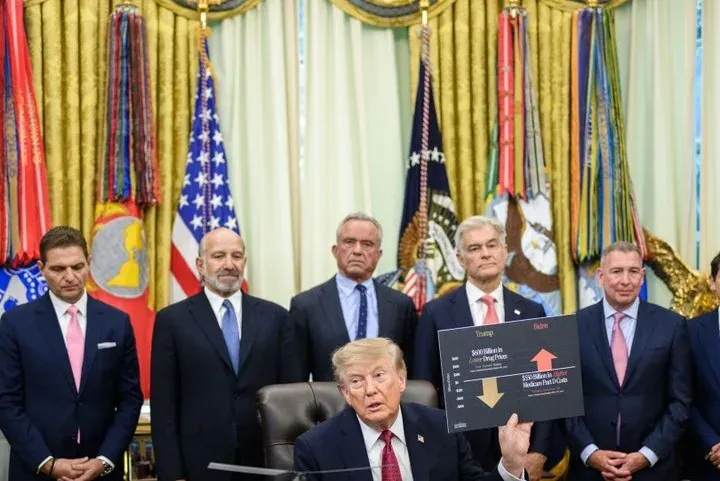
Nine pharmaceutical companies have committed a combined $19.6 billion for manufacturing and other operations in the United States, as President Donald Trump intensifies pressure on the industry to reshore medicine production. The announcements, made at the White House on 1 September, were accompanied by agreements to reduce medicine prices for American patients.
What Was Announced
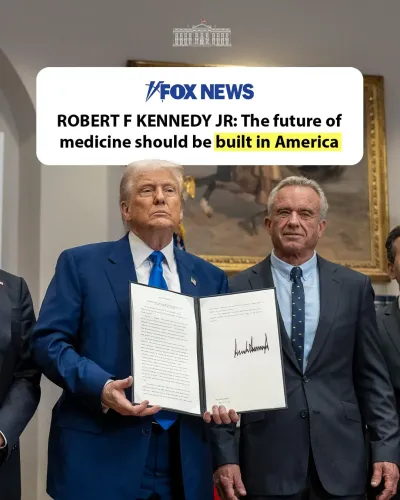
Administration officials framed the pledges as measures that would create jobs, protect pharmaceutical supply chains, and strengthen national security. Health and Human Services Secretary Robert F. Kennedy Jr. said Trump had set three goals for the negotiations: securing the world's lowest medicine prices for Americans, preserving biomedical innovation, and returning manufacturing to US soil.
'These companies today have agreed to $19.6 billion of construction to reshore their production in this country,' Kennedy said at the White House.
Commerce Secretary Howard Lutnick underscored the national security dimension, saying domestic manufacturing would reduce US dependence on overseas pharmaceutical supply chains. 'We need our drugs made in America, and then that brings jobs and investment in America,' Lutnick said.
Individual Company Commitments
BeiOne Medicines chief executive John Oyler announced one of the largest individual pledges at the event, committing nearly $11 billion in US research, development, and manufacturing through 2029. 'This is helping to strengthen America's leadership in biopharmaceutical innovation,' Oyler said.
CSL, which employs nearly 19,000 people across 44 states, announced a $1.5 billion investment in Illinois to onshore end-to-end production of plasma-derived therapies, including immunoglobulins. UCB chief executive Dr Jean-Christophe Tellier described his company's pledge as its largest-ever manufacturing investment — a $2 billion facility in Georgia.
Kyowa Kirin's Steve Schaefer said the company would dramatically shift its domestic production mix: from 5 per cent of its US-sold drugs currently manufactured in America, to over 95 per cent within two years.
Conflicting Figures and Context
The event produced notably inconsistent headline numbers. Lutnick placed the cumulative industry-wide pharmaceutical investment secured by the administration at $638 billion. Trump separately cited $640 billion, while Kennedy referenced $668 billion in reshoring agreements. Officials did not explain the discrepancies at the event.
Trump directly linked the commitments to his tariff and trade policies. 'These deals, one of the reasons is tariffs, I hate to say,' he said. The pharmaceutical industry relies on global networks for research, active ingredients, manufacturing, and distribution, and recent supply chain disruptions have sharpened US focus on dependence on foreign production.
What Comes Next
The pledges add to a growing list of reshoring commitments the Trump administration has solicited from major industries. Whether the announced figures translate into verified jobs and operational facilities will depend on execution timelines, regulatory approvals, and sustained policy incentives. Analysts and industry observers are expected to scrutinise the terms of the price-reduction agreements alongside the investment commitments in the coming weeks.
Point of View
But the event raised more questions than it answered. Three senior officials citing three different cumulative totals — $638 billion, $640 billion, $668 billion — within the same press event is not a rounding difference; it signals that the administration's accounting of these pledges lacks a common verified baseline. Pledges and completed investments are categorically different things, and the pharmaceutical industry has a long history of announcing capital commitments that are later scaled back, restructured, or quietly abandoned when policy winds shift. The price-reduction agreements attached to these deals deserve equal scrutiny: their scope, enforceability, and the drugs they cover have not been publicly detailed. The national security framing is legitimate — supply chain concentration in Asia is a documented vulnerability — but the credibility of this initiative will ultimately rest on whether factories get built and whether prices actually fall.
NationPress
16 Oct 2026
Frequently Asked Questions
Which nine pharmaceutical companies pledged $19.6 billion for US manufacturing?
The companies named at the White House event include BeiOne Medicines, CSL, UCB, and Kyowa Kirin, among others. Together, nine firms committed a combined $19.6 billion for manufacturing and related operations in the United States, alongside agreements to reduce medicine prices for American patients.
Why is the Trump administration pushing pharmaceutical companies to manufacture in the US?
The administration argues that domestic manufacturing reduces US dependence on overseas pharmaceutical supply chains, creates jobs, and strengthens national security. Commerce Secretary Howard Lutnick and Health and Human Services Secretary Robert F. Kennedy Jr. both cited these goals at the 1 September announcement.
What is BeiOne Medicines investing in the United States?
BeiOne Medicines chief executive John Oyler announced a commitment of nearly $11 billion in US research, development, and manufacturing through 2029, making it one of the largest individual pledges at the event.
Why did officials give different totals for overall pharmaceutical investment?
Commerce Secretary Howard Lutnick cited $638 billion, President Trump said $640 billion, and HHS Secretary Robert F. Kennedy Jr. referenced $668 billion in cumulative industry reshoring agreements. Officials did not explain the discrepancies during the event.
How do tariffs factor into these pharmaceutical investment pledges?
President Trump directly credited his tariff and trade policies with encouraging companies to relocate operations to the US. 'These deals, one of the reasons is tariffs, I hate to say,' Trump said at the White House event on 1 September.