North Korea slams NATO Summit as proof of 'war and confrontation' agenda
Synopsis
North Korea's foreign ministry has responded to the NATO Summit in Ankara with its sharpest multilateral rebuke in recent months — dismissing denuclearisation demands as obsolete and signalling an accelerated weapons build-up. The statement frames allied pressure not as a deterrent, but as a justification for expanding Pyongyang's own arsenal.
Key Takeaways
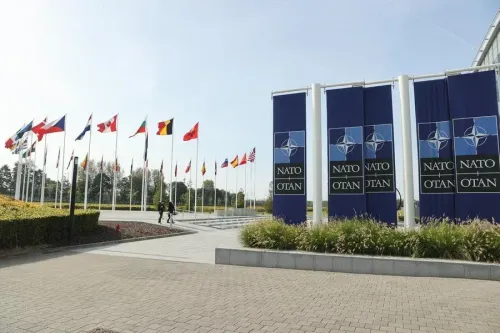
North Korea's foreign ministry issued a statement on 11 July condemning the NATO Summit held in Ankara, Türkiye .
Pyongyang called NATO a 'war and confrontation body' pursuing 'exclusive geopolitical interests.' North Korea rejected the joint US, Japan, and South Korea call for denuclearisation as having 'completely lost its timeliness and practical feasibility.' The statement warned of an 'accelerated' build-up of military deterrence in response to allied pressure.
North Korea accused NATO of destabilising the Asia-Pacific by 'shifting its responsibility onto other countries.'
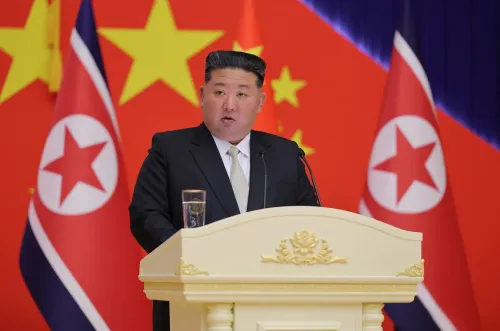
North Korea's foreign ministry on Saturday, 11 July sharply condemned the United States and its allies for what it called an 'intention for inter-camp confrontation' displayed at the North Atlantic Treaty Organisation (NATO) Summit held in Ankara, Türkiye. A foreign ministry spokesperson issued a press statement carried by the official Korean Central News Agency (KCNA), accusing the trans-Atlantic alliance of destabilising both Europe and the Asia-Pacific region.
What North Korea Said
The spokesperson's statement described NATO as 'a war and confrontation body that goes against international peace and security in all parts of the world while pursuing exclusive geopolitical interests.' Pyongyang argued that the alliance's continued existence beyond the Cold War era lacks legitimate justification and that its 'reckless eastward advance policy' is the primary driver of European insecurity.
The statement further accused NATO of 'shifting its responsibility onto other countries' in the Asia-Pacific, a framing that positions the alliance as an external aggressor rather than a defensive body — a line Pyongyang has consistently maintained in its official communications.
Rejection of Denuclearisation Calls
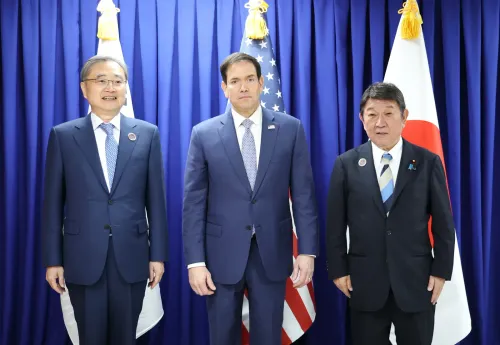
The statement took direct aim at the joint call by the United States, Japan, and South Korea for North Korea's denuclearisation, dismissing it as having 'completely lost its timeliness and practical feasibility.' Pyongyang insisted the demand 'can never affect the position of the DPRK (Democratic People's Republic of Korea)', pointing to decades of failed pressure as its own vindication.
This is consistent with North Korea's long-standing posture of treating its nuclear arsenal as non-negotiable, a position that has hardened considerably since the collapse of the Hanoi Summit between Kim Jong-un and then-US President Donald Trump in 2019.
Deterrence Build-Up Signalled
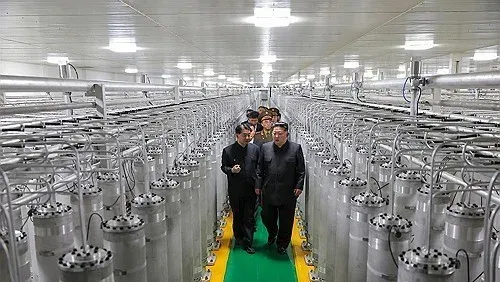
In what analysts may read as a veiled warning, the statement declared that North Korea will 'build up at an accelerated pace the strength capable of deterring the enemy countries' attempts at collective confrontation and their military threats.' The language suggests Pyongyang views the Ankara summit's outcomes as a fresh justification for expanding its own military capabilities.
The statement described confrontation by allied forces as providing 'a realistic justification to the renewal and expansion of the physical deterrent' — signalling that any multilateral pressure is likely to accelerate, not slow, North Korea's weapons development.
Broader Context
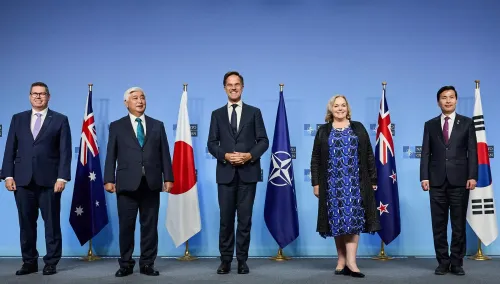
The NATO summit in Ankara was notable for deepening cooperation between the alliance and its Indo-Pacific partners, including Japan, South Korea, and Australia. This expanded engagement has drawn repeated criticism from both North Korea and China, who view it as an attempt to transplant a Cold War bloc structure into the Asia-Pacific. This comes amid an already elevated security environment on the Korean Peninsula, with inter-Korean communication channels remaining largely frozen. Pyongyang's response to the summit is unlikely to shift the diplomatic calculus in the near term, but the explicit reference to accelerated deterrence build-up warrants close monitoring.
Point of View
Not impulsive — it arrives precisely after a NATO summit that formalised deeper Indo-Pacific partnerships, giving North Korea a multilateral target rather than just a bilateral US one. The rejection of denuclearisation as 'no longer feasible' is the most consequential line: it closes off any residual diplomatic ambiguity about the DPRK's nuclear status. What mainstream coverage may underplay is the internal audience dimension — framing NATO expansion as an external threat is also a domestic legitimacy tool. The 'accelerated deterrence' language is the detail that security analysts should flag; it is not rhetorical filler, but a pattern that has preceded weapons tests in the past.
NationPress
10 Oct 2026
Frequently Asked Questions
Why did North Korea condemn the NATO Summit in Ankara?
North Korea condemned the NATO Summit held in Ankara, Türkiye, accusing the alliance and the United States of displaying an 'intention for inter-camp confrontation' that it says destabilises both Europe and the Asia-Pacific. Pyongyang's foreign ministry called NATO a 'war and confrontation body' that has outlived its Cold War mandate.
What did North Korea say about denuclearisation demands?
North Korea dismissed the joint call by the United States, Japan, and South Korea for its denuclearisation, saying the demand has 'completely lost its timeliness and practical feasibility.' The DPRK stated the demand 'can never affect' its position, pointing to decades of failed pressure as evidence.
What military signal did North Korea send in its statement?
North Korea said it would 'build up at an accelerated pace' its military deterrence capabilities in response to what it described as collective confrontation by enemy countries. The statement framed allied pressure as a 'realistic justification' for expanding its own arsenal.
How does this statement fit North Korea's broader posture?
North Korea has consistently rejected denuclearisation since the collapse of the 2019 Hanoi Summit between Kim Jong-un and Donald Trump. The Ankara statement continues that pattern while adding a new multilateral dimension, targeting NATO's Indo-Pacific partnerships specifically.
What did North Korea say about NATO's role in the Asia-Pacific?
North Korea accused NATO of 'creating instability in the Asia-Pacific region by shifting its responsibility onto other countries.' It argued the alliance is using the region to justify its continued existence beyond the Cold War era.