North Korea rejects UN chief's inter-Korean dialogue call after DMZ mine blast
Synopsis
North Korea's Kim Yo-jong has bluntly dismissed the UN Secretary-General's call for inter-Korean dialogue, accusing Guterres of bias and 'double-dealing' — a sharp escalation that slams the door on UN-facilitated de-escalation following the September DMZ mine blast that wounded three South Korean soldiers. With no communication channels open and both sides trading accusations at the UN Security Council, the Korean peninsula's diplomatic freeze is deepening.
Key Takeaways
Kim Yo-jong on 10 November 2026 rejected UN Secretary-General António Guterres' call to resume inter-Korean dialogue via a KCNA statement.
The backdrop is a 21 September mine explosion in the DMZ that wounded three South Korean soldiers , two seriously.
A joint South Korea–UN Command probe concluded North Korea deliberately planted antipersonnel mines south of the MDL ; Pyongyang denies this.
South Korea raised the incident with the UN Security Council on 22 October , demanding an apology and mine removal; North Korea responded with a counter-letter calling the blast 'fabricated.' Kim Yo-jong warned that Guterres would bear blame for any future incident if South Korean 'provocations' continue.
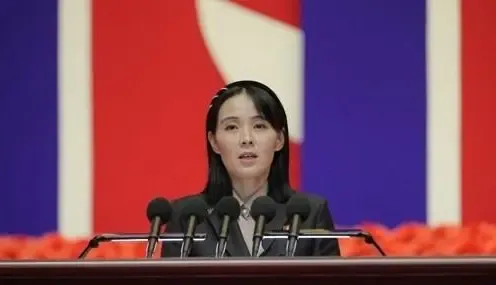
Kim Yo-jong, sister of North Korean leader Kim Jong-un, on Tuesday, 10 November 2026, rejected UN Secretary-General António Guterres' recent call to resume inter-Korean dialogue, accusing him of being 'prejudiced and irresponsible.' The rebuke, carried by the state-run Korean Central News Agency (KCNA), comes weeks after a September 21 mine explosion inside the Demilitarised Zone (DMZ) wounded three South Korean soldiers, two of them seriously.
Background: The DMZ Mine Blast
The explosion occurred on 21 September inside the DMZ near the Military Demarcation Line (MDL). A joint investigation by South Korea's military and the UN Command, concluded in early October, determined the blast was caused by antipersonnel mines deliberately planted by North Korea south of the MDL. Pyongyang has denied responsibility, dismissing Seoul's findings as 'fabricated' and describing them as an attempt to obstruct the North's border fortification work.
Guterres' Call and North Korea's Response
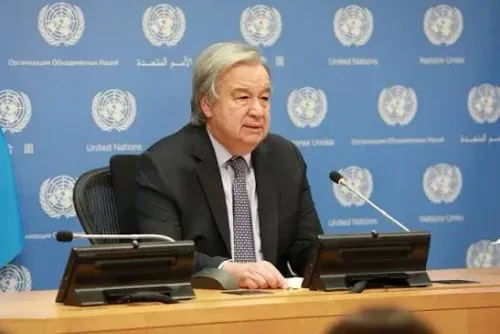
Last week, the UN chief called for restoring communication channels between the two Koreas, citing concerns over potential escalation. Kim Yo-jong responded sharply, accusing Guterres of 'double-dealing' — condemning North Korea's exercise of what she called its sovereign rights as a 'provocation' and 'threat,' while 'persistently keeping mum about the heinous military hysteria of the US and its allies,' she said.
'I express my regret over the fact that the top official of the UN, which regards impartiality and objectivity as its lifeline, took such a prejudiced and irresponsible attitude as echoing the ROK's unilateral and provocative sophism,' Kim said, using the abbreviation ROK — the Republic of Korea, South Korea's official name.
Seoul Raises the Issue at the UN Security Council
In a letter dated 22 October, South Korea formally raised the mine blast with the UN Security Council, calling on Pyongyang to apologise, remove the mines, and take steps to prevent a recurrence. North Korea responded with its own letter to the Council, accusing Seoul of fabricating the incident entirely.
North Korea's Warning and What Comes Next
Kim Yo-jong reiterated that the North's border fortification work 'never violates the UN Charter and the international laws as it is the most righteous, reasonable and regular exercise of its right to self-defence.' She concluded with a stark warning: 'If the reckless military provocations of the ROK gangsters lead to an undesirable incident in the southern border area, UN Secretary-General Guterres will never be free from the blame for it.'
This comes amid a broader pattern of inter-Korean tensions that have escalated sharply since Pyongyang formally declared the two Koreas to be 'hostile states' in late 2023, abandoning decades of reunification rhetoric. The rejection of the UN chief's mediation effort further narrows the already thin diplomatic space on the peninsula, with no active communication channel currently open between Seoul and Pyongyang.
Point of View
Including the UN's. By targeting Guterres personally — accusing the Secretary-General of partiality — North Korea is effectively delegitimising the UN as a neutral mediator on the peninsula, a posture it has steadily hardened since declaring the two Koreas hostile states. What mainstream coverage underweights is the structural significance: with no hotlines, no back-channel and now no multilateral entry point, the risk of a miscalculation in the DMZ is higher than at any point in recent years. The mine blast was a low-casualty incident; the next one may not be.
NationPress
10 Nov 2026
Frequently Asked Questions
Why did North Korea reject the UN chief's call for inter-Korean dialogue?
North Korea rejected UN Secretary-General António Guterres' call because, according to Kim Yo-jong's statement, he echoed what she described as South Korea's 'unilateral and provocative sophism' and condemned North Korea's border fortification as a provocation while staying silent on US-allied military activities. She accused him of being 'prejudiced and irresponsible.'
What was the September DMZ mine blast?
On 21 September 2026, an explosion occurred inside the Demilitarised Zone near the Military Demarcation Line, wounding three South Korean soldiers — two of them seriously. A joint investigation by South Korea's military and the UN Command concluded the blast was caused by antipersonnel mines deliberately planted by North Korea south of the MDL.
How has South Korea responded to the mine incident?
South Korea formally raised the matter with the UN Security Council in a letter dated 22 October, calling on Pyongyang to apologise, remove the mines, and prevent a recurrence. North Korea countered with its own Security Council letter, dismissing the entire incident as fabricated.
What does Kim Yo-jong's warning to the UN chief mean?
Kim Yo-jong said that if South Korean 'provocations' lead to an incident in the border area, Guterres 'will never be free from the blame for it' — a direct warning that North Korea holds the UN Secretary-General partially responsible for any future escalation on the peninsula.
Are there any active communication channels between North and South Korea?
No active communication channels between Seoul and Pyongyang are currently open. North Korea cut inter-Korean hotlines in 2020 and has not restored them, and its formal declaration of the two Koreas as 'hostile states' in late 2023 further reduced the diplomatic space for dialogue.