North Korea tests cruise missile dispersal warhead after cluster bomb trial
Synopsis
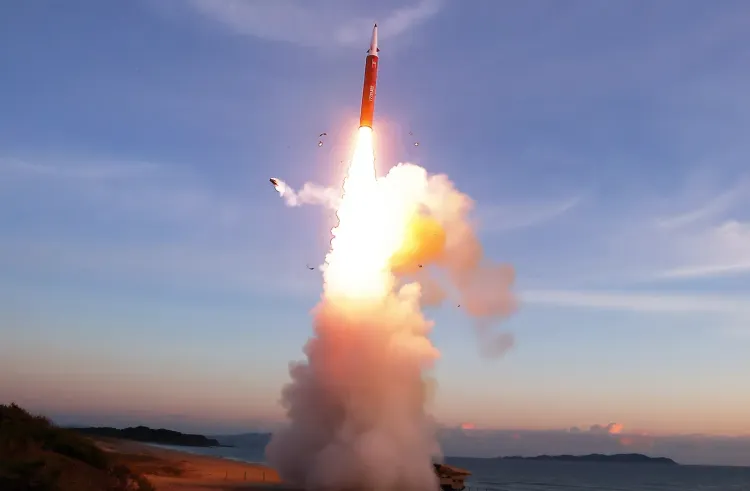
North Korea has tested a cruise missile-mounted dispersal warhead reportedly capable of incinerating 5 to 6 hectares, days after a ballistic missile cluster bomb trial. Defence analysts say the vertical strike capability is designed to penetrate South Korea's hardened underground military facilities — a strategic escalation that goes well beyond routine provocation.
Key Takeaways
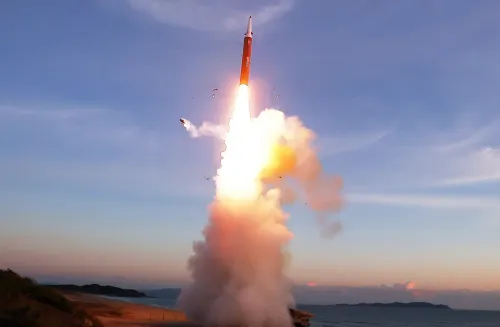
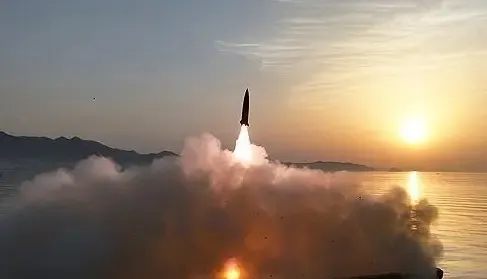
North Korea tested a 'dispersal warhead' for a cruise missile on Monday, 3 November 2026 , according to state media.
The warhead is reportedly capable of 'turning into ashes' a target area of 5 to 6 hectares at maximum power.
The tests also validated a vertical strike capability, aimed at penetrating underground facilities and tunnel entryways , analysts say.
North Korea tested a cluster bomb for ballistic missiles just days earlier on Saturday , and has pledged to field various cluster warhead types by year-end .
South Korea's JCS spokesperson Capt.
Jang Do-young said Seoul's capabilities already 'outplay' North Korea's asserted technology by 20 years .
North Korea has test-fired a 'dispersal warhead' designed for a strategic cruise missile, state media reported on Tuesday, 3 November 2026, days after Pyongyang conducted a separate test of a cluster bomb intended for ballistic missiles. The tests signal a broadening of the country's unconventional strike capabilities ahead of a self-imposed year-end deadline.
What Was Tested
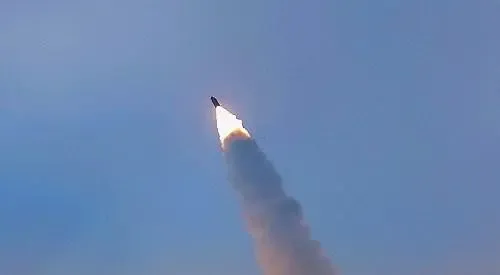
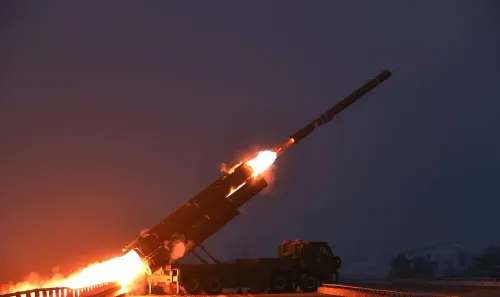
The Missile Administration carried out the tests on Monday to evaluate the warhead's destructive power and the missile's 'vertical strike' capability, according to the Korean Central News Agency (KCNA). The agency quoted the Warhead Institute of the Missile Administration as saying the 'middle-sized dispersal warhead' mounted on the cruise missile is capable of 'turning into ashes a target area of 5 to 6 hectares' at its highest-density power.
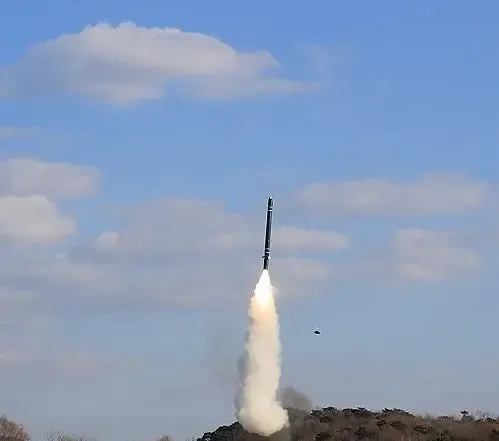
Separately, the Cruise Missile System Institute reported that it had perfected the missile's vertical strike capability by improving its terminal manoeuvrability, adjusted to account for the 'natural and geographical characteristics' of targeted areas, according to reports.
Why North Korea Is Developing These Systems
The director of the Missile Administration said the tests demonstrated the country's 'practical combat power' and underscored the urgency of developing diverse weapons. 'The necessity of developing a variety of weapon systems is urgent than ever before. It is because our armed forces should defend the security of the country and deter all sorts of threats,' the director was quoted as saying. North Korea has pledged to field various types of cluster warheads by the end of the year; it tested a cluster bomb mountable on tactical ballistic missiles as recently as Saturday.
Expert Analysis: Targeting Underground Facilities
Defence analysts say the emphasis on vertical strike capability reveals a specific operational goal. According to Shin Jong-woo, secretary-general of the Seoul-based Korea Defence and Security Forum, the North appears to be developing the means to precisely strike South Korean forces' underground facilities and tunnel entryways — structures that are difficult to hit horizontally or diagonally. 'It is a way of maximising the destructive power by raising the missile to full speed before hitting the target using the acceleration of gravity,' Shin said. This comes amid a pattern of North Korean tests that experts say are increasingly focused on penetrating hardened South Korean military infrastructure.
South Korea's Response
The South Korean military said on Tuesday it is maintaining an 'overwhelming' capability and readiness to respond to any North Korean provocations. Joint Chiefs of Staff (JCS) spokesperson Captain Jang Do-young told a press briefing: 'Our military has already developed the precision strike capabilities and relevant weapons systems, outplaying the North's asserted technology from 20 years ago, and is maintaining permanent operational readiness.' Seoul's response signals confidence in its own deterrence posture, even as Pyongyang accelerates its weapons testing calendar.
Broader Pattern of Escalation
Notably, this is at least the second significant weapons test by North Korea in a matter of days, following Saturday's ballistic missile cluster bomb evaluation. Pyongyang's accelerated testing tempo before year-end suggests a deliberate effort to demonstrate operational readiness across multiple strike platforms simultaneously. Analysts warn that combining cruise missile precision with dispersal warheads substantially lowers the threshold for large-area saturation strikes against military concentrations and logistics hubs. The international community, including South Korea, the United States, and Japan, is expected to closely monitor further developments.
Point of View
Closing a gap that Seoul had long considered a structural advantage. The accelerated year-end testing schedule also functions as political signalling, likely timed to complicate diplomatic options for Washington and Seoul heading into any potential talks. What mainstream coverage often underplays is the cumulative picture: these are not isolated tests but iterative capability demonstrations that together describe a coherent doctrine of saturation and penetration strikes.
NationPress
3 Nov 2026
Frequently Asked Questions
What is the 'dispersal warhead' North Korea tested?
It is a cruise missile-mounted munition that disperses destruction across a wide area. According to North Korea's state media, the warhead can incinerate a target area of 5 to 6 hectares at its highest-density power, making it suited to strikes on troop concentrations or logistics infrastructure rather than single point targets.
What is 'vertical strike' capability and why does it matter?
Vertical strike capability refers to a missile's ability to approach a target from near-directly above, maximising speed via gravitational acceleration. Defence analyst Shin Jong-woo says North Korea is developing this to hit South Korean underground military facilities and tunnel entryways that are extremely difficult to destroy with horizontal or diagonal strikes.
How does this test fit into North Korea's recent weapons programme?
North Korea conducted a cluster bomb test for tactical ballistic missiles just days earlier on Saturday and has publicly pledged to deploy various cluster warhead types by year-end. The dual tests in rapid succession suggest a coordinated, deadline-driven push to demonstrate operational readiness across multiple strike platforms.
How has South Korea responded to the tests?
The South Korean military said it is maintaining 'overwhelming' readiness to respond to any North Korean provocation. JCS spokesperson Capt. Jang Do-young stated that Seoul's precision strike capabilities and weapons systems already surpass North Korea's asserted technology by around 20 years.
Who is affected by these developments?
The most immediate concern is for South Korea, particularly its military infrastructure. More broadly, the tests heighten security tensions on the Korean Peninsula and affect strategic calculations for the United States, Japan, and other regional allies who maintain security arrangements with Seoul.