North Korea warns of 'chain of countermeasures' over RIMPAC 2025
Synopsis
North Korea has escalated its rhetoric over RIMPAC 2025, calling the US-led Hawaii exercise a 'war rehearsal' and warning of a 'chain of proportional countermeasures.' The warning comes as South Korea — deploying an Aegis destroyer, submarine, and patrol aircraft — makes history as the first Asian nation to lead the exercise's combined maritime command, deepening its role in US-led Indo-Pacific security.
Key Takeaways
North Korea condemned RIMPAC 2025 on 17 July , calling it a 'war rehearsal' via state media outlet KCNA .
Pyongyang warned the exercise would trigger a 'chain of proportional countermeasures' from regional countries.
RIMPAC 2025 runs from 24 June to 31 July , involving more than 25,000 personnel from 31 countries .
South Korea is leading the combined maritime component command — the first Asian nation to do so.
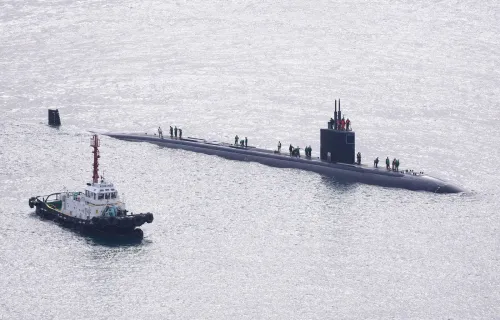
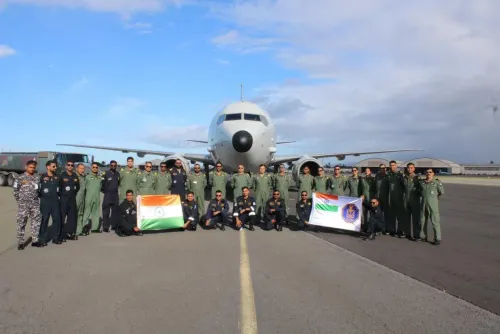
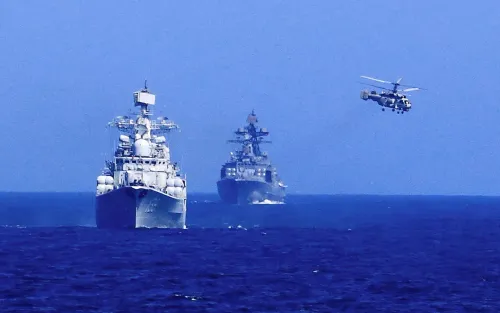
Seoul's assets include the Aegis destroyer Jeongjo the Great , a P-8 patrol aircraft , and the 3,000-tonne submarine Dosan Ahn Chang-ho .
KCNA also flagged the USS Essex amphibious assault ship and the nuclear-powered USS Theodore Roosevelt carrier.
North Korea on Friday, 17 July condemned the ongoing Rim of the Pacific (RIMPAC) multinational military exercise led by the United States in Hawaii, labelling it a 'war rehearsal' and warning that it would provoke a 'chain of proportional countermeasures' from countries across the region. The criticism, carried by the Korean Central News Agency (KCNA) in an op-ed, came as South Korea made history as the first Asian nation to lead the combined maritime component command at the exercise.
What North Korea Said
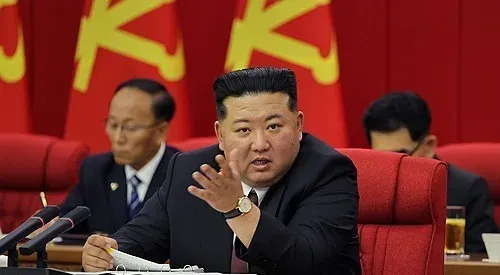
KCNA described RIMPAC as 'not merely a routine exercise targeting a hypothetical adversary, but a blatant war rehearsal spearheaded by the US and its followers to target regional states deemed primary obstacles to realising its Asia-Pacific strategy.' The state media outlet further stated that 'the reckless behaviour of these international hooligans is bound to trigger a chain of proportional countermeasures by regional countries to deter and manage the threat decisively.'
Pyongyang also framed its own military build-up in defensive terms, asserting that 'strengthening the war deterrent against the military challenges and threats of all hostile forces is a sovereign right that no one can block.'
Key Assets and Scale of RIMPAC
RIMPAC 2025 began on 24 June and is scheduled to run through 31 July, drawing more than 25,000 personnel from 31 countries. North Korea's state media specifically highlighted combined drills conducted by US and South Korean marines aboard the USS Essex amphibious assault ship, and pointed to the deployment of the nuclear-powered USS Theodore Roosevelt aircraft carrier alongside what it called Washington's 'war vassals.'
South Korea has contributed significant naval assets to this year's exercise, including the Aegis destroyer Jeongjo the Great, a P-8 maritime patrol aircraft, and the 3,000-tonne submarine Dosan Ahn Chang-ho.
South Korea's Historic Role
Seoul's leadership of the combined maritime component command at RIMPAC marks a milestone — it is the first time an Asian country has held that position. The development underscores South Korea's deepening integration into US-led security architecture in the Indo-Pacific, a trajectory that has accelerated following a series of North Korean missile tests and inter-Korean tensions over recent years.
Regional Security Context
North Korea's warning arrives against a backdrop of heightened military signalling on the Korean Peninsula. Pyongyang stated that the drills 'clearly demonstrate which forces are shaking the very foundations of global peace and security and portend that an undesirable situation may soon arise on the Korean Peninsula and in the region.' This is not the first time North Korea has responded to RIMPAC with sharp rhetoric — the exercise, held biennially, has drawn Pyongyang's condemnation in previous editions as well. Analysts note that such statements typically precede accelerated weapons testing cycles, though no specific action has been announced.
Point of View
But the timing is not incidental. South Korea's elevation to lead the combined maritime command is a structural shift — not a ceremonial one — and Pyongyang's targeting of that milestone signals it is watching Seoul's expanding role in US-led security frameworks as closely as Washington's own posture. The deployment of the USS Theodore Roosevelt alongside South Korean Aegis and submarine assets is precisely the kind of combined force projection that has historically preceded North Korean test cycles. Whether the 'chain of countermeasures' rhetoric translates into action will depend on Pyongyang's read of domestic political conditions and its ongoing negotiations calculus — but dismissing it as boilerplate would be a misreading of how North Korea has used RIMPAC as a provocation calendar in the past.
NationPress
16 Oct 2026
Frequently Asked Questions
What is RIMPAC 2025 and why is North Korea objecting to it?
RIMPAC — the Rim of the Pacific Exercise — is the world's largest international maritime military exercise, led by the United States and held in Hawaii. North Korea objects to the 2025 edition, running from 24 June to 31 July, calling it a 'war rehearsal' targeting regional states and warning it will provoke countermeasures.
What did North Korea's KCNA say about RIMPAC?
KCNA described RIMPAC as a 'blatant war rehearsal spearheaded by the US and its followers' and warned that the 'reckless behaviour of these international hooligans is bound to trigger a chain of proportional countermeasures.' It also said strengthening its own deterrent is a 'sovereign right.'
What is South Korea's role in RIMPAC 2025?
South Korea is leading the combined maritime component command at RIMPAC 2025 — the first Asian country to hold that position. Seoul has deployed the Aegis destroyer Jeongjo the Great, a P-8 maritime patrol aircraft, and the 3,000-tonne submarine Dosan Ahn Chang-ho.
How large is RIMPAC 2025?
RIMPAC 2025 involves more than 25,000 personnel from 31 countries and runs from 24 June through 31 July in and around Hawaii.
Has North Korea responded to RIMPAC with threats before?
Yes. North Korea has condemned RIMPAC in previous editions as well, consistently framing the biennial exercise as a provocation. Such statements have at times preceded accelerated weapons testing, though no specific action has been announced in response to the 2025 edition.