BRICS has special role in turbulent world, says NSA Ajit Doval at 16th NSA Meet
Synopsis
At the 16th BRICS NSA Meeting in New Delhi, India's NSA Ajit Doval made the case that a grouping covering 49% of the world's population and 30% of global GDP cannot be a bystander as multilateralism declines and conflicts multiply. His cautious welcome of the US-Iran MoU — and its implications for the Strait of Hormuz — added an unexpected diplomatic dimension to what is typically a security-focused gathering.
Key Takeaways
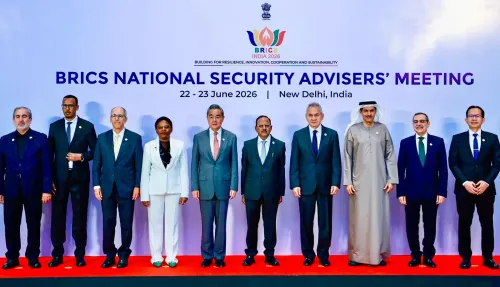
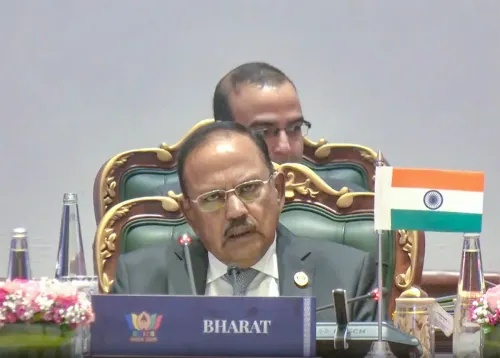
NSA Ajit Doval addressed the 16th BRICS National Security Advisors' Meeting in New Delhi on 23 June .
BRICS collectively represents 1.4 billion people (~ 49% of global population) and contributes $31.5 trillion (over 30% ) to global GDP.
Doval warned that 'multilateralism is on the decline' even as geopolitical tensions, armed conflicts, and cyber threats intensify.
The meeting will deliberate on outcomes from BRICS joint working groups on counter-terrorism and ICT security .
Doval expressed 'cautious optimism' over a reported US-Iran MoU , welcoming the opening of the Strait of Hormuz for energy and supply-chain stability.
India is hosting the meeting, reinforcing its central role within the expanded BRICS framework.
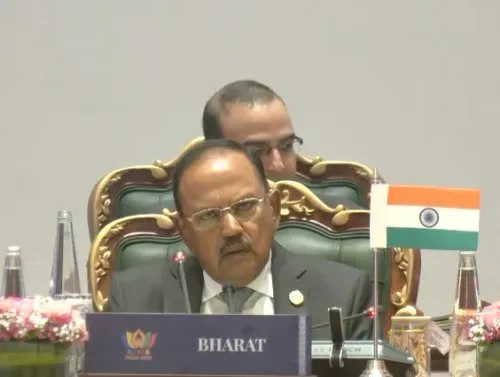
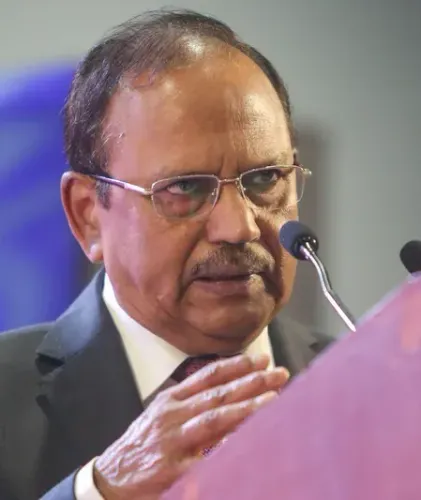
National Security Advisor Ajit Doval on Tuesday, 23 June asserted that BRICS is far more than an economic grouping, calling it a collective home to nearly half the world's population with a 'special role' in navigating a global order under strain. Speaking at the 16th BRICS National Security Advisors' Meeting in New Delhi, Doval underscored the urgency of collective action as geopolitical tensions, armed conflicts, and disruptive technologies reshape the international security landscape.
Scale and Significance of BRICS
Doval painted a striking picture of the grouping's collective weight. 'It is no ordinary grouping, but a home of 1.4 billion people that constitutes nearly 49 per cent or nearly half of the global population,' he said, adding that BRICS member states together contribute $31.5 trillion to global wealth — more than 30 per cent of the global economy — and span a land mass of over 42 million square kilometres.
He described BRICS as a 'very special coalition' of nations united by shared aspirations for peace, development, and economic growth, and expressed satisfaction at the grouping's steady expansion and growing influence on the world stage.
A World in Turmoil: Doval's Assessment
'We are meeting at a very tumultuous time. The world is beleaguered by military conflicts and complex security problems. It is facing geopolitical uncertainties, economic strain and disruptive technologies,' Doval said. He noted that existing institutional frameworks and conflict-resolution mechanisms are 'increasingly finding themselves inadequate to resolve or mitigate these conflicts.'
Expressing concern over the erosion of collective global governance, Doval stated plainly: 'Multilateralism is on the decline' — at precisely the moment when coordinated international responses are most needed. He traced BRICS back to its founding vision as an 'informal grouping of emerging economies' aimed at promoting a multipolar world order and amplifying the voice of the Global South.
Non-Traditional Threats and Cyber Security
Doval warned that non-traditional security threats have grown more sophisticated and adaptive, outpacing conventional responses. 'Non-traditional threats have transcended national borders and have developed defeat systems against conventional responses. Innovative disruptive technologies, more camouflaged variants of terrorism, cyber threats, in a world that is getting increasingly digitised, all constitute important threats for us,' he said.
The meeting, he noted, would deliberate on outcomes from two BRICS Joint Working Groups — one on counter-terrorism and another on security in the use of information and communication technologies (ICT) — both of which have gained heightened relevance in the current environment.
Cautious Optimism on US-Iran Developments
Doval also addressed recent diplomatic movement between the United States and Iran, welcoming a Memorandum of Understanding reportedly reached between the two countries. He said India viewed the development with 'cautious optimism', citing potential benefits for energy security and global supply chains.
'The opening of the Strait of Hormuz is a very welcome development. It will remove supply chain bottlenecks, and many of the shortages in the field of fertilisers and chemicals, among others, will be addressed,' he said, adding that improved freedom of navigation in the region would boost economic prosperity for countries well beyond the immediate neighbourhood.
India's Role as Host
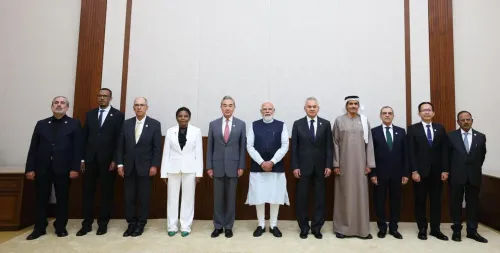
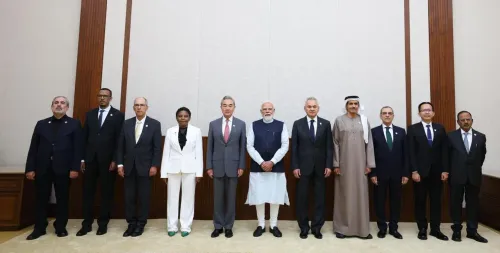
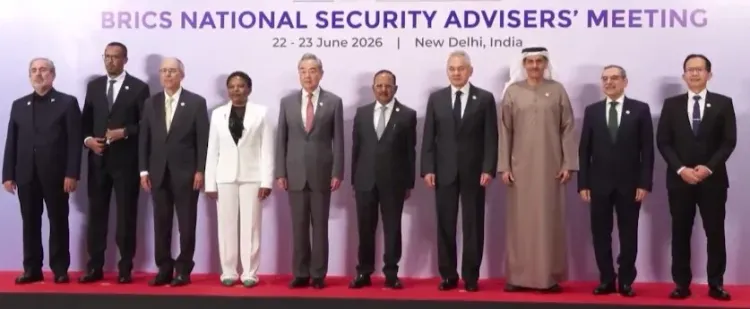
India is hosting the 16th BRICS National Security Advisors' Meeting, bringing together top security officials from member states to deliberate on evolving strategic challenges and deepen cooperation. National Security Advisors and heads of delegation from across the BRICS grouping are participating in the discussions. The meeting signals India's continued engagement with the expanded BRICS framework at a moment of heightened global uncertainty.
Point of View
A pragmatic hedge that does not always sit comfortably with BRICS partners closer to Tehran. The real test of this meeting is whether the counter-terrorism and ICT working groups produce actionable commitments, or remain aspirational frameworks that dissolve under bilateral rivalries within the grouping.
NationPress
21 Sept 2026
Frequently Asked Questions
What is the 16th BRICS National Security Advisors' Meeting?
It is a high-level gathering of National Security Advisors and heads of delegation from BRICS member states, hosted by India in New Delhi on 23 June 2025. The meeting focuses on evolving global security challenges, counter-terrorism cooperation, and ICT security.
What did NSA Ajit Doval say about BRICS at the meeting?
Doval described BRICS as a 'very special coalition' with a 'special role' in a world facing turmoil, noting that the grouping represents nearly 49% of the global population and over 30% of global GDP. He warned that multilateralism is declining even as threats grow more complex.
Why did Doval mention the US-Iran MoU at a BRICS security meeting?
Doval referenced the reportedly reached US-Iran Memorandum of Understanding to highlight its potential benefits for global energy security and supply chains. He specifically welcomed the opening of the Strait of Hormuz, which he said would ease fertiliser and chemical shortages and improve freedom of navigation.
What security threats did Doval highlight?
Doval flagged non-traditional threats including cyber attacks, technology-enabled terrorism, and disruptive technologies as key concerns. He noted these threats have 'transcended national borders' and developed countermeasures against conventional responses, making them harder to address through existing institutional frameworks.
What will the BRICS NSA meeting deliberate on?
The meeting will discuss outcomes from two BRICS Joint Working Groups — one on counter-terrorism and one on security in the use of information and communication technologies (ICT). Both areas have gained increased urgency given the rapidly evolving global security environment.