NSA Doval at BIMSTEC meet: Collaborate amid global uncertainties
Synopsis
At the fifth BIMSTEC NSA Meeting in New Delhi, India's NSA Ajit Doval did more than call for unity — he repositioned BIMSTEC as the institutional backbone of India's Neighbourhood First, Act East, and MAHASAGAR doctrines simultaneously. With the bloc's 30th anniversary approaching and global supply chains fracturing, the meeting signals India's intent to transform a historically low-key forum into a serious regional security architecture.
Key Takeaways
NSA Ajit Doval addressed the fifth BIMSTEC National Security Advisors' Meeting in New Delhi on 17 July 2025 .
He called for urgent collaboration among member states amid global conflicts, geopolitical uncertainties, and supply chain disruptions.
BIMSTEC represents nearly 22 per cent of the world's population and a combined GDP of approximately $5 trillion .
Doval linked India's BIMSTEC engagement to the Neighbourhood First , Act East , and MAHASAGAR strategic visions.
BIMSTEC was founded on 6 June 1997 and now has seven member states ; its 30th anniversary falls in 2027 .
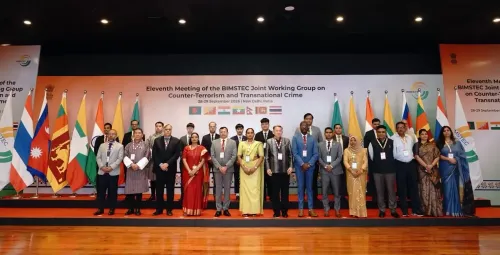
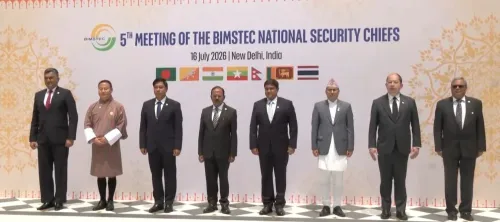
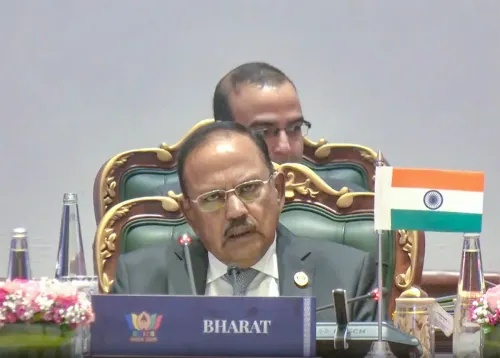
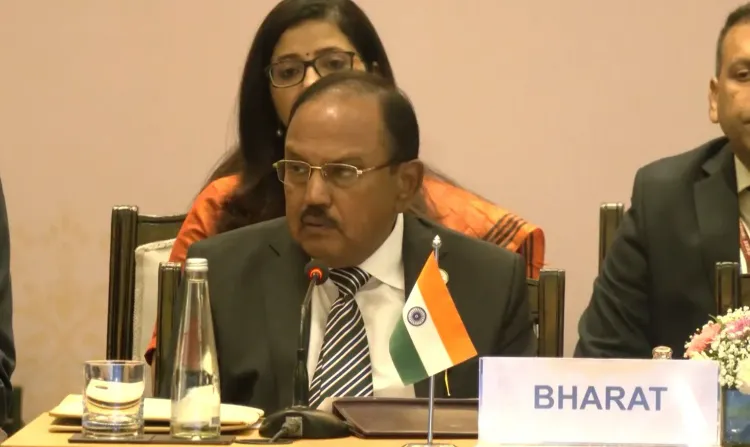
National Security Advisor Ajit Doval on Thursday, 17 July 2025, called on BIMSTEC member nations to deepen collaboration, take decisive collective action, and resolve shared challenges through dialogue, as geopolitical tensions and multi-domain security threats reshape the global order. Doval made these remarks while addressing the fifth BIMSTEC National Security Advisors' Meeting in New Delhi.
Key Remarks from the Meeting
Speaking at the gathering, Doval underscored the gravity of the current global environment. 'We are meeting today in the backdrop of a challenging global landscape. We are witnessing conflicts and geopolitical uncertainties. We are also facing multi-domain security threats amplified by rapid technological advancement. Disruptions in global supply chains have also resulted in economic hardship for all our countries,' he said.
He emphasised that this moment demands urgent, coordinated responses. 'In this setting, there is an urgent need for us to collaborate, take decisive actions for our mutual benefit, and find solutions through mutual discussions and deliberations to the best problems that we are all facing,' Doval added.
BIMSTEC's Strategic Weight
Doval highlighted the bloc's considerable geopolitical and economic heft. BIMSTEC collectively represents nearly 22 per cent of the world's population and commands a combined GDP of approximately $5 trillion. He described the grouping as united not only by the Bay of Bengal geographically, but also through what he called 'deep civilisational and cultural legacies' forged over a millennium of shared history.
He noted that member states have already made tangible progress on counterterrorism, transnational organised crime, cyber threats, and maritime security — and are now positioned to confront emerging threat vectors together.
India's Strategic Vision
Doval framed India's engagement with BIMSTEC as an expression of three overlapping strategic doctrines: the Neighbourhood First policy, the Act East policy, and what he described as the MAHASAGAR vision. This positioning signals that New Delhi views the Bay of Bengal grouping as a critical pillar of its broader Indo-Pacific strategy, not merely a regional forum.
Notably, this comes as India seeks to diversify its security partnerships amid shifting dynamics in South and Southeast Asia. BIMSTEC, long seen as an underperforming regional body, is increasingly being recalibrated as a vehicle for India's strategic outreach.
Looking Ahead to BIMSTEC's 30th Anniversary
With the bloc set to mark its 30th anniversary in 2027 — having been established on 6 June 1997 through the Bangkok Declaration — Doval called for a renewed commitment to expanding collaborative potential. 'Let us commit to further expand our collaborative potential and infuse new energy and resources towards ensuring national and regional security,' he said.
The organisation, which originally comprised Bangladesh, India, Sri Lanka, and Thailand, later admitted Myanmar on 22 December 1997 and Bhutan and Nepal in February 2004, bringing its membership to seven states. As the fifth NSA-level meeting concludes, all eyes will be on whether the deliberations translate into concrete institutional commitments ahead of the anniversary milestone.
Point of View
Act East, and MAHASAGAR — New Delhi is staking a claim to BIMSTEC's institutional future at a moment when China's influence in the Bay of Bengal littoral is expanding. The real question is whether the other six member states share India's appetite for a more security-focused, India-led architecture, or whether they prefer the bloc's traditionally low-commitment posture. The 30th anniversary in 2027 will be the first real test of whether this rhetorical upgrade has any structural backing.
NationPress
15 Oct 2026
Frequently Asked Questions
What is the BIMSTEC National Security Advisors' Meeting?
It is a high-level security dialogue among the National Security Advisors of BIMSTEC's seven member states — Bangladesh, India, Myanmar, Sri Lanka, Thailand, Bhutan, and Nepal. The fifth edition was held in New Delhi on 17 July 2025, chaired by India's NSA Ajit Doval.
What did NSA Ajit Doval say at the BIMSTEC meeting?
Doval called on member nations to collaborate urgently, take decisive collective action, and resolve shared problems through dialogue. He highlighted threats including geopolitical instability, supply chain disruptions, cyber threats, and transnational crime, and urged the bloc to build institutional capacity ahead of its 30th anniversary.
What is BIMSTEC and when was it founded?
The Bay of Bengal Initiative for Multi-Sectoral Technical and Economic Cooperation (BIMSTEC) is a regional organisation founded on 6 June 1997 via the Bangkok Declaration. It now has seven member states and collectively represents about 22 per cent of the world's population with a combined GDP of roughly $5 trillion.
How does BIMSTEC fit into India's foreign policy?
NSA Doval described BIMSTEC as central to India's Neighbourhood First policy, its Act East policy, and the MAHASAGAR vision. India views the Bay of Bengal grouping as a key platform for regional security cooperation and economic connectivity in the Indo-Pacific.
When is BIMSTEC's 30th anniversary?
BIMSTEC will mark its 30th anniversary in 2027, having been established on 6 June 1997. Doval called on member states to use the milestone as an opportunity to expand collaborative potential and inject new energy into the organisation's institutional framework.