New Zealand backs US-Iran deal to reopen Strait of Hormuz
Synopsis
New Zealand became one of the first nations to publicly back the US-Iran deal, with both its Prime Minister and Foreign Minister linking the Strait of Hormuz closure directly to household cost pressures on Kiwis. The response underscores how a Middle East flashpoint has rippled into Pacific economies — and why Wellington has a direct stake in whether the deal holds.
Key Takeaways
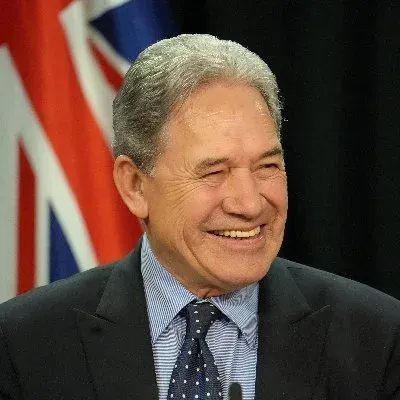
New Zealand formally welcomed the US-Iran agreement on 15 June , calling it a 'pivotal, constructive deal.' Foreign Minister Winston Peters said Strait of Hormuz disruptions had 'serious impacts' on New Zealand's economy and Pacific partners.
Prime Minister Christopher Luxon said the conflict 'hit Kiwis' back pockets' and called reopening the strait essential for fuel supply and trade.
US President Donald Trump announced the deal is 'complete,' ending the US naval blockade and reopening the Strait of Hormuz .
The strait carries a substantial share of global seaborne oil trade; its closure had driven energy price volatility worldwide.
New Zealand on Monday, 15 June formally welcomed progress toward a US-Iran agreement aimed at ending the Middle East conflict and reopening the Strait of Hormuz, calling it a pivotal step toward regional stability and economic relief for the Pacific nation.
Wellington's Official Response
Foreign Minister Winston Peters said in a statement that the agreement is 'a step toward reducing tensions and promoting stability in a region that is critical to global economic security.' He specifically flagged the impact of Hormuz disruptions on New Zealand's economy and that of its Pacific partners, noting that the closures have had 'serious impacts' on trade and supply chains.
Peters added that Wellington welcomes steps 'that will enable the safe reopening of this vital maritime route and restore confidence in key supply chains,' and emphasised that dialogue and diplomacy remain 'the most effective means of resolving longstanding issues.' He described the deal as 'a good first step' and urged all parties to build on the momentum.
Prime Minister Luxon Weighs In
New Zealand Prime Minister Christopher Luxon called the announced agreement 'a positive step toward reducing tensions and strengthening global stability.' In a post on social media platform X, Luxon linked the conflict directly to household finances, writing: 'The conflict has hit Kiwis' back pockets and put pressure on household budgets. Reopening the Strait of Hormuz will help restore stable trade routes, get fuel flowing, and keep our economy moving.'
The Trump Announcement
US President Donald Trump announced that the United States and Iran had completed a deal that would reopen the Strait of Hormuz and end the US naval blockade, describing it as a major breakthrough after months of conflict that rattled global energy markets and raised fears of a wider regional war. 'The Deal with the Islamic Republic of Iran is now complete. Congratulations to all!' Trump said in a post on social media.
Why the Strait of Hormuz Matters
The Strait of Hormuz is one of the world's most strategically critical waterways, through which a substantial portion of global seaborne oil trade passes. Disruptions to the strait over recent months have contributed to volatility in global energy prices and placed pressure on supply chains across Asia and the Pacific. For small open economies like New Zealand's, such disruptions translate quickly into higher fuel costs and inflationary pressure on households.
What Comes Next
The deal marks what both Washington and Wellington are framing as a diplomatic turning point, though the specifics of implementation — including timelines for lifting the naval blockade and verification mechanisms — have not yet been publicly detailed. International attention remains fixed on whether the agreement holds and whether it can be built upon to address the broader constellation of tensions between the US and Iran that have simmered for decades.
Point of View
And on what timeline — details that neither Washington nor Wellington have yet spelled out. A 'good first step' that lacks a verification framework has a familiar ring in this part of the world.
NationPress
25 Sept 2026
Frequently Asked Questions
What is the US-Iran deal that New Zealand has welcomed?
US President Donald Trump announced that the United States and Iran have completed a deal to reopen the Strait of Hormuz and end the US naval blockade, which he described as a major breakthrough after months of conflict. New Zealand welcomed the agreement on 15 June, calling it a step toward regional stability and economic relief.
Why does the Strait of Hormuz matter to New Zealand?
The Strait of Hormuz is a critical global oil and shipping route, and its disruption has had direct economic consequences for New Zealand, including higher fuel costs and pressure on household budgets. Foreign Minister Winston Peters specifically cited the strait's impact on New Zealand and its Pacific partners.
What did New Zealand's Prime Minister say about the deal?
Prime Minister Christopher Luxon called the agreement 'a positive step toward reducing tensions and strengthening global stability,' and said reopening the Strait of Hormuz would restore stable trade routes, improve fuel supply, and support the New Zealand economy.
What did Foreign Minister Winston Peters say?
Peters described the deal as 'a pivotal, constructive' step and a 'good first step,' urging all parties to build on the momentum. He emphasised that dialogue and diplomacy are 'the most effective means of resolving longstanding issues.'
What happens next following the US-Iran agreement?
The specific implementation details — including timelines for lifting the US naval blockade and any verification mechanisms — have not yet been publicly outlined. International attention remains on whether the agreement holds and can address the broader US-Iran tensions.