Punjab hits 150 LMT paddy record, pays ₹33,000 cr to farmers
Synopsis
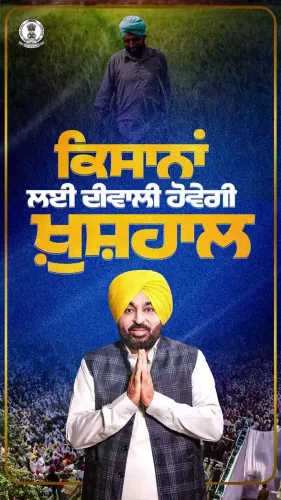
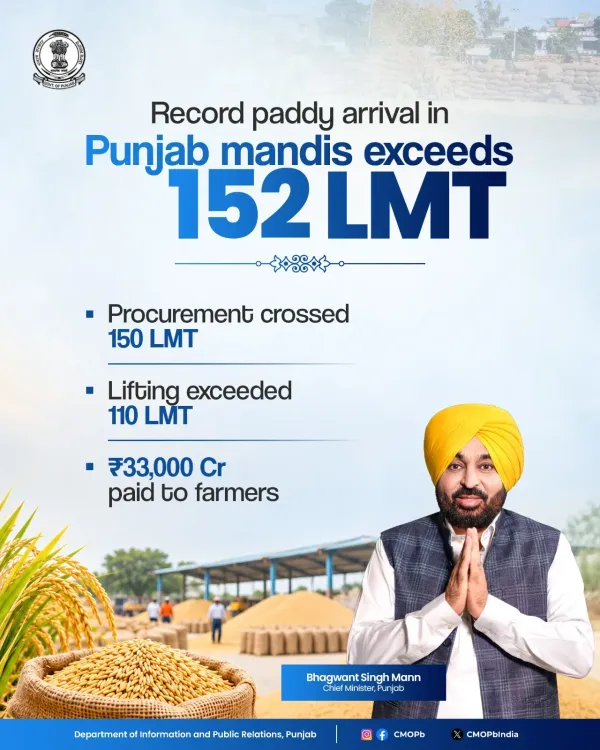
Punjab's CMO announces the state has crossed 150 Lakh Metric Tonnes of paddy procurement in Kharif Marketing Season 2026-27, with ₹33,000 crore — 100.89% of dues — already credited to farmers' accounts under CM Bhagwant Mann's government.
Key Takeaways
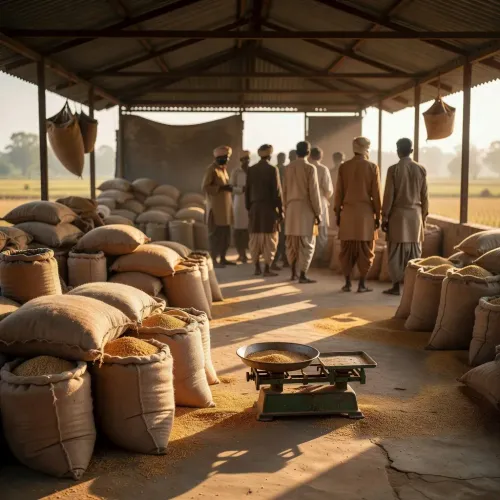
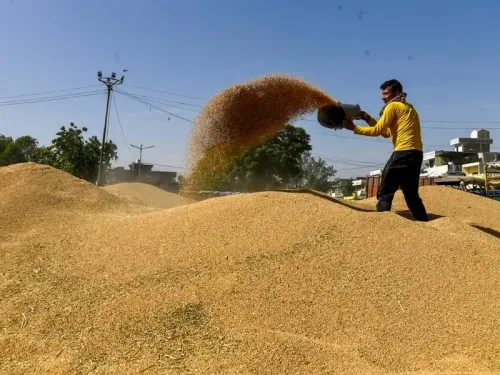
Punjab has crossed 150 Lakh Metric Tonnes (LMT) of paddy procurement in Kharif Marketing Season 2026-27 , marking a record milestone.
Payments worth ₹33,000 crore have been credited directly into farmers' accounts, representing 100.89 per cent of total dues — effectively full settlement.
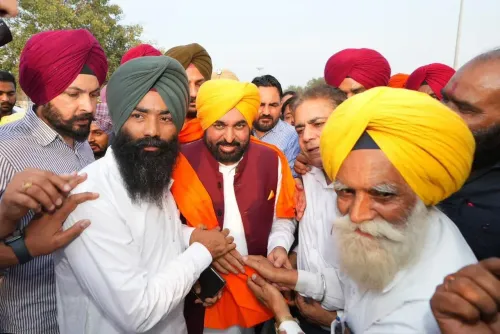
The Chief Minister Bhagwant Mann -led AAP government has been in office since March 2022 and has prioritised smooth, farmer-friendly mandi operations.
Punjab has been a cornerstone of India's national foodgrain procurement since the Green Revolution era, making state-level procurement performance a matter of national food-security significance.
Timely, above-100% payment disbursement addresses the historically damaging cycle of MSP payment delays that push farmers toward below-floor private sales.
A procurement milestone that decades of Green Revolution promise have been building toward: Punjab has crossed 150 Lakh Metric Tonnes (LMT) of paddy procurement in the Kharif Marketing Season 2026-27, and the Chief Minister's Office of Punjab announced on Tuesday, November 10, 2026 that ₹33,000 crore — representing a full 100.89 per cent of due payments — has already been credited directly into farmers' accounts.
Record grain, record speed — what 150 LMT actually means
Crossing 150 LMT is not just a round number. It signals that farmers across Punjab's mandis are actively choosing the official Minimum Support Price (MSP) channel over distress sales — a vote of confidence that procurement reformers have long chased. The Chief Minister @BhagwantMann-led Aam Aadmi Party government, in office since March 2022, has staked significant political capital on frictionless mandi operations, and this season's figures represent the clearest numerical vindication yet.
Punjab has anchored India's central foodgrain pool since the Green Revolution of the late 1960s. That structural role means a smooth kharif season in Punjab is not a local story — it feeds directly into national food-security arithmetic.
₹33,000 crore, 100.89% — the payment that rarely arrives on time
In procurement cycles across India, delayed MSP payments have historically been the single biggest friction point, pushing farmers toward arhtiyas (commission agents) or private buyers at below-floor prices. A 100.89 per cent disbursement rate — marginally above the full amount owed — ahead of season close is operationally significant. The ₹33,000 crore figure, credited directly into accounts, removes the middleman float that has traditionally eroded farmer income.
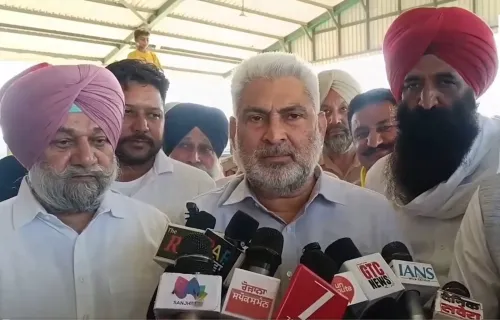
The government described operations across all mandis as 'smooth, hassle-free and farmer-friendly' — language that maps to specific grievance points: weighing disputes, moisture-rejection rates, and payment lag, all of which have triggered farmer agitation in previous seasons.
What comes next: the rabi season test
The kharif close sets the benchmark. With procurement clearing 150 LMT and payments at 100.89 per cent, attention now turns to whether the same infrastructure absorbs the wheat rabi season without bottlenecks. Mandi capacity, labour availability, and central agency lifting pace will all be under scrutiny as the winter crop cycle begins.
For CM Bhagwant Mann, the numbers double as a political asset heading into continued AAP governance — proof-of-delivery in the vocabulary farmers actually understand: tonnage procured and rupees in the account.
Point of View
Lending the AAP government a concrete, data-backed rebuttal to any narrative of administrative drift. The direct-to-account payment model — moving money past commission agents — reflects a broader governance trend of disintermediation that AAP has championed across states. For the central government, a fully-paid, record-volume kharif season in Punjab stabilises the national food buffer ahead of winter, making this as much a New Delhi story as a Chandigarh one. Whether the rabi season maintains this pace will be the real stress test of institutional capacity.
NationPress
10 Nov 2026
Frequently Asked Questions
How much paddy has Punjab procured in Kharif Marketing Season 2026-27?
Punjab has crossed 150 Lakh Metric Tonnes (LMT) of paddy procurement in KMS 2026-27, according to an announcement by the Chief Minister's Office on November 10, 2026.
How much money has been paid to Punjab farmers in KMS 2026-27?
₹33,000 crore has been credited directly into farmers' accounts, representing 100.89 per cent of the total amount due — meaning full payment has been completed even ahead of season close.
What is the Kharif Marketing Season and why does Punjab matter?
The Kharif Marketing Season (KMS) is the annual post-harvest procurement window, primarily for paddy. Punjab is one of India's largest contributors to the central foodgrain pool and has been central to national food security since the Green Revolution era.
Who is the Chief Minister of Punjab overseeing this procurement?
Bhagwant Mann of the Aam Aadmi Party has been Chief Minister of Punjab since March 2022 . His government has prioritised farmer-friendly mandi operations and direct account-based MSP payments.
What is MSP and why does direct payment matter for Punjab farmers?
MSP (Minimum Support Price) is the government-guaranteed floor price for crops. Direct payment to farmers' accounts bypasses commission agents, reducing the payment lag that historically pushed farmers into below-floor private sales.