Pakistan's Military Influence in Afghanistan: A Colonial Era's End
Synopsis
As Pakistan faces internal turmoil, a recent report reveals the Afghan Taliban's shift in strategy, prioritizing ideological expansion over ceasefires. The dynamics between the two nations have shifted dramatically, signaling the end of a long-held colonial mindset.
Key Takeaways
Pakistan's economy is under severe strain.
Deteriorating security in Balochistan fuels insurgency.
The Taliban prioritize survival over ceasefires.
Military strikes signal a shift in Pakistan-Afghanistan relations.
Increased illegal immigration is anticipated towards the EU.
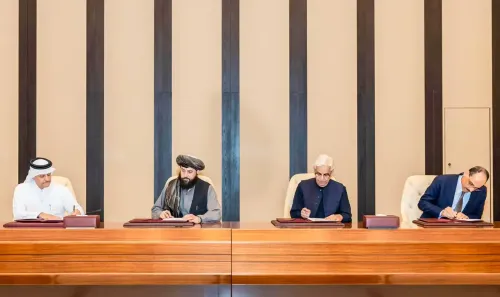
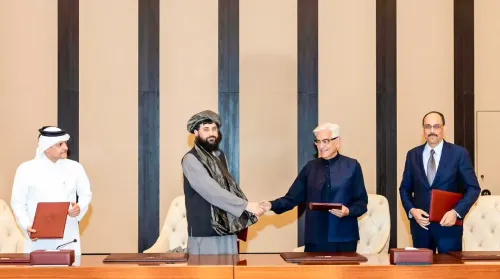
Brussels, April 4 (NationPress) As Pakistan grapples with economic challenges and faces declining domestic security amidst a resurgence of insurgency in Balochistan, the Afghan Taliban seem to be adopting a long-term strategy in their ongoing conflict with Islamabad, focusing on survival and ideological growth rather than ceasefires brokered by Qatar or Turkey, according to a recent report.
“For many years, the Islamabad establishment has engaged in a perilous game, fostering the Taliban as a strategic asset against India. Today, this strategy is backfiring, and the ensuing surge of violence poses a threat of increasing illegal immigration towards the already overburdened borders of the European Union,” the ‘Brussels Signal’ report elaborated.
As per the findings, the declaration of “open war” by Pakistani Defence Minister Khawaja Asif marks the end of a 30-year illusion.
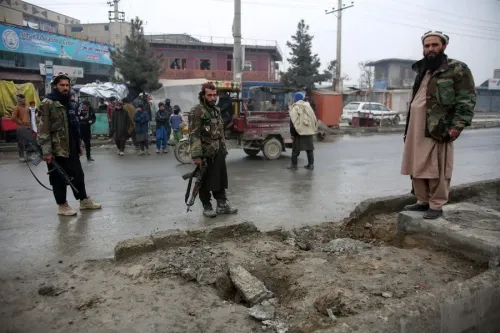
“The apprentice has not only abandoned the master but has also turned openly against him. The March 16 assault on Kabul was the moment the masks were removed. When Pakistani warplanes struck a rehabilitation facility in the heart of the Afghan capital, the so-called ‘Islamic brotherhood’ between the two nations officially ended,” it continued.
The report highlights that Islamabad claims to be targeting the Tehreek-e-Taliban Pakistan (TTP), alleging Afghanistan provides sanctuary, a claim that Kabul denies.
This has resulted in a “cycle of diplomacy-in-name-only,” characterized by the language of “air strikes, AK-47s, and suicide vests,” reflecting the harsh realities of the post-American vacuum in Afghanistan.
For Islamabad, the conflict with the TTP is deemed an existential battle, while for Kabul, it is about safeguarding the sovereignty reclaimed after two decades of warfare.
“Neither party can afford to yield. The light of the old order is dimming. The time when the Pakistani military could manage Afghanistan as if it were a colonial possession is finished. Trust has evaporated,” the report emphasized.
The report also indicated that the once “special relationship” between Islamabad and Kabul has devolved into hostility. Having weathered an American occupation, the Taliban may find it easier to withstand Pakistan’s hostility.
Highlighting the broader consequences of the conflict between Pakistan and Afghanistan, the report stated, “Meanwhile, the West observes a fire it has ignited but is now powerless to extinguish. Brussels, in particular, remains silent, hindered by bureaucratic hurdles. This silence is a luxury we cannot afford. As the Durand Line ignites and Balochistan erupts, this regional tragedy is a precursor to a significant rise in illegal immigration towards the EU.”
Point of View
The ongoing conflict between Pakistan and Afghanistan presents a complex interplay of power dynamics, sovereignty, and regional stability. Both nations find themselves at a critical juncture, where past alliances are unraveling, and the future remains uncertain.
NationPress
22 Oct 2026
Frequently Asked Questions
What is the current state of relations between Pakistan and Afghanistan?
The relationship has deteriorated significantly, shifting from a previously collaborative stance to outright hostility, as highlighted by recent military actions and allegations.
How has the Taliban's strategy changed?
The Taliban appears to be focusing on long-term ideological expansion rather than temporary ceasefires, indicating a shift in their approach to conflict with Pakistan.
What impact does this conflict have on illegal immigration?
The rising violence and instability in the region could lead to an increase in illegal immigration towards the European Union, as highlighted in the report.
What does the report say about the future of Pakistani military influence in Afghanistan?
The report suggests that the era where the Pakistani military could manage Afghanistan as a colonial fiefdom is over, indicating a significant shift in regional power dynamics.
How is the West responding to this situation?
The report criticizes the West, particularly Brussels, for its silence and inaction in the face of the escalating conflict and humanitarian crisis.