EU Parliament resolution on Pakistan forced conversions: Civil society demands stronger laws
Synopsis
A European Parliament resolution has brought Pakistan's forced conversion crisis into sharp international focus, centring on the case of 13-year-old Maria Shahbaz — a Christian girl whose court-awarded custody to her alleged abductor has alarmed rights groups. Civil society is now demanding a standalone anti-conversion law, warning that the verdict could set a damaging precedent for minority children across the country.
Key Takeaways
The European Parliament passed a resolution urging Pakistan to protect minority girls from forced religious conversion, abduction, and child marriage.
The resolution centres on the case of Maria Shahbaz , a 13-year-old Christian girl from Lahore , reportedly kidnapped and forcibly converted and married.
A Pakistani federal court awarded custody of Maria Shahbaz to her alleged abductor, triggering protests; a review petition remains pending.
Civil society groups have called for a standalone law criminalising forced religious conversion and stronger judicial protections for minors.
Voice for Justice Chairman Joseph Janssen warned the verdict could weaken legal protections for children and religious minorities if allowed to stand.
Advocate Akmal Bhatti argued courts must verify age, legality, and consent before recognising marriages involving minors.
The European Parliament has passed a resolution raising international alarm over the forced religious conversion, abduction, and child marriage of minority girls in Pakistan, prompting civil society groups within the country to demand comprehensive legislation criminalising these practices as distinct criminal offences. The resolution, adopted recently, has drawn renewed attention to systemic gaps in Pakistan's child protection and minority rights frameworks.
The Case at the Centre of the Resolution
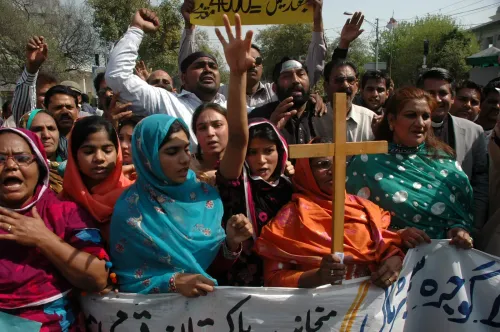
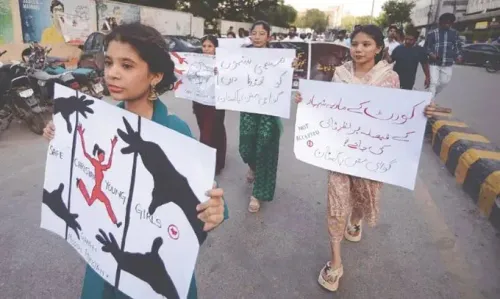
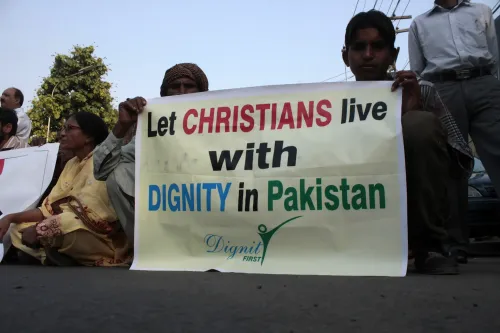
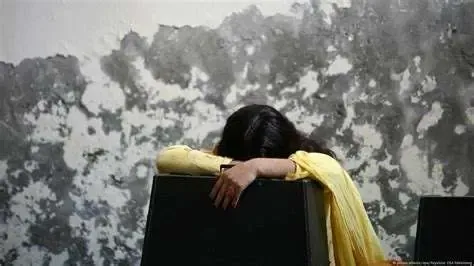
The European Parliament's resolution specifically highlighted the case of Maria Shahbaz, a 13-year-old Christian girl from Lahore, who was reportedly kidnapped in July last year and subsequently converted to Islam and married. Earlier this year, a federal court in Pakistan awarded custody of Maria Shahbaz to the Muslim man who allegedly abducted, converted, and married her — a verdict that triggered widespread protests from Christian communities, rights advocates, and civil society organisations across the country.
What the EU Resolution Demands
The resolution called on Pakistani authorities to provide Maria Shahbaz with independent legal representation, psychological support, and access to her family. It also urged a transparent and impartial review of her case in accordance with child protection laws and due process. Beyond the individual case, the resolution urged Pakistani authorities to investigate allegations of forced conversion and child marriage involving minors, hold perpetrators accountable, facilitate the safe return of kidnapped girls, and strengthen judicial capacity to hear such cases free from intimidation or external pressure.
Civil Society Voices
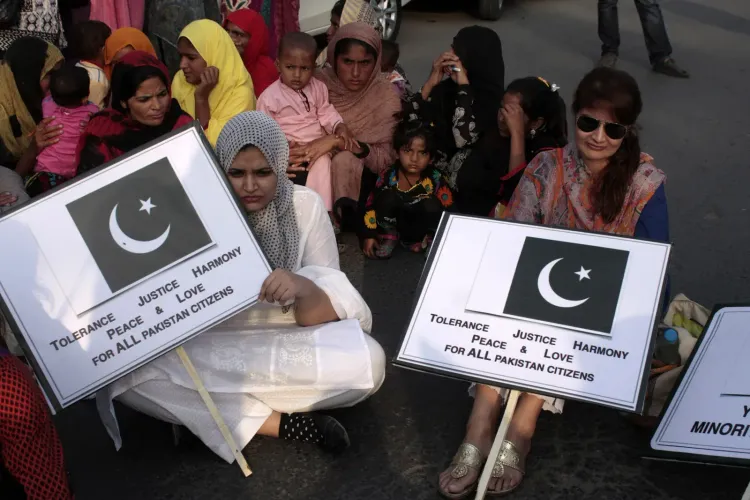
Kashif Nawab, a Director with Social Action Transformation of Humanity (SATH) in Pakistan, outlined these demands in a report published by Eurasia Review. Civil society representatives, while welcoming the resolution as an important expression of international concern over gender-based violence, child abuse, and religion-based discrimination, called on Islamabad to introduce legislation that treats forced religious conversion as a standalone criminal offence and strengthens protections for children and religious minorities.
Joseph Janssen, Chairman of Voice for Justice, warned that the Federal Constitutional Court's verdict in Maria Shahbaz's case could set a dangerous precedent for future cases involving child marriage and forced conversion. He argued that if allowed to stand, the ruling risks weakening legal protections for children and religious minorities across Pakistan.
Advocate Akmal Bhatti stressed that the case must be approached as a child protection matter rather than a religious one. He argued that courts are obligated to examine age, legality, and consent before recognising any marriage involving a minor. A review petition challenging the Federal Constitutional Court's verdict remains pending before the court.
Broader Context and What Comes Next
Forced religious conversions of minority girls — predominantly Christian and Hindu — have been a persistent concern in Pakistan, with human rights organisations documenting hundreds of cases annually. Critics argue that the absence of a specific anti-conversion law, combined with judicial inconsistency, has left victims with little recourse. This comes amid growing international scrutiny of Pakistan's record on minority rights, with the EU resolution adding diplomatic weight to long-standing domestic demands for reform. The outcome of the pending review petition in Maria Shahbaz's case is expected to have significant implications for how Pakistani courts handle similar cases going forward.
Point of View
But the harder test lies in Islamabad's response — and Pakistan's record on translating international pressure into legislative action is poor. The Maria Shahbaz case is not an anomaly; it is a symptom of a legal vacuum that rights groups have flagged for years. A dedicated anti-conversion law has been proposed, debated, and shelved multiple times. What distinguishes this moment is the pending review petition: if the Federal Constitutional Court reverses the custody ruling, it could create binding precedent. If it does not, the EU resolution risks becoming another document that documents the problem without changing it.
NationPress
14 Jul 2026
Frequently Asked Questions
What did the European Parliament resolution on Pakistan say?
The European Parliament passed a resolution urging Pakistan to protect minority girls from forced religious conversion, abduction, and child marriage. It specifically called for independent legal representation and a transparent review of the case of Maria Shahbaz, a 13-year-old Christian girl from Lahore.
Who is Maria Shahbaz and why is her case significant?
Maria Shahbaz is a 13-year-old Christian girl from Lahore who was reportedly kidnapped in July last year, then converted to Islam and married. A Pakistani federal court subsequently awarded her custody to the man who allegedly abducted her, a verdict that sparked protests and drew international condemnation.
What are civil society groups in Pakistan demanding?
Civil society groups are calling on Pakistani authorities to enact comprehensive legislation that criminalises forced religious conversion as a distinct offence, strengthen child protection laws, and ensure courts examine age, legality, and consent before recognising marriages involving minors.
What is the current legal status of the Maria Shahbaz case?
A review petition challenging the Federal Constitutional Court's custody verdict in Maria Shahbaz's case remains pending before the court. Rights advocates warn that if the verdict stands, it could set a damaging precedent for future cases involving minority children and forced conversion.
Why does Pakistan lack a specific law against forced religious conversion?
Pakistan does not have a standalone law criminalising forced religious conversion, a gap that human rights groups have highlighted for years. Proposed legislation has repeatedly stalled, leaving victims reliant on general child protection and criminal statutes that critics argue are inadequate and inconsistently applied.