Pakistan food supply falls short of dietary guidelines, FAO warns
Synopsis
A new FAO policy brief reveals Pakistan's food supply has failed its own 2018 dietary guidelines for over a decade — fruits and vegetables in severe shortage, cereals and sugar in excess, and more than 60% of citizens unable to afford a healthy diet. The findings land as Pakistan ranks 106th of 122 countries on the Global Hunger Index 2026, second-worst in South Asia.
Key Takeaways
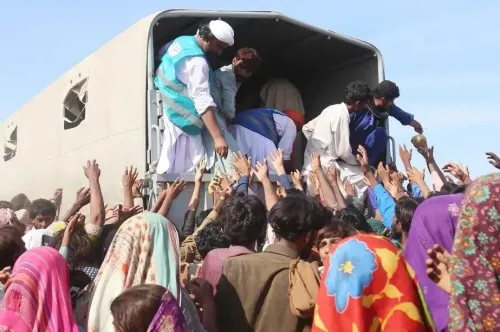
Over 60% of Pakistan's population cannot afford a healthy diet, according to an FAO policy brief.
The vegetable supply gap widened from 10.9–17.8 million tonnes in 2010 to 13–21.6 million tonnes by 2023.
Pakistan's population grew from 189.3 million (2010) to 235.2 million (2023) , projected to hit 330 million by 2050 .
Pakistan scored 25.5 on the Global Hunger Index 2026 , ranking 106th out of 122 countries — second-worst in South Asia after Afghanistan.
Pakistan adopted food-based dietary guidelines in 2018 , but structural supply gaps have persisted throughout the review period of 2010–2023 .
The FAO has called for coordinated fiscal, regulatory, and distribution reforms to close nutritional deficits.
Pakistan's national food supply has consistently failed to meet its own dietary guidelines, with critical shortages of fruits, vegetables, pulses, roots, and tubers, even as cereals and sugar remain in excess of recommended levels, according to a policy brief by the Food and Agriculture Organisation (FAO). The findings, reported on Monday, 26 October 2026, underscore deepening food security challenges in a country where over 60 per cent of the population cannot afford a healthy diet.
Key Findings from the FAO Policy Brief
The FAO brief compared Pakistan's annual food supply against the requirements of its population across 10 dietary guideline food groups for the period 2010 to 2023. The results revealed persistent and widening gaps in nutritious food categories. The vegetable supply gap grew from 10.9 million to 17.8 million tonnes in 2010 to 13 million to 21.6 million tonnes by 2023. The fruit supply deficit similarly expanded — from 1.9 million to 10.3 million tonnes in 2010, to 3.9 million to 14.3 million tonnes in 2023.
On a more positive note, the supply of milk, milk products, meat, and eggs showed measurable improvement over the same period. Cereals and sugar, however, continued to exceed recommended dietary levels — an imbalance that public health experts link to rising diet-related non-communicable diseases in the country.
Population Pressure and Climate Risks
Pakistan's population surged from 189.3 million in 2010 to 235.2 million in 2023, and projections estimate it will reach approximately 330 million by 2050. This demographic pressure is compounding existing strains on the agri-food system. The FAO brief notes that the challenge will intensify further due to climate change and related agricultural disruptions, which threaten both crop yields and food distribution networks.
Pakistan adopted its food-based dietary guidelines in 2018, but according to the FAO, translating those guidelines into improved public health outcomes remains elusive as long as a majority of citizens cannot access or afford nutritious food.
FAO Recommendations
To address the structural imbalance, the FAO has urged Pakistani authorities to implement coordinated fiscal and regulatory measures. These include realigning agricultural production and trade priorities, improving food distribution infrastructure, reducing post-harvest losses and food waste, and strengthening consumer demand for healthier food options through policy incentives and public awareness.
The recommendations signal that the gap is not solely a production problem — distribution inefficiencies and affordability barriers are equally significant drivers of dietary inadequacy.
Pakistan's Performance on the Global Hunger Index
The FAO findings come alongside a separate ranking that placed Pakistan as the second-worst performer in South Asia on the Global Hunger Index (GHI) 2026, with a score of 25.5 — trailing only Afghanistan, which scored 28.6. Globally, Pakistan was ranked 106th out of 122 countries.
The GHI classifies Pakistan's hunger level as 'serious'. The score is computed from four indicators: child stunting, undernourishment, child wasting, and child mortality. Pakistan's score has improved from 36.2 in 2002, reflecting some long-term progress, though the current trajectory suggests gains are slowing as food insecurity challenges mount.
With population growth, climate vulnerability, and widening supply deficits converging simultaneously, the coming decade will likely determine whether Pakistan's food system can be restructured fast enough to prevent a worsening public health crisis.
Point of View
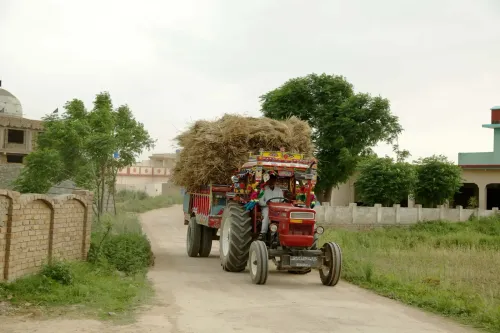
Yet the supply system has continued to overproduce cereals and sugar while underproducing the very food groups those guidelines prioritise. The FAO brief's data on widening vegetable and fruit supply gaps despite years of stated intent exposes a fundamental disconnect between agricultural incentives and public health goals. For India, which shares a long border and regional food trade architecture with Pakistan, an increasingly food-insecure neighbour with a population heading toward 330 million is not just a humanitarian concern — it is a geopolitical variable worth watching.
NationPress
26 Oct 2026
Frequently Asked Questions
What did the FAO report say about Pakistan's food supply?
The FAO policy brief found that Pakistan's food supply has consistently failed to meet its own national dietary guidelines between 2010 and 2023, with critical shortages in fruits, vegetables, pulses, roots, and tubers, while cereals and sugar remain in excess of recommended levels. Over 60% of Pakistan's population cannot afford a healthy diet.
How did Pakistan rank on the Global Hunger Index 2026?
Pakistan ranked 106th out of 122 countries on the Global Hunger Index 2026, with a score of 25.5, classified as a 'serious' level of hunger. It was the second-worst performer in South Asia, trailing only Afghanistan, which scored 28.6.
What is driving Pakistan's food insecurity?
Key drivers include a widening gap between food supply and dietary requirements, rapid population growth from 189.3 million in 2010 to 235.2 million in 2023, affordability barriers, post-harvest losses, and growing climate-related risks to agriculture.
What has the FAO recommended to address Pakistan's food crisis?
The FAO has urged Pakistan to implement coordinated fiscal and regulatory measures, realign agricultural production and trade priorities toward nutritious food groups, improve food distribution infrastructure, reduce post-harvest losses and food waste, and strengthen consumer demand for healthy diets.
When did Pakistan adopt its food-based dietary guidelines?
Pakistan adopted its food-based dietary guidelines in 2018. However, the FAO brief notes that these guidelines cannot be achieved in practice until people have equitable access to nutritious and affordable food — a condition that currently does not hold for the majority of the population.