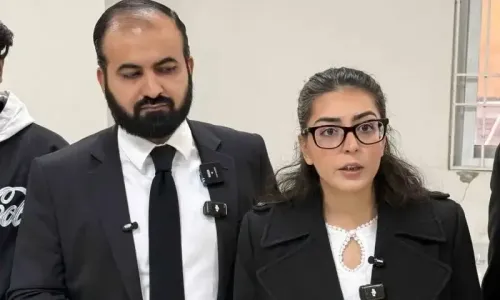
Pakistan re-arrests rights lawyers hours after Supreme Court bail order
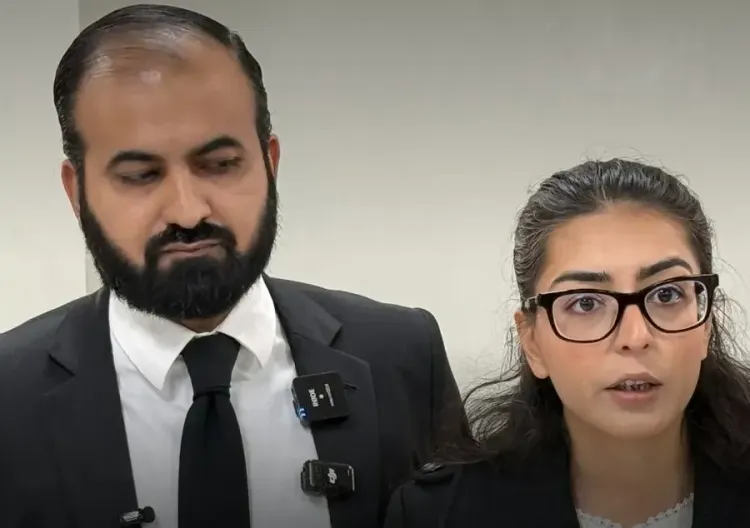
Synopsis
Hours after Pakistan's Supreme Court suspended their 17-year PECA sentences and ordered bail, rights lawyers Imaan Zainab Mazari-Hazir and Hadi Ali Chattha were re-arrested using a dormant FIR — with Anti-Terrorism Act charges allegedly added by hand. A collective of 243 legal and civil society figures, backed by Amnesty International, says this is a deliberate attempt to weaponise the justice system against critical voices.
Key Takeaways
Imaan Zainab Mazari-Hazir and Hadi Ali Chattha were re-arrested by Islamabad police on 17 September 2026 , hours after the Supreme Court of Pakistan ordered their release on bail.
The two lawyers had served nearly nine months on 17-year sentences under the Prevention of Electronic Crimes Act (PECA) .
A dormant FIR dated 22 March 2025 was activated to block their release; charges under Section 7 of the Anti-Terrorism Act reportedly added 'belatedly by hand.' A collective of 243 lawyers, academics, and civil society members has condemned the re-arrest and demanded immediate unconditional release.
Amnesty International's Deputy Regional Director for South Asia, Babu Ram Pant , called the re-arrest 'politically motivated' and the charges 'absurd.'
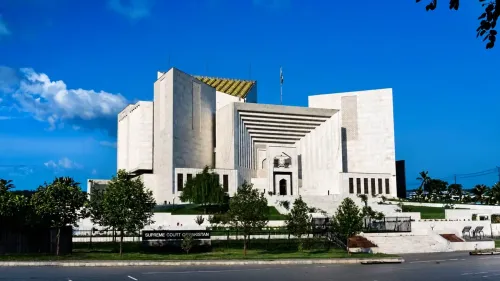
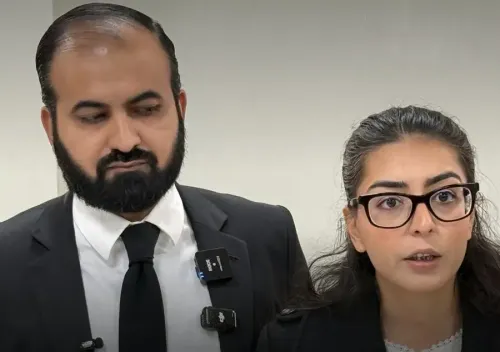
An independent collective of 243 lawyers, academics, and civil society members in Pakistan has strongly condemned the re-arrest of human rights advocates Imaan Zainab Mazari-Hazir and Hadi Ali Chattha by Islamabad police on 17 September 2026 — mere hours after the Supreme Court of Pakistan suspended their 17-year sentences under the Prevention of Electronic Crimes Act (PECA) and ordered their release on bail.
What Happened
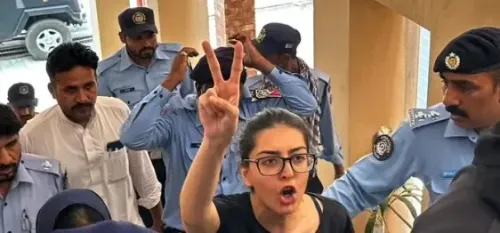
According to the collective's statement, the two lawyers had been held for nearly nine months following a trial the signatories described as marred by 'contraventions of constitutional and international fair trial and due process guarantees.' Their imminent release was blocked when authorities produced a separate, dormant First Information Report (FIR) registered on 22 March 2025, which the collective says was activated specifically to circumvent the Supreme Court's judicial order.
The FIR alleges that Imaan and Hadi chanted 'anti-government' slogans at a protest. Critically, according to the statement, 'no section of the Anti-Terrorism Act (ATA) had been added' at the time of registration — charges under Section 7 of the ATA reportedly appear to have been inserted 'belatedly by hand,' raising serious questions about the integrity of the proceedings.
Amnesty International's Condemnation
Human rights organisation Amnesty International also condemned the re-arrest on Friday. Babu Ram Pant, Amnesty International's Deputy Regional Director for South Asia, said the re-arrest 'dispels any pretence that the charges against them are anything other than a politically motivated attempt to punish them for their human rights work.'
Pant further stated that the latest charges — brought for 'simply attending a peaceful protest' — are 'not only absurd but an insult to their lifelong commitment to human rights.' He called on Pakistani authorities to release Imaan and Hadi 'immediately and unconditionally, with no further charges to prolong their detention.'
Demands of the Collective
The 243-strong collective — comprising lawyers, academics, and civil society figures — outlined three key demands. First, that all charges and criminal proceedings against the two lawyers related to their 'legitimate professional activities and exercise of freedom of expression' be immediately dropped. Second, that their safety and due process rights be guaranteed, including protection from 'further arbitrary detention, ill-treatment, or intimidation.' Third, that all lawyers in Pakistan be allowed to perform their professional duties 'without fear of reprisals,' in line with international standards.
Broader Pattern of Concern
This case has drawn particular attention because the re-arrest came within hours of a Supreme Court order for release — a sequence critics argue represents a direct attempt by law enforcement to circumvent judicial authority. Notably, the use of dormant FIRs to override court-ordered bail is a pattern that rights groups say has been employed increasingly against dissenting voices in Pakistan. The PECA, under which the original 17-year sentences were handed down, has itself faced sustained criticism from press freedom and legal advocacy organisations as being used to silence critical voices.
With international pressure mounting and the Supreme Court's authority effectively challenged on the ground, the fate of Imaan Zainab Mazari-Hazir and Hadi Ali Chattha is likely to become a key test case for judicial independence and civil liberties in Pakistan.
Point of View
Which, if proven, would represent a deliberate manipulation of the legal record. Pakistan's civil society has long warned that PECA and ATA are being wielded as instruments of political suppression rather than security. The international response, led by Amnesty International, is unlikely to change calculus in Islamabad without sustained diplomatic pressure — but the Supreme Court's next move will be the real indicator of whether judicial independence retains any practical meaning in this context.
NationPress
20 Sept 2026
Frequently Asked Questions
Why were Imaan Zainab Mazari-Hazir and Hadi Ali Chattha re-arrested?
They were re-arrested by Islamabad police on 17 September 2026 using a dormant FIR from March 2025, just hours after the Supreme Court of Pakistan suspended their 17-year PECA sentences and ordered their release on bail. Critics, including Amnesty International, say the re-arrest was politically motivated to prevent their release.
What were the original charges against the two lawyers?
Imaan Zainab Mazari-Hazir and Hadi Ali Chattha were sentenced to 17 years each under the Prevention of Electronic Crimes Act (PECA). The Supreme Court of Pakistan suspended those sentences on 17 September 2026 and ordered their release on bail.
What is the Anti-Terrorism Act charge and why is it controversial?
The new FIR alleges the two lawyers chanted 'anti-government' slogans at a protest. According to the collective's statement, Section 7 of the Anti-Terrorism Act was not part of the original FIR and appears to have been added 'belatedly by hand,' raising serious concerns about the integrity of the legal proceedings.
Who has condemned the re-arrest?
An independent collective of 243 lawyers, academics, and civil society members issued a formal condemnation. Amnesty International also condemned the re-arrest, with Deputy Regional Director for South Asia Babu Ram Pant calling it a 'politically motivated attempt to punish them for their human rights work.'
What are the demands of the collective and Amnesty International?
Both the collective and Amnesty International are demanding the immediate and unconditional release of Imaan and Hadi, the dropping of all charges related to their professional activities, guarantees of their safety and due process rights, and assurances that all lawyers in Pakistan can work without fear of reprisals.