Pakistan minority reforms: Rights groups push 28th Amendment demands
Synopsis
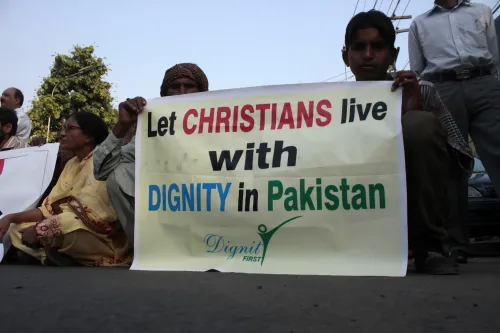
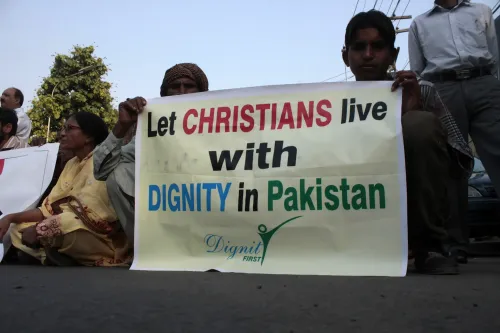
As Pakistan deliberates its 28th Constitutional Amendment, minority rights groups are demanding direct electoral representation, a ban on forced conversions of minors, and an end to discriminatory hiring — all against a backdrop of at least six Christian sanitation workers dying in toxic sewer accidents since April. The deaths and the reform push together expose how deeply structural exclusion runs in Pakistan's legal and labour systems.
Key Takeaways
Minorities Alliance Pakistan (MAP) presented a reform package at a press conference in Islamabad calling for changes under the proposed 28th Constitutional Amendment Bill .
MAP chairman Akmal Bhatti demanded amendments to Articles 51 and 106 to allow direct elections for minority and women's reserved seats.
The package proposes banning religious conversion of persons below 18 years without informed consent before a judicial magistrate.
At least six Christian sanitation workers have died in sewer-related incidents across Faisalabad , Sahiwal , and Karachi since April 2025 .
Christians make up approximately 1.37 per cent of Pakistan's population and are disproportionately employed in hazardous sanitation work, according to rights groups.
Minority Concern Director Alexander Mughal called the situation a matter of 'human dignity, equality, and justice.'
Minority rights organisations in Pakistan have urged the federal government to incorporate sweeping constitutional protections for religious minorities, women, and children within the proposed 28th Constitutional Amendment Bill. The appeal was made at a press conference in Islamabad, where leaders of the Minorities Alliance Pakistan (MAP) and allied groups presented a formal reform package addressing political representation, religious freedom, and child protection.
Key Demands Placed Before Parliament
MAP chairman Akmal Bhatti argued that Pakistan could not function as a genuine pluralistic democracy so long as constitutional provisions barred non-Muslims from holding the offices of President and Prime Minister, and while minority communities lacked direct democratic representation. Bhatti called for amendments to Articles 51 and 106 of the Constitution to introduce direct elections for seats reserved for non-Muslims and women in the National Assembly and provincial assemblies.
The reform package also proposes banning religious conversion of individuals below the age of 18 years unless free and informed consent is formally recorded before a judicial magistrate — a measure aimed at curbing forced conversions. Bhatti urged the Parliamentary Committee on Constitutional Reforms to consult minority communities, legal experts, and civil society organisations before finalising the amendment package.
Sanitation Workers: A Pattern of Deadly Discrimination
The push for constitutional reform comes amid a series of deaths among Christian sanitation workers — deaths that advocacy groups have linked to what they term systemic discrimination. On 7 May, Shabbir Masih, 33, died after inhaling toxic gas in a 25-foot-deep sewer line in Faisalabad. Three days earlier, Shakeel Masih and Samar Masih died while cleaning a sewer line in Sahiwal. In April, three more Christian workers died in similar incidents in Karachi, according to reports.
Minority advocacy group Minority Concern attributed these deaths to unsafe working conditions, inadequate protective equipment, and limited employment opportunities beyond sanitation work — all rooted, it said, in deep-seated discrimination against Christians in Pakistan.
Workers Contradict Official Claims on Safety Equipment
Christian sanitation worker Shafiq Masih disputed official assertions that workers are provided with adequate Personal Protective Equipment (PPE). 'Each of the Water and Sanitation Authority field office responsible for sewer maintenance reportedly has only one PPE suit, shown only to visiting officials or media. Even that imported suit from Japan is not suitable for local conditions — it is heavy and impractical. The death toll is higher than reported,' he said.
Minority Concern Director Alexander Mughal said: 'Sanitary workers are indispensable members of society. No individual should risk their life simply for carrying out essential public service work.' He added that protecting the rights and safety of Christian sanitation workers was 'not only a labour issue — it is a matter of human dignity, equality, and justice.'
The Broader Context
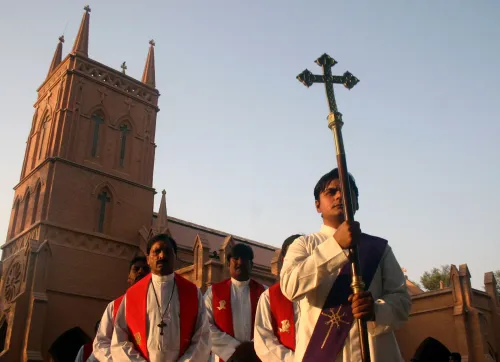
Christians comprise approximately 1.37 per cent of Pakistan's population and have historically been pushed into low-paid sanitation roles linked to marginalised caste structures in South Asia. Rights groups including Minority Concern have called on Pakistani authorities to end discriminatory hiring practices that channel minorities into hazardous work. This is not the first time such demands have been raised — minority rights advocates have repeatedly flagged structural exclusion, but constitutional change has remained elusive. The proposed 28th Amendment, if it proceeds, represents a rare legislative opening for these communities to press their case.
Point of View
But the odds are long. The country has debated minority representation for decades without meaningful reform, and the 28th Amendment's primary drivers are unlikely to prioritise non-Muslim rights over more politically potent concerns. The sanitation worker deaths are not incidental to this story — they are its evidence: when constitutional exclusion is normalised, it filters down to who gets a PPE suit and who dies in a sewer. The gap between official claims of adequate safety equipment and workers' on-the-ground accounts is a credibility problem that Pakistani authorities have yet to address. Without independent oversight and enforceable anti-discrimination provisions, reform announcements risk becoming another layer of unimplemented law.
NationPress
8 Oct 2026
Frequently Asked Questions
What reforms are minority groups demanding under Pakistan's 28th Constitutional Amendment?
Minority rights groups, led by the Minorities Alliance Pakistan (MAP), are calling for direct elections to reserved seats for non-Muslims and women under Articles 51 and 106, a ban on religious conversion of persons under 18 without judicial consent, and broader equality guarantees. They have also urged the Parliamentary Committee on Constitutional Reforms to consult minority communities before finalising the amendment.
Why are Christian sanitation workers dying in Pakistan?
At least six Christian sanitation workers have died since April 2025 while cleaning sewer lines in Faisalabad, Sahiwal, and Karachi, reportedly due to toxic gas exposure and inadequate protective equipment. Advocacy group Minority Concern attributes the deaths to systemic discrimination that channels Christians into hazardous sanitation work with insufficient safety safeguards.
Who is Akmal Bhatti and what has he called for?
Akmal Bhatti is the chairman of the Minorities Alliance Pakistan (MAP). He has called for constitutional amendments to allow non-Muslims to hold the offices of President and Prime Minister, introduce direct electoral representation for minorities, and protect children from forced religious conversion and child marriage.
What did Minority Concern Director Alexander Mughal say about the sanitation worker deaths?
Alexander Mughal said sanitation workers are 'indispensable members of society' and that no individual should risk their life for carrying out essential public service. He described the issue as one of human dignity, equality, and justice — not merely a labour dispute.
What share of Pakistan's population is Christian?
Christians comprise approximately 1.37 per cent of Pakistan's population. Rights groups say they are disproportionately pushed into low-paid sanitation roles historically associated with marginalised castes, with limited access to other employment opportunities.