Pakistan keeps EU GSP+ benefits despite human rights failures, saves €732 million in 2024
Synopsis
Pakistan pocketed €732 million in EU tariff savings in 2024 under a scheme that legally requires human rights compliance — yet documented abuses against religious minorities, including 210 recorded cases of abduction and forced conversion of Christian girls, continue largely unchecked. The EU Ambassador has now warned that continued access is at risk, raising a fundamental question about whether Brussels will act or let its own conditionalities remain on paper.
Key Takeaways
Pakistan saved an estimated €732 million in EU tariffs in 2024 under the GSP+ scheme despite failing its human rights obligations.
The preferential trade arrangement, in place since 1 January 2014 , grants Pakistan zero tariffs on roughly two-thirds of product categories.
EU Ambassador Raimundas Karoblis warned Pakistan's GSP+ access could be jeopardised without meaningful human rights progress.
At least 210 cases of abduction, forced conversion, and child marriage involving Christian girls were documented between 2019 and 2025 , per the Jubilee Campaign report presented to the European Parliament .
The Voice of Pakistan Minority (VOPM) said more than 83% of victims are minors, with an average age of just 12.8 years .
A 21-year-old Christian woman, Saba Mehboob , was reportedly shot dead in Rawalpindi by a neighbour whose advances she had rejected.
Pakistan remains the largest beneficiary of the European Union's Generalised Scheme of Preferences Plus (GSP+), saving an estimated €732 million in tariff costs in 2024 alone — even as it continues to fall short of the human rights obligations that are a formal condition of the scheme, according to reports. The development has drawn renewed scrutiny from EU officials and international rights groups.
What the GSP+ scheme requires
Under the GSP+ arrangement, Pakistan enjoys zero tariffs on roughly two-thirds of all product categories traded with the European Union. The preferential access, in place since 1 January 2014, is explicitly tied to the implementation of international conventions covering human rights, labour rights, environmental protection, climate change, and good governance. Critics argue that after more than twelve years, Pakistan has consistently failed to honour these obligations.
EU Ambassador's warning
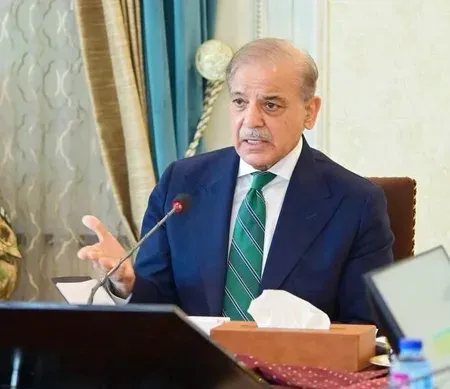
EU Ambassador to Pakistan Raimundas Karoblis has warned that Pakistan's continued access to the scheme could be jeopardised if meaningful progress on human rights is not demonstrated. He identified blasphemy cases as a major concern for the EU, noting that Pakistan's blasphemy laws — which carry penalties including the death penalty and life imprisonment under the Pakistan Penal Code — are reportedly being used to intimidate Christians and other religious minorities. Rights activists argue that these communities live under constant fear of blasphemy accusations and violent threats.
Documented pattern of minority persecution
The ambassador's remarks come amid a documented and worsening pattern of abuses against Pakistan's religious minorities. A report titled 'Stolen Girls', presented at the European Parliament by the US-based advocacy group Jubilee Campaign, documented at least 210 cases of abduction, forced conversion, and child marriage involving Christian girls in Pakistan between 2019 and 2025. The Voice of Pakistan Minority (VOPM) said that more than 83 per cent of the victims are minors, with an average age of just 12.8 years, and that perpetrators are on average around 35 years old — resulting in age gaps often exceeding 20 or even 30 years.
The VOPM said the persistent failure of Pakistani state institutions — including the police, judiciary, and administrative authorities — to respond effectively has 'fostered an environment of near impunity for perpetrators.' The organisation noted that affected families are frequently left to navigate a system stacked against them, while victims are denied both protection and a meaningful voice.
Recent violence against minorities
Adding to the grave concern, a 21-year-old Christian woman was recently killed inside her home in Rawalpindi, reportedly by a Muslim neighbour whose romantic advances she had rejected. The victim, identified as Saba Mehboob, was shot dead by the alleged suspect, Adnan Butt, according to her brother Joshua Mehmood. After the killing, the suspect allegedly kidnapped her teenage stepbrother and pressured him to falsely confess to the murder, according to reports citing Christian Daily International-Morning Star News. In a separate development in August, a leading minority rights body expressed grave concern over a growing pattern of forced conversions and child marriages targeting minority girls across the country.
The critical question for the EU
Turkey-born journalist Uzay Bulut, writing in PJ Media, framed the central dilemma: 'How can the European Union justify granting aid and trade privileges to a regime that imprisons people for blasphemy and treats its non-Muslim communities as second-class citizens?' The EU has not yet announced formal proceedings to suspend or revoke Pakistan's GSP+ status. The next review of compliance is expected to be closely watched by rights advocates, who argue that continued inaction by Brussels would render the scheme's human rights conditionalities meaningless.
Point of View
That leverage has effectively been surrendered. Brussels faces a credibility problem: if €732 million in annual tariff savings cannot compel basic protections for minority communities, the human rights conditionality is ornamental, not operational. The documented pattern — 210 forced conversion cases, an average victim age of 12.8, a climate of blasphemy-law intimidation — is not new information for EU policymakers. What is new is a sitting EU ambassador publicly naming the risk. Whether that warning translates into a formal compliance review or remains diplomatic signalling will define whether GSP+ is a trade tool or a public relations exercise.
NationPress
27 Sept 2026
Frequently Asked Questions
What is the EU's GSP+ scheme and why does it matter for Pakistan?
The EU's Generalised Scheme of Preferences Plus (GSP+) grants qualifying countries — including Pakistan — preferential or zero tariffs on around two-thirds of product categories, in exchange for implementing international conventions on human rights, labour rights, and governance. Pakistan has benefited from the scheme since 1 January 2014 and saved an estimated €732 million in tariff costs in 2024 alone, making it the scheme's largest beneficiary.
Why is Pakistan's GSP+ status under scrutiny?
Pakistan has reportedly failed to meet the human rights obligations attached to the GSP+ arrangement for over twelve years. EU Ambassador Raimundas Karoblis has warned that continued access could be jeopardised unless meaningful progress is demonstrated, citing blasphemy laws and the persecution of religious minorities as major concerns.
What does the 'Stolen Girls' report reveal about Pakistan's minorities?
The report, presented at the European Parliament by the US-based Jubilee Campaign, documented at least 210 cases of abduction, forced conversion, and child marriage involving Christian girls in Pakistan between 2019 and 2025. The Voice of Pakistan Minority noted that more than 83% of victims are minors, with an average age of 12.8 years.
What are Pakistan's blasphemy laws and why are they controversial?
Pakistan's blasphemy laws, under the Pakistan Penal Code, carry severe punishments including the death penalty and life imprisonment. Rights groups and the EU Ambassador have said these laws are reportedly being used to intimidate Christians and other religious minorities, creating a climate of fear and near impunity for those who weaponise the accusations.
Could the EU suspend or revoke Pakistan's GSP+ status?
The EU has the formal mechanism to suspend GSP+ access if a beneficiary country fails to implement required conventions. While no suspension proceedings have been announced, EU Ambassador Karoblis has publicly warned that Pakistan's access is at risk without demonstrable human rights improvement, signalling that a formal review is possible.