Pakistan security crisis dents foreign investor confidence: OICCI 2026 survey
Synopsis
A fresh OICCI survey lays bare the scale of Pakistan's security problem: 71% of foreign companies now rank law and order among their top three business concerns, street crime in Karachi and Quetta is rising year-on-year, and 88% say the Middle East conflict is hitting their operations. For a country desperately seeking foreign investment, the numbers are a damaging indictment of ground realities.
Key Takeaways
71 per cent of OICCI member company leaderships ranked security among their top three business concerns in the 2026 Security Survey .
Security conditions worsened for 42 per cent of respondents in Karachi and for 81 per cent in Quetta .
Street crime in Karachi rose to 50 per cent (from 45 per cent ); in Quetta it jumped to 37 per cent from 24 per cent .
86 per cent of respondents across the rest of Balochistan reported deteriorating security conditions.
88 per cent of respondents said the Middle East conflict had impacted their organisations.
OICCI has called on the Pakistan government to strengthen policing and accelerate institutional reforms.
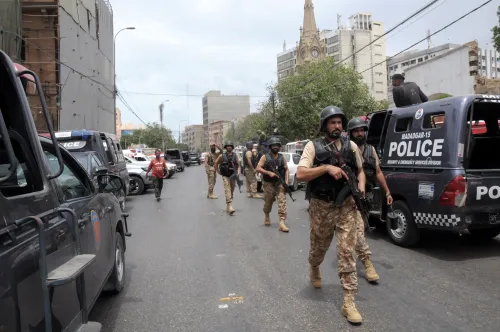
Foreign companies operating in Pakistan are growing increasingly wary of the country's deteriorating law and order situation, according to findings from the Overseas Investors Chamber of Commerce and Industry (OICCI) Security Survey 2026. The survey, cited in a report by Express Tribune, reveals that worsening security conditions — particularly in Karachi and Pakistan's western regions — are eroding investor confidence and disrupting business operations.
Security Among Top Business Concerns
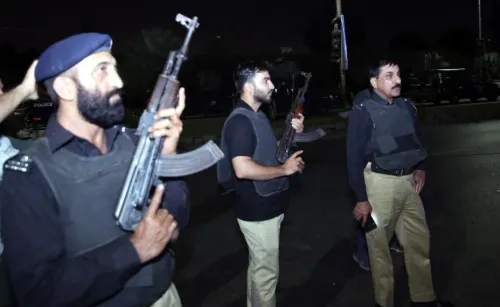
Top leadership of 71 per cent of OICCI member companies ranked security among their top three business concerns, the survey found. OICCI Secretary General M Abdul Aleem stated that sustaining investment momentum requires consistent improvements in public safety, underscoring that law and order remains a structural barrier to attracting and retaining foreign capital.
Overall, 32 per cent of respondents said security conditions affecting their businesses had deteriorated — up from 28 per cent in the previous year — signalling a year-on-year worsening trend.
Karachi and Balochistan Hit Hardest
Security perceptions in Karachi, Pakistan's commercial capital, continued to slide, with 42 per cent of respondents reporting a worsening environment, up from 41 per cent in 2025. Street crime remained the foremost concern in the city, with 50 per cent of respondents reporting an increase — compared to 45 per cent the previous year.
The situation in Balochistan was significantly more alarming. In Quetta, 81 per cent of respondents reported deteriorating security, while 86 per cent across the rest of Balochistan said the same. Street crime in Quetta rose sharply, with 37 per cent reporting an increase, up from 24 per cent a year earlier.
Employee safety during daily commutes also worsened, with concerns rising in Karachi (from 41 per cent to 45 per cent) and in Quetta (from 79 per cent to 83 per cent), according to the survey data.
Middle East Conflict Adding to Business Stress
Beyond domestic insecurity, 88 per cent of respondents said the ongoing Middle East conflict had affected their organisations. Supply chain security, reduced business activity, and employee safety emerged as the three primary concerns stemming from the regional spillover — compounding an already fragile operating environment for foreign businesses in Pakistan.
What OICCI Is Demanding
The OICCI has urged Pakistan's government to sustain targeted security interventions, strengthen policing, and accelerate institutional reforms. The chamber's position is that businesses require a more predictable and secure operating environment before investment confidence can meaningfully recover. Notably, these recommendations mirror calls made in previous years, raising questions about the pace of implementation.
What This Means for Pakistan's Investment Climate
Pakistan has been actively courting foreign direct investment amid a fragile economic recovery, but the OICCI findings suggest that security dysfunction is undermining those efforts at the ground level. This comes amid broader concerns about political instability and fiscal stress in the country. Without measurable progress on law and order — particularly in Karachi and Balochistan — analysts warn that foreign companies may scale back or defer expansion plans, deepening Pakistan's investment deficit.
Point of View
And Balochistan's near-universal negative sentiment (86 per cent) suggests the western corridor is effectively off-limits for many businesses. Pakistan's economic managers have been pitching investment corridors and SEZs to foreign capitals, but the OICCI numbers reveal a fundamental contradiction — you cannot sell an investment destination when your own investor community is citing security as a top-three risk. Until institutional reforms translate into measurable ground-level improvements, these surveys risk becoming an annual ritual of concern without consequence.
NationPress
10 Oct 2026
Frequently Asked Questions
What does the OICCI Security Survey 2026 say about Pakistan's business environment?
The OICCI Security Survey 2026 found that 71 per cent of member company leaderships ranked security among their top three business concerns, with worsening conditions reported in Karachi, Quetta, and across Balochistan. Overall, 32 per cent of respondents said security conditions affecting their businesses had deteriorated, up from 28 per cent the previous year.
How bad is the security situation in Karachi for businesses?
In Karachi, 42 per cent of respondents reported a worsening security environment in 2026, up from 41 per cent in 2025. Street crime was the top concern, with 50 per cent reporting an increase compared to 45 per cent the prior year, and employee commute safety concerns also rose to 45 per cent from 41 per cent.
Which region of Pakistan has the worst security perception among foreign businesses?
Balochistan recorded the most alarming figures, with 81 per cent in Quetta and 86 per cent across the rest of the province reporting deteriorating security. Street crime in Quetta rose sharply from 24 per cent to 37 per cent year-on-year.
How has the Middle East conflict affected foreign companies in Pakistan?
According to the OICCI survey, 88 per cent of respondents said the Middle East conflict had affected their organisations. The primary impacts cited were supply chain disruptions, reduced business activity, and heightened employee safety concerns.
What has OICCI asked the Pakistan government to do?
The OICCI has urged the government to sustain targeted security interventions, strengthen policing, and accelerate institutional reforms to create a more predictable and secure operating environment for foreign businesses.