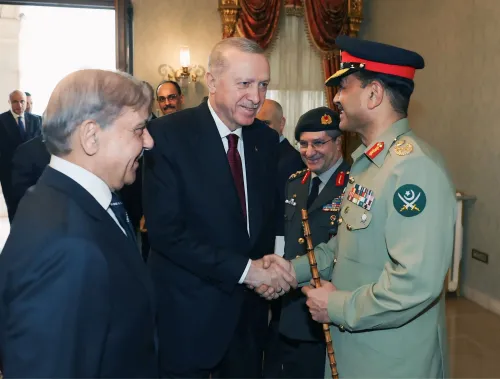
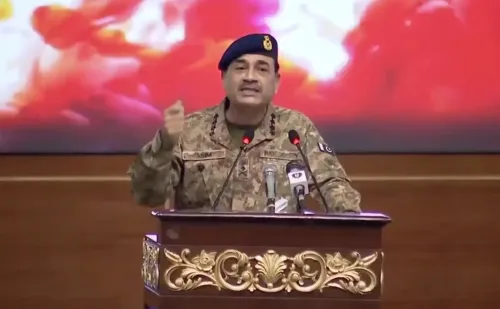
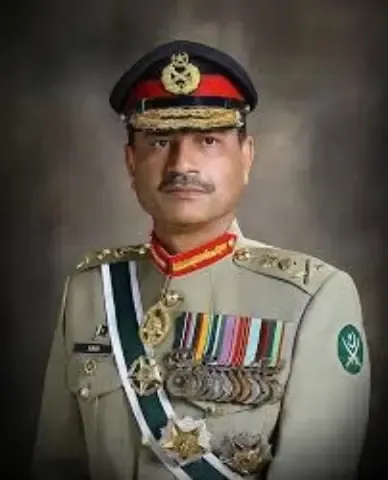
Pakistan's worst security slide in a decade under Asim Munir: MEMRI report
Synopsis
Pakistan recorded 1,066 militant attacks in 2025 — the highest since 2014 — under Field Marshal Asim Munir, who has simultaneously positioned himself as a regional peace broker. A MEMRI analysis exposes the stark contradiction: a military that mediates abroad while deploying coercion, disappearances, and narrative control at home, with no measurable security dividend to show for it.
Key Takeaways
Militant attacks in Pakistan rose from 380 in 2022 to 1,066 in 2025 under Army Chief Asim Munir , according to PICSS .
2025 recorded Pakistan's highest militant attacks since 2014 , worst security-force fatalities since 2011 , and worst civilian deaths since 2015 .
Munir was elevated to Field Marshal in 2025 despite the deteriorating security environment.
The Joint Awami Action Committee (JAAC) was banned under anti-terror laws in PoK , triggering deadly protests near Rawalakot and Muzaffarabad .
HRW reported that Pakistani authorities used broad laws in 2025 to crack down on media, political opposition, and civil society.
A MEMRI analysis concludes that Pakistan's hard-security model has deepened instability in Balochistan , Khyber Pakhtunkhwa , and along the Afghanistan border.
Pakistan has recorded its worst internal security deterioration in over a decade under Army Chief General Asim Munir, according to a detailed analysis published by the Middle East Media Research Institute (MEMRI). The report, released in July 2025, argues that Munir's hard-security doctrine — built on military sweeps, mass arrests, and narrative control — has deepened instability rather than resolved it.
The Security Data Behind the Claim
According to figures cited from the Pakistan Institute for Conflict and Security Studies (PICSS), militant attacks in Pakistan rose sharply year-on-year under Munir's tenure: from 380 attacks in 2022 to 645 in 2023, 908 in 2024, and 1,066 in 2025. PICSS assessed that 2025 recorded the highest number of militant attacks since 2014, the highest security-force fatalities since 2011, and the worst civilian death toll since 2015.
Munir was elevated to the rank of Field Marshal in 2025, yet the security indicators during his tenure present a sharply different picture from the image of a stabilising military commander that official narratives have cultivated.
The Hard-Security Model and Its Failures
When Munir assumed command in 2022, Pakistan was already grappling with renewed militancy, unrest in Balochistan and Khyber Pakhtunkhwa, and deteriorating relations with Afghanistan. Rather than pursuing political accommodation, the military deepened its reliance on coercive tools: cross-border strikes, bans on political organisations, centralised army control, and mass detentions.
The MEMRI report states: 'The contradiction is structural, not cosmetic, and sits at the center of Munir's security approach. Abroad, Pakistan speaks the language of ceasefire, dialogue and mediation. At home, the state relies on coercion, bans, arrests, disappearances, military sweeps and collective punishment.'
The report further notes that Balochistan remains politically alienated, Khyber Pakhtunkhwa remains volatile, the former tribal belt remains heavily militarised, and relations with Afghanistan have escalated from diplomatic tension to repeated armed confrontations.
Pakistan-Occupied Kashmir and the JAAC Crackdown
The coercive approach has also been applied in Pakistan-occupied Kashmir (PoK). Protests near Rawalakot and Muzaffarabad in June 2025 turned violent after the Joint Awami Action Committee (JAAC) — a civil-society group demanding political and economic rights — was banned under anti-terror legislation. The crackdown drew criticism from rights organisations and added another layer to what the MEMRI report describes as Pakistan's compounding internal crisis.
Narrative Management Over Accountability
Human Rights Watch (HRW) separately assessed that Pakistani authorities in 2025 used vague and overly broad laws to intensify crackdowns on media freedom, political opposition, and civil society. The MEMRI report draws a direct line between this information control and the failure to address root causes of militancy.
'Every major failure is reframed as a foreign conspiracy, every protest is treated as a security threat, and every military escalation is projected as national resolve. But narrative control cannot substitute for public security,' the MEMRI report noted. 'The result is a state that polices criticism more aggressively than it resolves the conditions producing militancy.'
Critics argue that the same military leadership that presents itself as a mediator between Iran and Washington has been unable — or unwilling — to create political space for its own Baloch, Pashtun, and Kashmiri citizens. As militant attacks continue to rise and civilian casualties mount, the gap between Pakistan's international posture and its domestic security reality appears to be widening.
Point of View
And it has repeatedly failed to address the political grievances that sustain militancy. Until the military's international image-building is held to the same standard as its domestic casualty count, the gap between narrative and reality will only widen.
NationPress
22 Jul 2026
Frequently Asked Questions
What does the MEMRI report say about Pakistan's security under Asim Munir?
The Middle East Media Research Institute (MEMRI) report concludes that Pakistan has experienced one of its worst internal security slides in over a decade under Army Chief Asim Munir. Citing PICSS data, it documents a surge in militant attacks from 380 in 2022 to 1,066 in 2025, alongside record security-force and civilian fatalities.
How many militant attacks occurred in Pakistan in 2025?
According to the Pakistan Institute for Conflict and Security Studies (PICSS), Pakistan recorded 1,066 militant attacks in 2025 — the highest annual figure since 2014. The same year also saw the highest security-force fatalities since 2011 and the worst civilian death toll since 2015.
Why did protests in Pakistan-occupied Kashmir turn violent?
Protests near Rawalakot and Muzaffarabad in PoK turned deadly in June 2025 after Pakistani authorities banned the Joint Awami Action Committee (JAAC) under anti-terror laws. The JAAC is a civil-society group that had been demanding political and economic rights for residents of the region.
What is the contradiction in Pakistan's security posture that the MEMRI report highlights?
The report argues that Pakistan presents itself internationally as a mediator — between Iran and Washington, for instance — while domestically relying on coercion, mass arrests, enforced disappearances, and narrative control. It describes this as a structural contradiction at the core of Munir's approach, not a superficial inconsistency.
What did Human Rights Watch say about Pakistan in 2025?
Human Rights Watch (HRW) assessed that Pakistani authorities in 2025 used vague and overly broad laws to intensify crackdowns on media freedom, political opposition, and civil society. The MEMRI report cites this as evidence that the state focuses more on suppressing criticism than on addressing the conditions that produce militancy.