Investigative Report Reveals Pakistan's AI-Driven Disinformation Campaigns Targeting Bangladesh

Synopsis
A recent investigation uncovers how Pakistan-linked disinformation networks are manipulating Bangladesh's digital landscape through AI and social media, aiming to shift public perceptions and geopolitical narratives. These campaigns employ fear tactics and false narratives, posing significant challenges to regional stability.
Key Takeaways
Pakistan-linked networks are utilizing AI and social media for disinformation.
Efforts aim to manipulate public perception in Bangladesh.
Common themes include fear-driven narratives and false claims.
AI-generated content enhances the reach of misleading information.
Cross-border disinformation poses risks to regional stability.
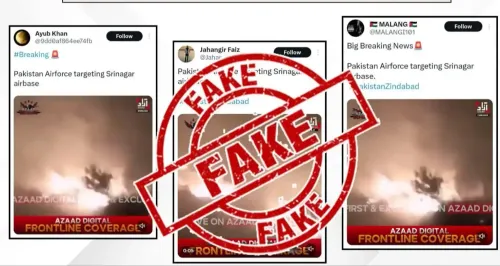
New Delhi, April 5 (NationPress) Networks of disinformation linked to Pakistan are strategically targeting Bangladesh through coordinated digital initiatives. These efforts make extensive use of social media platforms, artificial intelligence tools, and local amplification networks to influence public narratives and geopolitical perceptions, as revealed in a recent investigation.
The report emphasizes how individuals associated with Pakistan systematically promote narratives that depict India as a destabilizing influence while presenting Pakistan as a favorable strategic ally for Bangladesh.
The investigation indicates that these digital campaigns usually start on the social media platform X and are further disseminated throughout Bangladeshi digital spaces, especially via Facebook groups and pages. Local accounts help amplify this content, giving it the semblance of genuine traction and allowing it to penetrate mainstream discussions.
The study identifies common themes in the messaging, such as fear-driven narratives, identity-centric topics, and efforts to influence views on regional security dynamics.
A notable instance cited involves the circulation of false information regarding alleged operations by the Research and Analysis Wing (RAW), which gained significant traction online and was, in some cases, reported by sections of the Bangladeshi media, thereby greatly expanding its reach.
Another narrative highlighted in the report pertains to defense collaboration. Accounts associated with Pakistan spread claims suggesting that Bangladesh was on the verge of acquiring JF-17 Thunder fighter jets, which are co-developed with China.
The report points out that these claims were not officially confirmed by Bangladeshi authorities but were amplified in a manner that fostered the impression of an imminent policy change.
Furthermore, the investigation reveals that such campaigns often commence with speculative or limited data, which are then escalated through coordinated messaging into definitive assertions. This approach, the report suggests, aims to manufacture consensus and shape public dialogue on strategic and policy matters.
A significant aspect highlighted in the report is the rising use of AI-generated content, including videos, voiceovers, and manipulated visuals, to enhance the credibility and virality of misleading messages across various platforms.
The report also notes an ideological dimension within these campaigns, promoting themes of broader “Muslim unity” and advocating for closer defense ties with Pakistan, often juxtaposed against India’s role in the region.
The findings emerge amid shifting political dynamics in Bangladesh and a rapidly evolving digital information landscape, where online platforms are increasingly pivotal in molding public opinion.
The report, released by The Dissent and authored by Sayed Hasan Al Manzur, highlights that such cross-border disinformation operations represent a growing challenge for South Asia, with potentially serious implications for democratic discourse, media credibility, and regional stability, necessitating heightened vigilance and coordinated counteractions.
Point of View
It’s imperative to recognize the significance of this report. The systematic efforts by disinformation networks linked to Pakistan to influence Bangladesh's digital discourse underscore a pressing threat to democratic integrity and regional stability. It is essential to remain vigilant and counter these narratives with factual reporting.
NationPress
19 Sept 2026
Frequently Asked Questions
What are the main findings of the report?
The report reveals that Pakistan-linked disinformation networks are using AI and social media to manipulate public perceptions in Bangladesh, promoting narratives that favor Pakistan while portraying India negatively.
How are these disinformation campaigns executed?
The campaigns typically start on social media platform X and spread through local amplification on platforms like Facebook, giving an illusion of organic traction.
What tactics are employed in these campaigns?
Common tactics include fear-based messaging, identity-driven themes, and the spread of false narratives, such as unverified claims about defense cooperation.
What is the role of AI in these disinformation efforts?
AI is increasingly utilized to create persuasive content, including videos and visuals, to enhance the credibility and reach of misleading narratives.
What implications do these findings have for South Asia?
The findings highlight a growing challenge for democratic discourse and media integrity in South Asia, necessitating coordinated countermeasures against disinformation.