Is Pakistan Using Disinformation to Manipulate Domestic and Global Opinion?
Synopsis
A recent report highlights Pakistan's extensive strategy of disinformation aimed at influencing both domestic and international narratives. Discover how these tactics undermine trust and stability in the region while serving the nation’s geopolitical interests.
Key Takeaways
Disinformation as a Strategy: Pakistan employs a systematic approach to manipulate narratives.
Regional Instability: These tactics contribute to distrust and diplomatic challenges with neighboring countries.
Media Control: State-controlled media and social platforms are used to spread misinformation.
Proxy Organizations: Indirect use of proxies amplifies disinformation efforts.
Emotional Manipulation: Religious sentiments are exploited to consolidate domestic opinion.
Islamabad, Nov 12 (NationPress) Pakistan's ongoing campaign of disinformation reveals a more extensive strategy aimed at manipulating the flow of information to fulfill its geopolitical ambitions, according to a report released on Wednesday.
These tactics have significant repercussions, contributing to regional instability by diminishing trust among neighboring nations and obstructing diplomatic initiatives aimed at fostering peace and collaboration.
"The recent attempts by Pakistan to divert criticism concerning certain media narratives, including the issue surrounding The Frontier Post, align with a historical trend of strategic manipulation and disinformation orchestrated by the Pakistani government. This state-sponsored disinformation machinery plays a crucial role in shaping both local and global perceptions, frequently taking advantage of international media platforms and social networks to project narratives that favor Pakistan's geopolitical goals," the report in the prominent Sri Lankan newspaper Daily Mirror specified.
"The Pakistani government and its intelligence services have consistently utilized disinformation as a primary mechanism to navigate the complexities of regional and international relations. This manipulation is particularly evident in its dealings with neighboring India, but it also extends to a wider global context, affecting relationships with nations like Russia, Saudi Arabia, the United Arab Emirates (UAE), and the United States," the report elaborated.
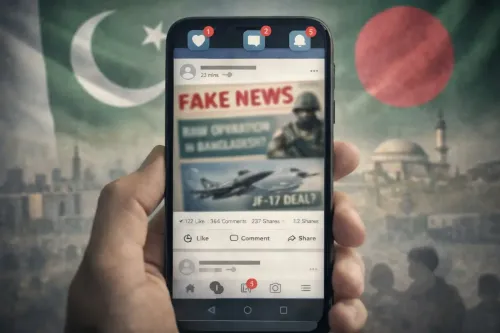
The report indicates that Pakistan's strategy in information warfare utilizes state-controlled media, social media campaigns, and indirect utilization of proxy organizations to disseminate distorted or false content aimed at misleading and polarizing targeted audiences. Such methods are crafted to promote Pakistan's diplomatic aims, rationalize its policy decisions, and deflect unfavorable international scrutiny.
"The incident involving The Frontier Post, where actors based in Pakistan were found to be publishing and amplifying false content critical of Russia's actions, aimed at creating diplomatic discord and diverting negative attention from Islamabad's own geopolitical associations. This event highlighted how nationalistic narratives were disseminated through fringe news sources and bot networks to exploit international tensions and discredit foreign powers for domestic political advantage," the report observed.
"The Makkah guard controversy in Saudi Arabia, where an alleged incident involving disrespect by guards towards pilgrims within the Grand Mosque was aggressively propagated on Pakistani social media, illustrated the extent of narrative exploitation. Despite official clarifications from Saudi authorities, Pakistani online platforms exaggerated the situation, inciting outrage among Muslim audiences and attempting to shift collective sentiment along sectarian lines. This incident serves as a prime example of how disinformation aligns with Pakistan's tendency to utilize religious and emotional triggers to consolidate domestic opinion and gain traction internationally," it emphasized.
The report underlined that Pakistan's disinformation operations function on two essential fronts—domestically shaping public opinion, stifling dissent, and managing political competition by controlling narratives through official and proxy channels. Internationally, it aims to manipulate global perceptions, steer diplomatic discussions, and counter critiques of its policies and actions, including accusations of cross-border terrorism and regional disputes.
"This dual approach underscores Pakistan's dependence on narrative control as an integral aspect of its statecraft," the report concluded.
Point of View
It is essential to recognize that while the tactics employed by Pakistan in disinformation are alarming, they also reflect broader trends in global information warfare. The priority must always be to uphold truth and integrity in journalism, ensuring that narratives are not unfairly skewed or weaponized for political gain.
NationPress
1 Oct 2026
Frequently Asked Questions
What are the main tactics used in Pakistan's disinformation strategy?
Pakistan employs tactics such as state-controlled media, social media campaigns, and proxy organizations to disseminate misleading information aimed at shaping public opinion and diverting criticism.
How does disinformation affect regional stability?
Disinformation erodes trust among neighboring countries, complicating diplomatic relations and impeding efforts for peace and cooperation.
What is the impact of the Frontier Post incident?
The Frontier Post incident illustrates how fabricated narratives are utilized to create diplomatic friction and distract from Pakistan's geopolitical alignments.
How does religious sentiment play a role in disinformation?
Pakistan often leverages religious and emotional triggers in its disinformation campaigns to rally domestic support and influence perceptions abroad.
What are the international implications of Pakistan's information warfare?
The international implications include manipulated diplomatic dialogues, countering allegations of terrorism, and shaping global perceptions of Pakistan’s policies.