Pakistan-backed disinformation campaign targets India using 'whack-a-mole' tactics
Synopsis
Indian investigators have exposed a Pakistan-backed disinformation operation that weaponised proxy social media accounts, WhatsApp, and Telegram to push fabricated narratives during protests — deliberately targeting non-BJP states. The campaign used 'informational smurfing' to flood private chats and a 'whack-a-mole' structure to survive takedowns, making it one of the most operationally sophisticated cross-border influence efforts documented by Indian agencies.
Key Takeaways
Investigators have found a multi-layered disinformation campaign allegedly backed by Pakistan targeting India amid ongoing protests.
The operation used a primary proxy account amplified by scores of secondary fake handles to manufacture the appearance of viral traction.
Posts were most heavily circulated in Jammu and Kashmir and Punjab , with officials saying non- BJP -governed states were deliberately targeted.
Informational smurfing and the whack-a-mole effect were used to flood encrypted platforms and evade fact-checkers.
WhatsApp and Telegram 's end-to-end encryption makes formal content takedowns by law enforcement extremely difficult.
An Intelligence Bureau official confirmed the challenge is 'massive' and that Pakistan-backed elements continue to develop new amplification methods.
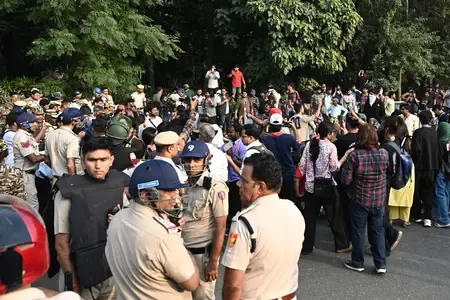
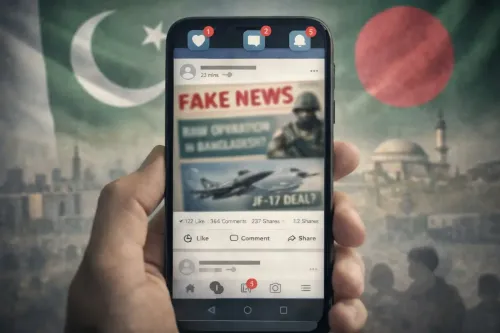
Investigators probing an ongoing wave of protests have uncovered a sophisticated, multi-layered digital warfare campaign allegedly backed by Pakistan and aimed at undermining the Indian government and discrediting its response to the unrest. The operation relied on coordinated fake accounts, encrypted messaging platforms, and psychological amplification techniques to push fabricated narratives to millions of users across India.
How the Campaign Was Structured
According to officials, the operation began with the creation of a primary proxy account, around which scores of additional proxy accounts were built. These secondary handles artificially inflated the reach of content posted by the primary account through coordinated interactions among themselves — creating a false impression of organic viral traction.
Once enough artificial engagement accumulated, genuine users began joining the conversation, further amplifying the fabricated content. As real profiles shared the posts, the fake narratives gained an air of credibility and spread well beyond the original network of proxy accounts.
Targeted States and Selective Amplification
Officials say the disinformation effort was deliberately geographically targeted. Posts were circulated most heavily in states where a non-Bharatiya Janata Party (BJP) government is in power, with Jammu and Kashmir and Punjab recording the highest levels of engagement.
'These elements were selective while choosing the location where they wanted these fake posts to go viral,' an official said. Investigators are continuing to examine patterns of engagement across digital platforms to identify further targeting.
Informational Smurfing and the Whack-a-Mole Effect
The campaign reportedly deployed two distinct techniques to maximise reach and resist fact-checking. The first, informational smurfing, involves simultaneously dropping a narrative into dozens of small, fragmented chat groups so that the content appears to surface everywhere at once, lending it false ubiquity.
The second, the whack-a-mole effect, describes a situation where each time one false claim is taken down or debunked, a new version resurfaces on a different platform or channel. Officials say this approach makes it nearly impossible to fully suppress a narrative. WhatsApp and Telegram were specifically chosen for this phase because their end-to-end encryption prevents platform moderators and fact-checkers from easily identifying or removing offending content.
The Encryption Challenge for Law Enforcement
A senior Intelligence Bureau official acknowledged the scale of the problem, noting that law enforcement agencies can make formal takedown requests when such content surfaces on open social media platforms. However, once the same material migrates to encrypted channels and is forwarded repeatedly within private groups, the ability to intervene drops sharply.
'The problem is massive and these Pakistani elements keep finding new ways to amplify fake narratives and content,' the official said. Because the material is eventually forwarded by trusted contacts — family members, community groups, professional networks — it becomes embedded in everyday perception, making debunking both difficult and slow.
What Investigators Are Looking at Next
The investigation is ongoing. Authorities are examining the full network of proxy accounts, mapping the geographic distribution of engagement, and assessing which platforms bore the heaviest load of coordinated inauthentic activity. The findings could inform both policy responses and formal requests to digital platforms for greater cooperation on cross-border disinformation operations.
Point of View
Coordinated artificial amplification, migration to encrypted channels — suggests this is not an improvised campaign but a structured, doctrine-driven effort. What is striking is the explicit geographic targeting of non-BJP states: it reveals an intent not just to spread confusion, but to exploit existing political fault lines. Indian agencies face a structural asymmetry: open platforms can be pressured for takedowns, but encrypted apps sit outside that leverage. Until India has a formal legal and diplomatic framework compelling platform cooperation on cross-border influence operations, the whack-a-mole metaphor will remain precisely accurate — each takedown is a temporary fix, not a solution.
NationPress
15 Oct 2026
Frequently Asked Questions
What is the Pakistan-backed disinformation campaign targeting India?
It is an alleged multi-layered digital influence operation in which elements backed by Pakistan created networks of proxy social media accounts to spread fake narratives during ongoing protests in India. The campaign then migrated content to WhatsApp and Telegram to evade platform moderation and reach a wider audience.
What is the 'whack-a-mole' tactic used in this campaign?
The whack-a-mole effect describes a strategy where each time a false claim is suppressed or debunked, a new version of it surfaces on a different channel or platform. Because WhatsApp and Telegram are encrypted, fact-checkers and moderators cannot easily detect or remove the content, allowing the narrative to keep circulating.
What is informational smurfing?
Informational smurfing is a technique where a fabricated narrative is simultaneously dropped into scores of small, fragmented private chat groups. This creates the illusion that the story is everywhere at once, lending it false credibility and making it harder to trace back to a single source.
Which states were most targeted by the disinformation operation?
According to officials, posts received the highest engagement in Jammu and Kashmir and Punjab. The campaign was allegedly designed to target states where a non-BJP government is in power, exploiting existing political divisions to maximise impact.
Why is it difficult for Indian authorities to counter this campaign?
Law enforcement can make formal takedown requests for content posted on open social media platforms. However, once the material moves to end-to-end encrypted channels like WhatsApp and Telegram, moderators and fact-checkers cannot easily see or act on it, allowing the fake content to keep circulating in a loop and gain false authority through repeated forwarding.