Is Pakistan’s Strategic Failure in Khyber Pakhtunkhwa Leading to an Ethnic Security Crisis?
Synopsis
As tensions escalate between Pakistan and Afghanistan, a recent report reveals a troubling shift. The Taliban's refusal to conform to Pakistan's expectations has sparked an ethnic security crisis in Khyber Pakhtunkhwa, challenging long-held military strategies. Discover the implications of this evolving situation.
Key Takeaways
Pakistan's relationship with the Taliban has deteriorated.
Military operations in Khyber Pakhtunkhwa are more about discipline than counterterrorism.
Pashtuns are viewed as a managed population under force.
The Durand Line complicates kinship and commerce for Pashtuns.
The Taliban's autonomy signals a shift in regional power dynamics.
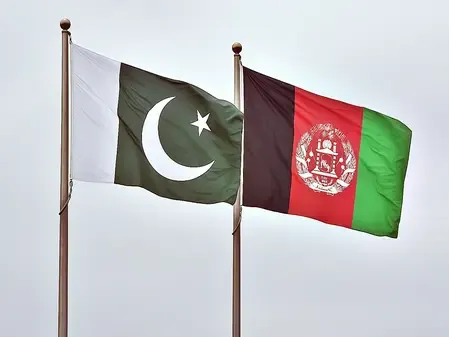
Islamabad, Feb 3 (NationPress) Pakistan's animosity towards Afghanistan transcends terrorism — for Islamabad, terrorism has long been a negotiable concept. The Taliban in Kabul, however, acts as an autonomous entity — brutal, responsive, and independent, as highlighted in a recent report. The Taliban reportedly rejected directives, dismissed hierarchies, and turned down the role scripted for them within Pakistan’s strategic framework.
The report by 'Counter Currents' noted that nothing angers a patron more than a proxy that ceases to ask for permission.
“Pakistan’s military has consistently favored organized conflicts: clearly identifiable enemies, compliant proxies, and violence that adheres to a narrative. For decades, the western frontier complied. Militants were seen as assets, Pashtuns as mere geography, and Afghanistan was regarded not as a political entity but as strategic negative space — a region to be shaped, managed, and intermittently controlled,” wrote Junaid S Ahmed, Director of the Centre for the Study of Islam and Decolonization (CSID) in Islamabad, in 'Counter Currents'.
“What the Generals never accounted for — as is often the case — is autonomy. Not just from civilians, not from provinces, and certainly not from former allies expected to remain grateful, dependent, and silent. What Rawalpindi now labels a security crisis is fundamentally less dignified. It is the shock of lost control, masquerading as resolve. A tantrum, fortified and aerial,” he continued.
According to Ahmed, Pakistani authorities perceive Pashtuns as a populace they can manage through force. Pashtuns, radicalized as suspects and governed as exceptions, are viewed as the connective tissue linking Afghanistan's defiance to domestic unrest.
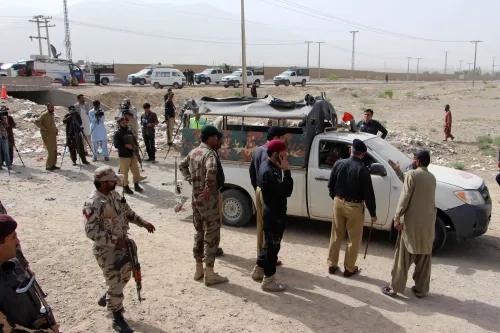
“A strategic failure has been reduced to an ethnic security challenge, and the solution remains reassuringly familiar: bombard, displace, sanitize the language, and repeat. Military operations in Khyber Pakhtunkhwa and the former tribal regions do not constitute counterterrorism in a substantial sense. They are merely disciplinary acts,” he stated.
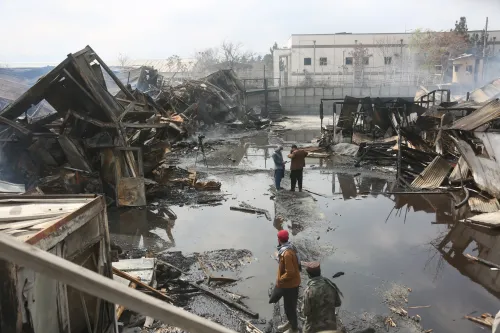
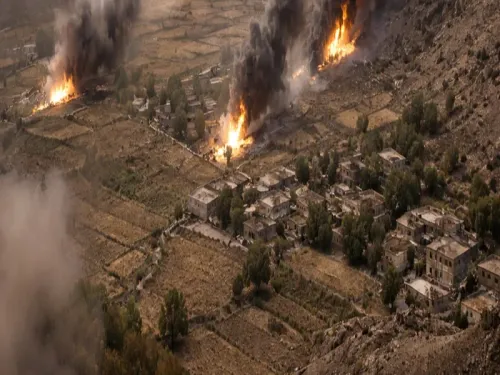
Villages are obliterated to restore hierarchy, displacement is normalized as a strategy, and the suffering of people goes unnoticed by authorities. Violence is not merely inflicted but processed, and Pashtuns have endured it for generations. The Pakistani state aims to interpret Pashtun resistance as a cultural response rather than a political one, according to the report.
This narrative conveniently absolves the center of accountability. However, the truth is stark: Pashtun regions have faced a governance model centered on securitization: collective punishment, economic neglect, enforced disappearances, and episodic devastation presented as stability. The military's resentment towards Pashtuns is cumulative, and the standoff with Afghanistan amplifies this anger. Cross-border strikes are labeled self-defense, yet they serve a political purpose as a distraction.
“Borders, however, are not mere abstractions in Pashtun life. They are colonial incisions disrupting kinship, trade, and collective memory. The Durand Line has never been emotionally internalized by those living across it, and successive Afghan regimes — whether monarchical, republican, or Islamist — have approached it with deliberate ambiguity. The Taliban have not overtly rejected the border, but they have declined to sanctify it. This ambiguity is both historical and strategic,” he emphasized.
“Pakistan’s failure lies not in Kabul questioning the line but in Rawalpindi’s diminishing ability to enforce silence regarding it. The Afghan Taliban no longer rely on Pakistani sanctuaries or sponsorship. They possess alternatives: regional alliances, transactional diplomacy, and calculated interactions with Pakistan’s adversaries. This is not an act of Taliban brilliance; it is a manifestation of Pakistani strategic fatigue. And when exhaustion is ignored, it transforms into aggression,” Ahmed concluded in Counter Currents.
Point of View
I believe it is vital to address the complexities surrounding Pakistan's strategic failures and the ongoing ethnic tensions. Our focus remains on providing accurate and unbiased insights that reflect the realities on the ground, ensuring we remain committed to our audience's understanding.
NationPress
26 Sept 2026
Frequently Asked Questions
What is the main cause of the ethnic security crisis in Khyber Pakhtunkhwa?
The crisis stems from Pakistan's strategic failures in managing its relationship with the Taliban, who have asserted their autonomy and rejected external control.
How has the Pakistani military responded to the situation?
The military has resorted to military operations in Khyber Pakhtunkhwa, which are viewed as disciplinary actions rather than genuine counterterrorism efforts.
What role do Pashtuns play in this crisis?
Pashtuns are seen as a critical link between Afghanistan's defiance and domestic instability, often managed through force by Pakistani authorities.
What are the implications of the Durand Line in this context?
The Durand Line represents a colonial border that disrupts Pashtun kinship and commerce, with its significance not being fully internalized by those living across it.
Why is the Taliban's behavior significant for Pakistan?
The Taliban's refusal to adhere to Pakistani directives indicates a shift in power dynamics, reflecting Pakistan's diminishing influence in the region.