Pakistan's 'hard state' doctrine deepens alienation in Balochistan, PoK: Report
Synopsis
A MEMRI report tears into Pakistan Army Chief Asim Munir's 'hard state' doctrine, arguing it is manufacturing the very instability it claims to prevent. The banning of PoK's JKJAAC — a civil platform demanding cheaper electricity and wheat relief — under anti-terror law is the latest data point in a pattern repeated across Balochistan, Khyber Pakhtunkhwa, and Sindh: coercion deepening alienation, not resolving it.
Key Takeaways
A MEMRI report finds Pakistan's 'hard state' doctrine, championed by Army Chief Asim Munir , is accelerating alienation rather than ensuring stability.
The Jammu Kashmir Joint Awami Action Committee (JKJAAC) was banned under anti-terror provisions on 5 June ; sedition cases were filed and internet services suspended in PoK .
The JKJAAC's demands were civilian in nature: electricity tariffs, wheat subsidies, political representation, and governance reform.
The same crackdown playbook — movement bans, leader arrests, communication blackouts, foreign-hand narratives — is reportedly deployed across Balochistan , Khyber Pakhtunkhwa , and Sindh .
The report concludes the hard state 'cannot create legitimacy through fear' and characterises it as 'state failure dressed as discipline' .
Pakistan's hard-state doctrine — championed by Army Chief Asim Munir — is generating the 'illusion of control' while accelerating alienation across the country's peripheries, according to a report by the US-based Middle East Media Research Institute (MEMRI). The assessment, released amid escalating unrest in Pakistan-occupied Kashmir (PoK), Balochistan, Khyber Pakhtunkhwa, and Sindh, argues that a doctrine sold as discipline is, by its own metrics, failing.
What the Hard State Doctrine Means
In official Pakistani discourse, the 'hard state' framework is defined as 'discipline, national security, and institutional resolve'. General Asim Munir has made it a cornerstone of the security establishment's public vocabulary. However, the MEMRI report contends that in practice, the doctrine translates to centralised coercion, military-first governance, and the systematic framing of political dissent as a security threat. Public discontent across affected regions, it notes, extends beyond poverty and poor governance — it reflects a deeper questioning of the political order itself.
The PoK Crackdown and the JKJAAC Ban
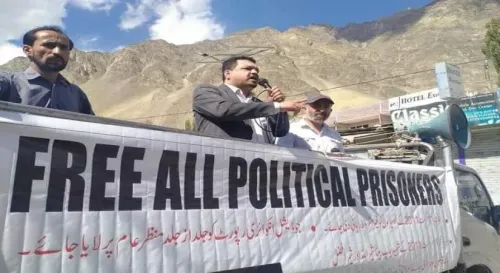
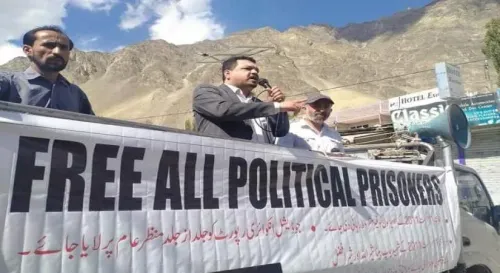
The report identifies a sharp contradiction at the heart of Pakistan's Kashmir policy: Islamabad presents itself internationally as a defender of Kashmiri rights, even as its security apparatus suppresses local mobilisation inside PoK. The Jammu Kashmir Joint Awami Action Committee (JKJAAC) — a civil platform drawing together traders, transporters, lawyers, students, and rights groups — emerged from everyday grievances including electricity tariffs, wheat subsidies, governance failures, and demands for political representation. On 5 June, authorities banned the JKJAAC under anti-terror provisions, targeted its leaders, initiated sedition cases against prominent figures, and suspended internet and mobile services in the region.
The MEMRI report described the response as following a 'familiar script': 'First delegitimise the grievance, then criminalise the protester, then justify force as law and order. A movement demanding cheaper electricity, wheat relief, local rights, and political representation is now being pushed into the frame of sedition, terrorism, and anti-national activity. This is how the hard state manufactures its own justification: it turns public anger into a security file.'
A Pattern Repeated Across Pakistan's Peripheries
The MEMRI assessment documents what it describes as an identical playbook deployed across Balochistan, Khyber Pakhtunkhwa, and Sindh: movements are banned, leaders arrested, communications suspended, force deployed, foreign interference blamed, and dissent branded anti-national. The consistent outcome, the report argues, is deeper alienation rather than national integration — the opposite of what a stability doctrine should produce.
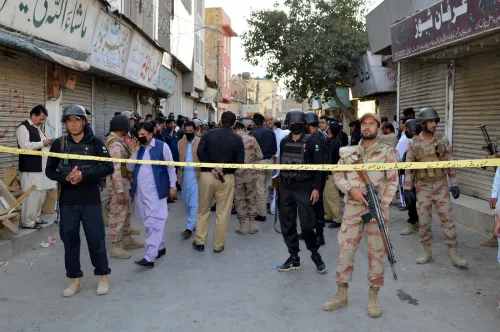
This pattern is not new. Balochistan has witnessed successive cycles of insurgency, military operations, enforced disappearances, and political exclusion spanning decades. The JKJAAC crackdown in PoK represents, according to the report, the same logic being applied to a newer and more visible civil movement.
Why the Hard State Is Structurally Weak
The report's sharpest conclusion is that coercive control cannot substitute for political legitimacy. 'It can occupy space, silence streets, and manufacture temporary order, but it cannot create legitimacy through fear,' the MEMRI report stated. 'If the security establishment cannot protect civilians, reduce casualties, resolve grievances, or win trust, then the hard state is not a doctrine of strength. It is state failure dressed as discipline.'
Analysts note that Pakistan's security establishment has historically treated its internal peripheries as administrative problems rather than political ones — a posture that has repeatedly converted manageable grievances into entrenched conflicts. The MEMRI report suggests the hard-state framing accelerates that cycle rather than interrupting it.
What Comes Next
With the JKJAAC ban in place and sedition cases proceeding, civil society groups in PoK face mounting legal pressure. Regional observers will be watching whether the crackdown triggers broader protests or drives the movement underground — both outcomes the report implies would validate its central argument. The international community, including rights organisations monitoring Pakistan, is expected to scrutinise the anti-terror application against a civilian platform whose stated demands were economic and administrative in nature.
Point of View
Then cites the resulting unrest as proof that more coercion is needed. The JKJAAC case is particularly damaging to Islamabad's international narrative — it is difficult to position yourself as a champion of Kashmiri rights abroad while banning a civil platform in PoK for demanding affordable electricity. Asim Munir's 'hard state' framing may have internal utility as a political signal to the establishment, but as a governance doctrine it has no theory of legitimacy — and without legitimacy, order is always temporary. The deeper risk is that each crackdown cycle in Balochistan, PoK, and Sindh forecloses the political off-ramps that might otherwise de-escalate these movements.
NationPress
19 Sept 2026
Frequently Asked Questions
What is Pakistan's 'hard state' doctrine?
The 'hard state' is a political framework introduced by Pakistan Army Chief Asim Munir, officially defined as 'discipline, national security, and institutional resolve.' In practice, according to a MEMRI report, it functions as centralised coercion, military-first governance, and the criminalisation of dissent as a security threat.
Why was the JKJAAC banned in Pakistan-occupied Kashmir?
The Jammu Kashmir Joint Awami Action Committee (JKJAAC) was banned on 5 June under anti-terror provisions by Pakistani authorities. The JKJAAC is a civil platform that had been demanding lower electricity tariffs, wheat subsidies, better governance, and political representation — demands the MEMRI report describes as civilian and administrative, not seditious.
Which regions of Pakistan are affected by the hard-state crackdown?
According to the MEMRI report, the same coercive playbook is being applied across Pakistan-occupied Kashmir (PoK), Balochistan, Khyber Pakhtunkhwa, and Sindh. In each case, movements are banned, leaders arrested, communications suspended, and dissent branded as anti-national or foreign-sponsored.
What does the MEMRI report conclude about the hard state's effectiveness?
The report concludes that the hard state provides only an 'illusion of control' and is failing even by its own stated goal of ensuring stability. It argues the doctrine 'cannot create legitimacy through fear' and characterises it as 'state failure dressed as discipline.'
How does Pakistan's PoK policy contradict its international stance on Kashmir?
The MEMRI report highlights a core contradiction: Pakistan presents itself internationally as a defender of Kashmiri rights, while its security establishment inside PoK treats the civil rights movement as a security threat and suppresses local political mobilisation, most recently by banning the JKJAAC under anti-terror law.