Pakistan's 'hard-state doctrine' deepening regional alienation: Report

Synopsis
A Spain-based analysis by Moroccan journalist Fatima El Hashimi delivers a pointed verdict on Pakistan's military playbook: the 'hard-state doctrine' is generating the very instability it claims to suppress. Across PoK, Balochistan, Khyber Pakhtunkhwa, and Sindh, force without legitimacy is widening alienation — and Rawalpindi's contradiction is becoming harder to hide.
Key Takeaways
A report in Spain -based outlet Atalayar by researcher Fatima El Hashimi argues Pakistan's 'hard-state doctrine' is failing on its own terms.
Intensified operations across PoK , Balochistan , Khyber Pakhtunkhwa , and Sindh are deepening alienation rather than delivering stability.
In PoK , cities including Muzaffarabad and Rawalakot have seen strikes, clashes, and arrests, with dozens reportedly killed or injured.
Balochistan remains Pakistan's most deprived major province despite holding significant gas, mineral, and coastal resources.
The report warns that branding dissent as anti-national and criminalising protest erodes the state's moral authority before any security operation begins.
Pakistan's military-driven 'hard-state doctrine' is increasingly failing on its own terms, deepening alienation across Pakistan-occupied Kashmir (PoK), Balochistan, Khyber Pakhtunkhwa, and Sindh, according to a report published in Spain-based media outlet Atalayar. The analysis, authored by Moroccan researcher and journalist Fatima El Hashimi, argues that a doctrine built around discipline and security must ultimately be judged by whether it delivers lasting stability — and by that measure, it is falling short.
The Central Contradiction
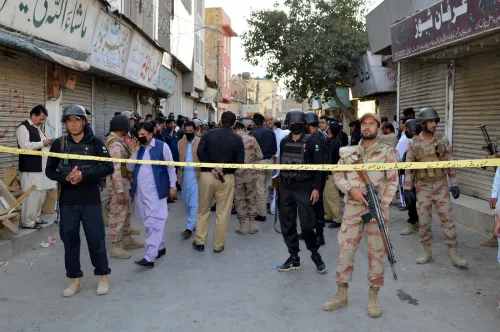
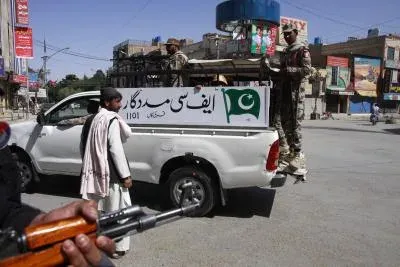
The report identifies a core paradox that, it argues, Rawalpindi can no longer conceal: intensified security operations are not producing greater safety, and tighter military control is not translating into political legitimacy. Across the affected regions, the same cycle repeats — restrict movement, arrest leaders, suspend communications, deploy force, attribute unrest to foreign actors, and brand dissent as anti-national.
"That is the hard state's real weakness. It can occupy space, silence streets, and manufacture temporary order, but it cannot create legitimacy through fear. If the security establishment cannot protect civilians, reduce casualties, resolve grievances, or win trust, then the hard state is not a doctrine of strength. It is state failure dressed as discipline," Hashimi wrote.
PoK: Civil Rights Treated as a Security Threat
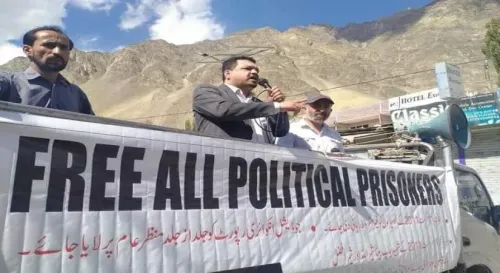
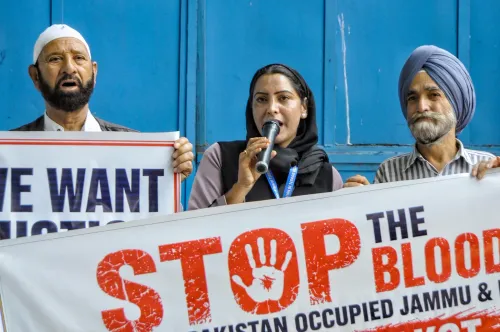
According to the report, Pakistan's internal contradiction is most visible in PoK. While Islamabad projects itself internationally as a champion of Kashmiri rights, within the territory it has responded to local mobilisation with heavy-handed security measures — treating what the report describes as a civil rights movement as a security threat rather than a political warning.
The ongoing unrest has pushed Muzaffarabad, Rawalakot, and other parts of the region into strikes, clashes, barricades, arrests, and heavy security deployments. Dozens have reportedly been killed and injured during clashes with Pakistani forces in the occupied territory.
Balochistan: Resource-Rich, Chronically Deprived
Despite being Pakistan's largest province by area and one of its most resource-rich, Balochistan remains among the country's most deprived regions. Its gas reserves, mineral wealth, and coastline have long served federal and strategic interests, yet many local communities continue to face poor infrastructure, inadequate public services, and deep political marginalisation, the report noted.
Highlighting what it called the "central contradiction" of Pakistan's Balochistan policy, the report stated: "The security establishment claims it is fighting militancy, yet its broad-brush approach often pushes peaceful political space into a corner. When families asking for the whereabouts of their sons are met with arrests, mobile shutdowns, terrorism charges, and sedition narratives, the state loses moral ground even before the next security operation begins."
Khyber Pakhtunkhwa and Sindh: Loyalty Demanded, Accountability Denied
In Khyber Pakhtunkhwa, the report argues, the security establishment's failures are routinely reframed as the people's problem. Communities that have endured militancy, displacement, and repeated military operations are then asked to prove their loyalty when they seek accountability. "This is a damaging cycle: the state makes security decisions, local people absorb the cost, and those who question the cost are branded suspects," the report noted.
Across all four regions, Hashimi observed that grievances have moved beyond poverty or poor services. "They are questioning the political compact itself. Their grievance is that Pakistan's security establishment extracts resources, polices identity, criminalises protest, and then presents the resulting unrest as proof that more force is needed," she wrote.
What the Analysis Signals
The report stops short of predicting an imminent breakdown, but its conclusions are pointed: a doctrine premised on control without consent is producing diminishing returns. The widening gap between the Pakistani state's international posture and its domestic conduct, particularly in PoK, is likely to draw increasing scrutiny from regional observers and international rights bodies in the months ahead.
Point of View
Locking the security establishment into an escalation spiral with no political off-ramp. Pakistan's simultaneous posture as a Kashmiri rights champion abroad and a heavy-handed occupier within PoK is a contradiction that international audiences are increasingly equipped to notice. The deeper problem is structural — a security apparatus that has historically treated political demands as threats to be suppressed rather than signals to be read. Until that calculus changes, the doctrine will keep manufacturing the instability it claims to cure.
NationPress
5 Oct 2026
Frequently Asked Questions
What is Pakistan's 'hard-state doctrine'?
Pakistan's 'hard-state doctrine' refers to the military-led approach of using security operations, movement restrictions, communications blackouts, and force to manage political unrest across regions such as PoK, Balochistan, Khyber Pakhtunkhwa, and Sindh. According to a report in Spain-based outlet Atalayar, the doctrine prioritises control over consent and has increasingly failed to produce lasting stability.
Which regions of Pakistan are most affected by this approach?
The report identifies Pakistan-occupied Kashmir (PoK), Balochistan, Khyber Pakhtunkhwa, and Sindh as the primary regions where the hard-state doctrine is generating widening alienation. In each, the same pattern of arrests, communications suspensions, and force deployment is reportedly applied, with dissent branded as anti-national.
What is happening in Pakistan-occupied Kashmir?
According to the report, PoK has seen sustained unrest in cities including Muzaffarabad and Rawalakot, with strikes, clashes, barricades, and heavy security deployments. Dozens have reportedly been killed and injured during clashes with Pakistani forces. The report argues Islamabad is treating a civil rights movement as a security threat rather than a political signal.
Why does the report highlight Balochistan specifically?
Balochistan is Pakistan's largest province by area and among its most resource-rich, yet it remains one of the country's most deprived regions. The report argues that federal and strategic interests have long extracted value from the province's gas reserves, mineral wealth, and coastline while local communities receive poor infrastructure and remain politically marginalised.
Who authored the report and where was it published?
The analysis was written by Moroccan researcher and journalist Fatima El Hashimi and published in Atalayar, a Spain-based media outlet. It was released on 6 July and examines the structural failures of Pakistan's security-first governance model across multiple provinces and territories.