BLA tightens grip on Balochistan as PoK unrest adds to Pakistan's crisis
Synopsis
Pakistan is facing a two-front internal crisis: the BLA has reportedly killed nearly 150 security personnel in two months — 38 in just three days — while seizing control of key highways in Balochistan, even as PoK simmers with intensifying protests. Officials say the BLA has transformed from a guerrilla outfit into a sophisticated force with drones, a suicide squad, and better intelligence than the Pakistani Army itself.
Key Takeaways
38 Pakistani security personnel — 27 policemen and 11 soldiers — were killed between 5 and 8 July in Balochistan.
Intelligence inputs indicate nearly 150 security personnel have been killed in Balochistan over the past two months , with officials alleging Pakistan is concealing the true toll.
The BLA has evolved from a guerrilla outfit into a coordinated force with drones , a suicide squad including women , and superior ground intelligence.
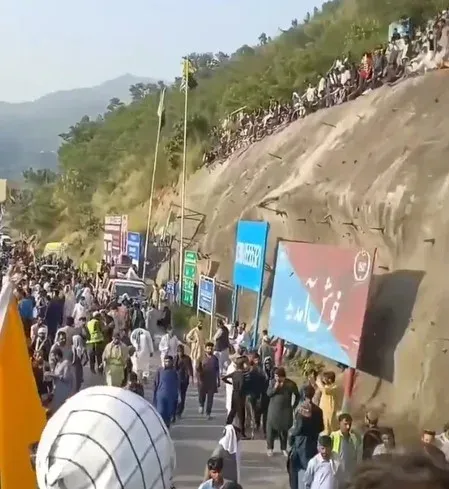
The JAAC has simultaneously called for intensified protests in Pakistan-occupied Kashmir (PoK) , opening a second front for Islamabad.
Deep Baloch grievances — over alleged enforced disappearances, resource diversion, and CPEC exclusion — are cited as key drivers of growing BLA support.
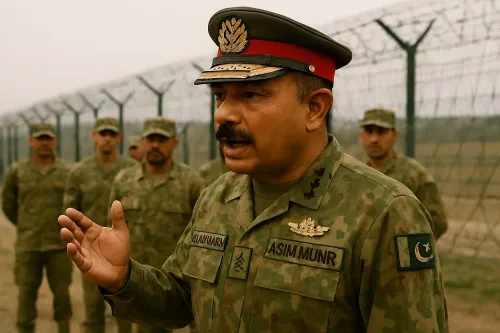
Pakistan Army chief Field Marshal Asim Munir has reportedly refused dialogue, opting for force — a posture officials say risks further entrenching the insurgency.
The Balochistan Liberation Army (BLA) has sharply escalated its operations across Balochistan, even as the Joint Awami Action Committee (JAAC) intensifies protest activity in Pakistan-occupied Kashmir (PoK), compounding Islamabad's deepening internal security crisis as of 10 July.
Rising Security Force Casualties
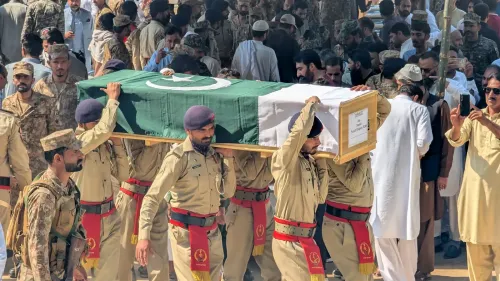
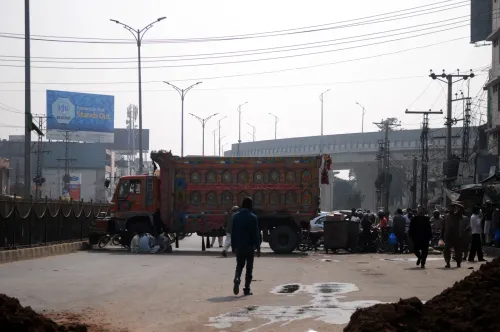
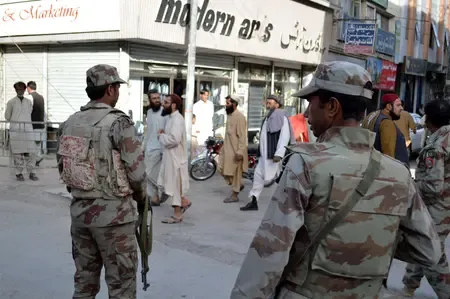
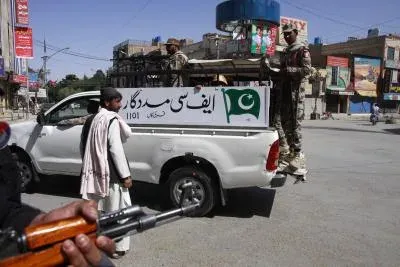
Pakistan's security establishment has absorbed some of its heaviest losses in recent memory. According to reports, 38 security personnel — including 27 policemen and 11 soldiers — were killed between 5 and 8 July alone. Intelligence inputs, according to an official, suggest that nearly 150 personnel have been killed over the past two months, though the Pakistani establishment is reportedly concealing the actual toll. The surge in casualties, officials say, followed security force operations to retake highways that insurgents had seized.
BLA's Expanding Capabilities
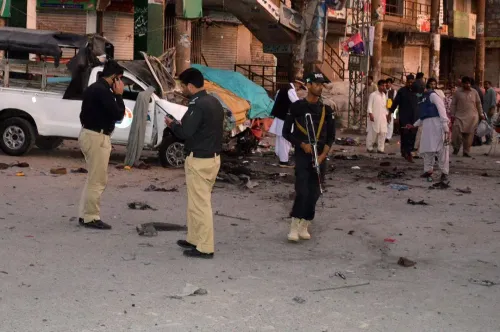
What has alarmed Pakistani authorities, according to officials, is how dramatically the BLA has evolved as a fighting force. 'What has shocked the Pakistani establishment is the manner in which the BLA has been operating in recent times. An organisation that once specialised in guerrilla warfare has evolved well beyond that. It now has a full-fledged suicide squad, which also includes women,' an Intelligence Bureau official said. The group now reportedly conducts coordinated attacks using modern weapons, enhanced technology, and commercially available drones. Officials note that the BLA's intelligence network is assessed to be more operationally efficient than that of Pakistan's own security apparatus — a key reason why Pakistani forces have struggled to anticipate and counter strikes on police stations, checkpoints, highways, and government infrastructure.
Local Grievances Fuelling Insurgent Support
Officials point to deep-rooted political and economic alienation as the primary driver of the BLA's expanding grassroots support. For years, Balochistan has been the subject of international human rights scrutiny over allegations of enforced disappearances, targeted killings, and sexual violence against local women — allegations that have, according to officials, united significant sections of the local population against the Pakistani state. Separately, Baloch communities have long complained that revenues generated from the region's natural resources are diverted to larger Pakistani cities, with local development remaining neglected. Critics have also argued that the benefits of the China-Pakistan Economic Corridor (CPEC) project are unlikely to reach Balochistan, further entrenching resentment.
Pakistan Army Chief Under Pressure
Officials say Pakistan Army chief Field Marshal Asim Munir faces a mounting crisis on multiple fronts — Balochistan, Khyber Pakhtunkhwa, and PoK — with his reported posture being one of force rather than dialogue. When protests intensified in PoK, Munir's response was reportedly to suppress dissent. Officials warn that in Balochistan, Munir may soon find himself in a position where the BLA refuses negotiations even if he were to seek them. Successive Pakistani governments, officials added, have adopted what they describe as an arrogant approach toward the region, further deepening the alienation of the Baloch population. Notably, a deadly attack on a train carrying Pakistani security personnel in Balochistan weeks earlier underscored the BLA's growing operational reach.
What Comes Next
With the BLA demonstrating control over key highways and logistics corridors, and with ground-level intelligence drying up due to reduced local cooperation with security forces, officials believe Islamabad's strategic options are narrowing. The convergence of unrest in PoK and Balochistan simultaneously represents one of the most complex internal security challenges Pakistan has faced in years.
Point of View
A suicide squad, and superior ground intelligence — is not an overnight development; it is the compounded result of decades of state neglect, alleged human rights abuses, and resource extraction without local benefit. Islamabad's refusal to engage politically, as officials describe it, is not just a tactical error — it is accelerating the very alienation that sustains the insurgency. The simultaneous unrest in PoK suggests Pakistan's civil-military establishment faces a legitimacy deficit that force alone cannot resolve. The CPEC dimension adds a geopolitical layer: if Balochistan's instability deepens, Beijing's flagship connectivity project faces existential risk — a pressure point that may yet force a rethink in Rawalpindi.
NationPress
9 Oct 2026
Frequently Asked Questions
How many Pakistan security personnel have been killed in Balochistan recently?
According to intelligence inputs cited by officials, nearly 150 Pakistani security personnel have been killed in Balochistan over the past two months. Between 5 and 8 July alone, 38 personnel were killed — including 27 policemen and 11 soldiers. Officials say the Pakistani establishment may be underreporting the actual toll.
What makes the BLA more dangerous now than before?
Officials say the BLA has evolved far beyond its guerrilla warfare origins. It now conducts coordinated attacks using modern weapons, commercially available drones, and reportedly has a full-fledged suicide squad that includes women. Its intelligence network is assessed to be more efficient than Pakistan's own security apparatus.
Why does the BLA enjoy local support in Balochistan?
Officials attribute BLA's grassroots support to long-standing grievances including allegations of enforced disappearances, targeted killings, and sexual violence by Pakistani security forces. Additionally, Baloch communities allege that revenues from the region's natural resources are diverted to larger Pakistani cities, with CPEC benefits also expected to bypass the region.
What is happening in Pakistan-occupied Kashmir alongside the Balochistan crisis?
The Joint Awami Action Committee (JAAC) has called for intensified protests in Pakistan-occupied Kashmir (PoK), adding a second front to Pakistan's internal security challenges. Officials say Army chief Field Marshal Asim Munir's response to PoK protests has been to suppress dissent through force rather than engage in dialogue.
How is Pakistan Army chief Asim Munir responding to the Balochistan crisis?
According to officials, Field Marshal Asim Munir has refused dialogue with dissident groups across Balochistan, Khyber Pakhtunkhwa, and PoK, opting instead for a force-based approach. Officials warn that the BLA may soon refuse negotiations even if Munir were to seek them, given the depth of alienation built over successive Pakistani governments.