Pakistan's 'hard state' fuels Balochistan insurgency, PoK unrest: Report
Synopsis
A report by the International Centre for Peace Studies lays out a damning picture: Pakistan's 'hard state' approach has driven insurgent attacks to 435 in 2025 — up from 79 in 2022 — with Balochistan and Khyber Pakhtunkhwa accounting for 95 per cent of all incidents. With public debt at 68.5 per cent of GDP and PoK simmering, the report argues Pakistan's military-first instinct is fuelling the very crisis it claims to contain.
Key Takeaways
Pakistan's 'hard state' approach has intensified insurgency in Balochistan and Khyber Pakhtunkhwa , according to the International Centre for Peace Studies .
Insurgent attacks by Baloch groups surged from 79 in 2022 to 234 in 2025 ; total attacks in 2025 reached 435 .
More than 65 per cent of 2025 attacks targeted Pakistan's military and security personnel.
Balochistan and Khyber Pakhtunkhwa accounted for 95 per cent of all insurgent attacks in both 2024 and 2025 .
Pakistan's public debt stands at 68.5 per cent of GDP ; economic growth projected at just 3.5 per cent in 2025–26 .
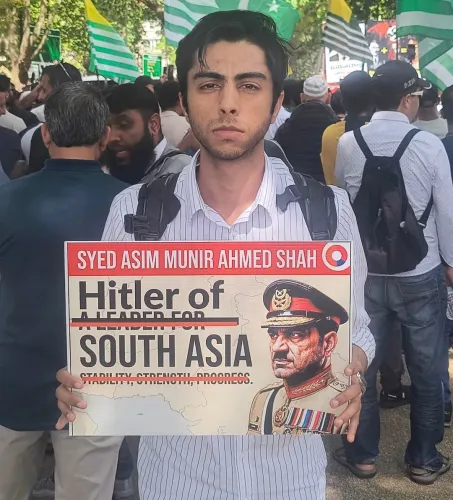
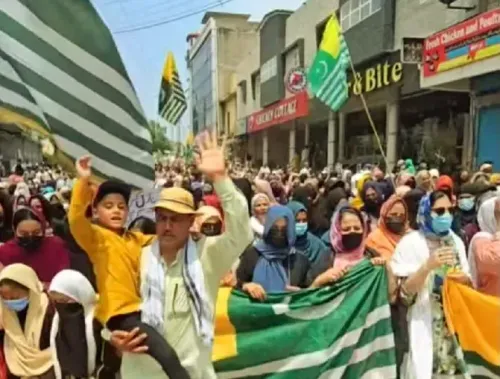
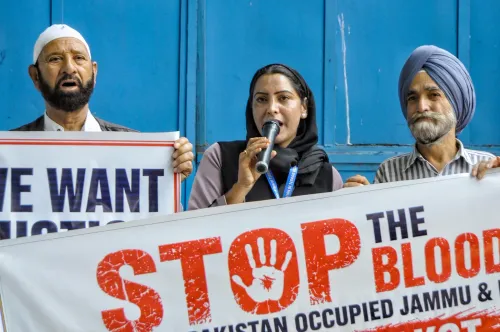
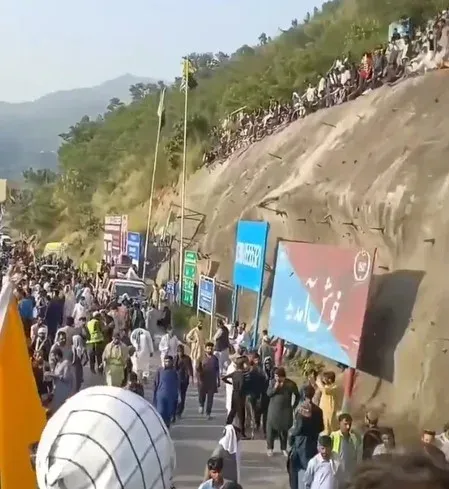
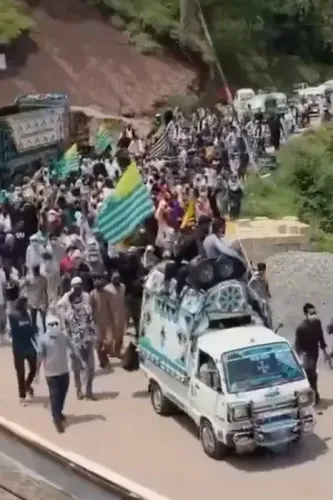
Persistent protests in Pakistan-occupied Kashmir (PoK) are being met with the same repressive tactics used in Balochistan, the report states.
Pakistan's entrenched 'hard state' approach has intensified insurgency across Balochistan and Khyber Pakhtunkhwa, deepened political fractures, and laid bare the scale of internal turmoil that persists in Pakistan-occupied Kashmir (PoK) — turmoil that no volume of international goodwill can neutralise, according to a report by the International Centre for Peace Studies.
The Hard State in Practice
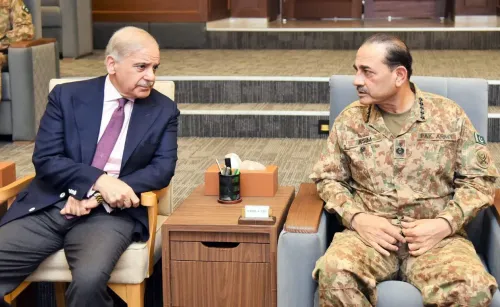
The report argues that Pakistan's civilian government has systematically abdicated its responsibility to resolve regional conflicts through political dialogue, instead defaulting to army intervention. Pakistani armed forces, it notes, routinely frame such conflicts as acts of sedition or routine law-and-order problems, denying the political legitimacy of protesters and accusing demonstrators of acting as proxies for foreign powers.
This deeply 'securitised' response, the report warns, does not resolve grievances — it perpetuates a cycle of mistrust, alienation, and confrontation that feeds the very instability it claims to suppress.
Insurgency Numbers Tell a Stark Story
Balochistan and Khyber Pakhtunkhwa together accounted for 93 per cent of all insurgent attacks in 2023, rising to 95 per cent in both 2024 and 2025, according to the report.
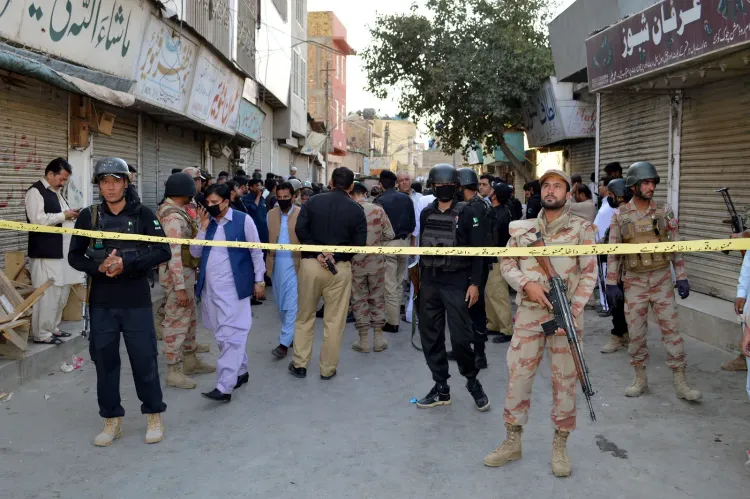
Citing the Pakistan Institute for Peace Studies (PIPS) annual security report, the document records a sharp escalation in attacks by Baloch insurgent groups — from 79 in 2022 to 110 in 2023, 202 in 2024, and 234 in 2025. Of the 435 total insurgent attacks recorded in 2025, more than 65 per cent targeted Pakistan's military and security personnel. Groups involved include the Balochistan Liberation Army (BLA), Balochistan Liberation Front (BLF), Balochistan Republic Guards (BRG), and Tehrik-e-Taliban Pakistan (TTP), with tactics ranging from suicide bombings to direct armed assaults.
Balochistan: Decades of Marginalisation
The report traces the roots of Balochistan's crisis to entrenched economic inequality and political exclusion compounding over decades. Civil society groups in the province have continually demanded greater political autonomy, rights, and control over natural resources — demands that have run parallel to armed insurgency rather than replacing it.
The recurring themes across all affected regions, the report notes, are excessive centralisation by the federal government, economic inequality, and political marginalisation — structural conditions that military crackdowns cannot address.
PoK Unrest and Pakistan's Credibility Deficit
The report highlights that Pakistan's ruling establishment has exported the same 'hard state' playbook to Pakistan-occupied Kashmir, responding to political dissent with what it describes as 'brutal crackdown and repression.' Persistent protests in PoK, the report argues, further expose the depth of Pakistan's internal crisis.
This matters beyond Pakistan's borders. The report states that Pakistan's credibility as a potential peace broker in any international context will ultimately depend on its capacity to establish peace and political stability at home — a capacity it has not yet demonstrated.
Economic Fragility Compounds the Crisis
Pakistan's structural vulnerabilities sharpen the stakes. With economic growth projected at just 3.5 per cent in 2025–26, a USD 7 billion relief package from the International Monetary Fund (IMF), and public debt at 68.5 per cent of GDP, the country urgently requires genuine political leadership capable of resolving internal conflicts and securing long-term stability — not a military apparatus substituting for governance.
As insurgent attacks continue their upward trajectory and PoK unrest intensifies, the report's central warning is clear: Pakistan's hard state approach is not a solution — it is the accelerant.
Point of View
And the report's figures show that strategy is producing the opposite of its stated goal. What mainstream coverage often misses is the compounding effect: a fragile IMF-dependent economy, a civilian government that has outsourced conflict management to the army, and a PoK now showing the same fault lines — these are not separate crises but one systemic failure. Pakistan's aspirations to regional relevance or peace-broker status are structurally hollow until this loop is broken.
NationPress
30 Sept 2026
Frequently Asked Questions
What is Pakistan's 'hard state' approach and why is it controversial?
The 'hard state' approach refers to Pakistan's pattern of deploying military force to suppress regional dissent in Balochistan, Khyber Pakhtunkhwa, and Pakistan-occupied Kashmir rather than engaging through political dialogue. Critics, including the International Centre for Peace Studies, argue it denies the political legitimacy of protests and perpetuates cycles of mistrust and violence instead of resolving underlying grievances.
How much has insurgent violence increased in Pakistan?
According to the Pakistan Institute for Peace Studies, Baloch insurgent group attacks rose sharply from 79 in 2022 to 234 in 2025. Total insurgent attacks across Pakistan reached 435 in 2025, with over 65 per cent targeting military and security personnel.
Which provinces bear the brunt of Pakistan's insurgency?
Balochistan and Khyber Pakhtunkhwa together accounted for 93 per cent of insurgent attacks in 2023 and 95 per cent in both 2024 and 2025, according to the International Centre for Peace Studies report.
What is the economic context behind Pakistan's instability?
Pakistan's economy is under significant stress, with growth projected at just 3.5 per cent in 2025–26, a USD 7 billion IMF relief package in place, and public debt standing at 68.5 per cent of GDP. The report argues this makes genuine political leadership — rather than military intervention — essential for long-term stability.
What is happening in Pakistan-occupied Kashmir?
Persistent protests have broken out in Pakistan-occupied Kashmir (PoK), with the report noting that Pakistan's ruling establishment is applying the same 'brutal crackdown and repression' tactics used in Balochistan and Khyber Pakhtunkhwa. The unrest is cited as further evidence of Pakistan's deepening internal crisis.