Pakistan orders arrest of undocumented Afghans from July 10
Synopsis
Pakistan has set a hard deadline — 10 July 2026 — for the arrest of any Afghan national without a valid visa, escalating a deportation drive that has already displaced hundreds of thousands. The UN has explicitly called the forced repatriations a violation of international refugee law, setting up a direct confrontation between Islamabad's immigration policy and its international legal obligations.
Key Takeaways
Pakistan's Ministry of Interior has ordered the arrest of undocumented Afghan nationals effective 10 July 2026 .
The directive stems from a review meeting on the Illegal Foreigners' Repatriation Plan (IFRP) held on 1 June 2026 .
Authorities must submit a status report on undocumented Afghans by 11 July 2026 .
Nearly 270,000 Afghans have already been deported in 2026, mainly from Iran and Pakistan, per UNHCR .
UN Human Rights Commissioner Volker Turk warned on 22 May 2026 that forced repatriations violate the principle of non-refoulement .
Women, girls, former government affiliates, and civil society members are identified as facing the gravest risk upon return.
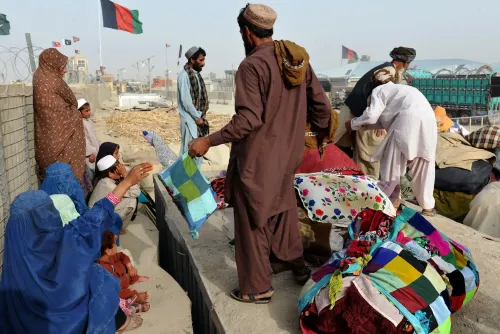
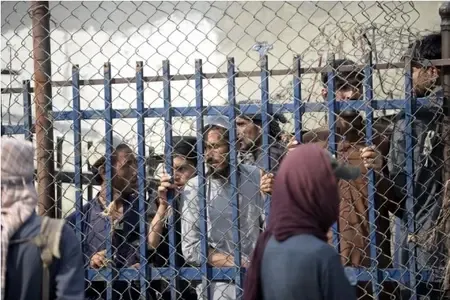
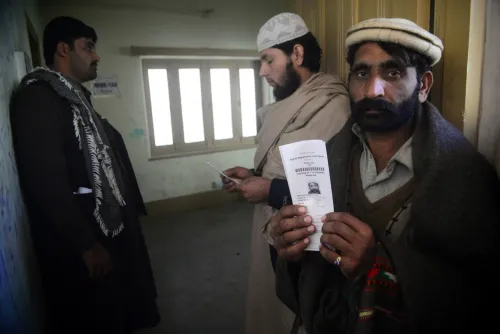
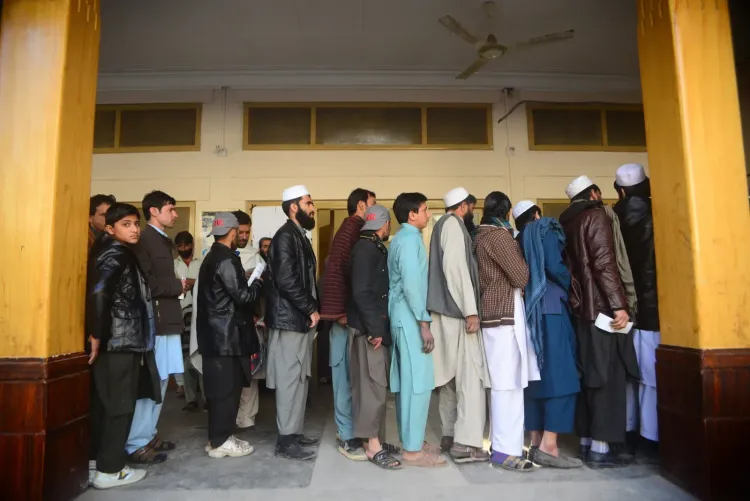
Pakistan's Ministry of Interior has directed the immediate arrest of any Afghan national found residing in the country without a valid visa, effective 10 July 2026. The order, issued to Chief Secretaries of all provinces and the Islamabad Capital Territory (ICT), marks a sharp escalation in Islamabad's crackdown on undocumented Afghan migrants.
What the Order Says
The ministry's notification, reported by Dawn, states that the directive flows from decisions taken at a review meeting on the Illegal Foreigners' Repatriation Plan (IFRP) held on 1 June 2026. During that meeting, all provincial governments, special area governments, and the ICT Administration were directed to 'expedite the repatriation/deportation of Afghan nationals, including visa overstay cases, and to ensure strict implementation of the IFRP.'
The order instructs that necessary directives be issued to all Deputy Commissioners, district administrations, police, and other law enforcement agencies to enforce the crackdown. A status report detailing the number of undocumented Afghans, action taken against them, and their present status is to be submitted by 11 July 2026.
Background: A Deportation Drive Years in the Making
This is not a new policy — it is an intensification of one. Pakistan launched its deportation drive in 2023, and renewed it in April 2025 when the government rescinded hundreds of thousands of residence permits for Afghans, warning of arrests for those who did not leave. The latest order sets a firm legal deadline, converting what was previously a warning into an enforceable mandate.
According to the United Nations High Commissioner for Refugees (UNHCR), nearly 270,000 Afghans have been deported to Afghanistan since the beginning of 2026, primarily from Iran and Pakistan, with smaller numbers from Turkey and Tajikistan. This follows the deportation of over 1.2 million Afghan refugees from Iran and 150,000 from Pakistan in the previous year alone.
UN's Human Rights Warning
On 22 May 2026, Volker Turk, the United Nations High Commissioner for Human Rights, warned against the continued forced repatriation of Afghan refugees and asylum-seekers, calling it a violation of international human rights and refugee law. 'Afghan women, children and men continue to be pushed out of countries where they had sought safety, forcing them to return to Afghanistan against their will and exposing them to grave risk,' he said.
Turk specifically invoked the international law principle of non-refoulement — which prohibits returning individuals to countries where they face serious risk of harm. 'Returning individuals at serious risk of human rights violations involuntarily to Afghanistan runs contrary to the core international law principle of non-refoulement. I urge States to abide by their international legal obligations and protect Afghans by not taking any action that exposes them to irreparable harm upon return,' he said.
Who Is Most at Risk
The UN human rights agency has flagged that women and girls, individuals affiliated with the former Afghan government and its security forces, media workers, civil society members, and members of the LGBTIQ+ community remain at grave risk of reprisals and human rights abuses upon return to Taliban-controlled Afghanistan. Critics argue that mass deportation orders make no distinction between economic migrants and those with legitimate protection needs.
With the 10 July deadline now in force, attention will turn to whether Pakistan's law enforcement agencies execute the order uniformly — and how the international community responds to what the UN has characterised as a systematic violation of refugee law.
Point of View
000 already deported this year and no credible individual risk-assessment process visible in the order, the gap between Pakistan's legal obligations and its enforcement posture is widening, not closing. The countries that absorbed Afghan refugees after 2021 are now systematically reversing that decision — and the international community has so far produced warnings, not consequences.
NationPress
29 Jun 2026
Frequently Asked Questions
What has Pakistan's Interior Ministry ordered regarding Afghan nationals?
Pakistan's Ministry of Interior has ordered the immediate arrest of any Afghan national found residing in Pakistan without a valid visa, effective 10 July 2026. The directive applies nationwide and instructs police, district administrations, and all law enforcement agencies to enforce the order.
What is the Illegal Foreigners' Repatriation Plan (IFRP)?
The IFRP is Pakistan's policy framework for identifying and deporting undocumented foreign nationals, with Afghan migrants as its primary focus. It was launched in 2023 and renewed in April 2025 when Pakistan rescinded hundreds of thousands of residence permits for Afghans.
How many Afghans have already been deported in 2026?
According to UNHCR, nearly 270,000 Afghans have been deported to Afghanistan since the start of 2026, mainly from Iran and Pakistan, with smaller numbers from Turkey and Tajikistan. This is in addition to over 1.2 million deported from Iran and 150,000 from Pakistan in the previous year.
Why has the UN condemned Pakistan's deportation drive?
UN Human Rights Commissioner Volker Turk warned on 22 May 2026 that forced repatriations of Afghan refugees violate international human rights and refugee law, specifically the principle of non-refoulement, which bars returning individuals to places where they face serious risk of harm. The UN has identified women, former government affiliates, media workers, and civil society members as being at particular risk.
Who is most at risk from forced return to Afghanistan?
The UN has identified Afghan women and girls, individuals affiliated with the former Afghan government and security forces, media workers, civil society members, and members of the LGBTIQ+ community as facing the gravest risk of reprisals and human rights abuses if returned to Taliban-controlled Afghanistan.