Pakistan press freedom crisis: HRCP roundtable warns of gravest curbs in decades
Synopsis
A rare cross-sector coalition — journalists, artists, lawyers, and civil society — has agreed to form a national alliance to fight what the HRCP is calling one of Pakistan's gravest press freedom crises in decades. With the Foreign Media Facilitation Guidelines 2026 drawing international condemnation and PECA being weaponised against ordinary citizens, the crackdown has moved well beyond the newsroom.
Key Takeaways
The Human Rights Commission of Pakistan (HRCP) , with EU support, convened a roundtable on 20 August where participants described Pakistan's press freedom situation as one of the gravest in recent decades.
Participants agreed to form a broad national alliance of journalists, lawyers, artists, and civil society to coordinate advocacy, litigation, and rapid-response mechanisms.
The Prevention of Electronic Crimes Act (PECA) was flagged as a key instrument of censorship, with restrictions now affecting ordinary citizens, not just journalists.
Pakistan's Foreign Media Facilitation Guidelines 2026 require foreign journalists to obtain an NOC before reporting outside Islamabad, Lahore, and Karachi.
The Committee to Protect Journalists (CPJ) has urged Pakistan to withdraw the guidelines, calling them an 'appalling blow to press freedom.' Participants called for an end to impunity for attacks, enforced disappearances, and killings of journalists, and demanded stronger protections for women journalists and digital media practitioners.
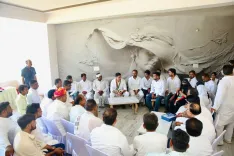
Media professionals, artists, academicians, and human rights defenders from across Pakistan have warned that the country is experiencing one of the gravest crises for freedom of expression in recent decades, according to the Human Rights Commission of Pakistan (HRCP). The warning emerged from a roundtable convened by the HRCP with the support of the European Union (EU) in Islamabad on 20 August.
Key Concerns Raised at the Roundtable
Participants flagged the unchecked abuse of laws such as Pakistan's Prevention of Electronic Crimes Act (PECA), alongside expanding censorship, surveillance, and arbitrary restrictions on online expression. They also highlighted shrinking access to information, the intimidation of journalists, and mounting pressure on independent, regional, and digital media outlets across the country.
Critically, participants stressed that these curbs no longer affect journalists alone. Ordinary citizens exercising their constitutional right to free expression are increasingly subjected to the same restrictions, broadening the scope of the crisis beyond the press.
A National Alliance in the Making
A significant outcome of the roundtable was the agreement among participants to establish a broad national alliance to, in the HRCP's words, 'confront the escalating assault on freedom of expression.' The proposed alliance would bring together journalists' unions, press clubs, freelance and digital journalists, lawyers, artists, civil society organisations, and other democratic actors.
The HRCP stated that the alliance would 'coordinate advocacy, strategic litigation, documentation, rapid-response mechanisms and public mobilisation in defence of freedom of expression across Pakistan.' Participants also agreed on a common reform agenda, calling for the repeal or amendment of laws that criminalise dissent, restrict online speech, or enable censorship.
Demands: Accountability and Editorial Independence
Beyond legal reform, the roundtable issued a call to end impunity for attacks, enforced disappearances, killings, threats, and harassment of journalists — a pattern that rights groups say has gone largely unpunished. Participants also demanded stronger safeguards to protect editorial independence from political, commercial, and institutional interference.
The meeting underscored the need to create safer and more equitable spaces for women journalists, while ensuring equal protections for freelance and digital media practitioners. Journalists' unions and press clubs were urged to modernise their roles by providing legal assistance, collective representation, and emergency safety support. Media organisations were called upon to guarantee fair wages, written contracts, insurance coverage, and safe working conditions.
Foreign Media Guidelines Draw International Criticism
The roundtable comes amid fresh controversy over Pakistan's newly implemented Foreign Media Facilitation Guidelines 2026, which several media bodies have criticised as a 'direct assault on press freedom.' The guidelines require all foreign journalists to secure a no-objection certificate (NOC) from Pakistan's Ministry of Information and Broadcasting (MOIB) before travelling to any city outside Islamabad, Lahore, and Karachi for news reporting.
The Committee to Protect Journalists (CPJ) has urged the Pakistani government to withdraw the guidelines. Waliullah Rahmani, CPJ's Afghanistan and Pakistan Representative, said: 'The Foreign Media Facilitation Guidelines open the door for Pakistani authorities to further restrict international media coverage, prevent journalists from reporting freely outside Pakistan's three main cities, and risk exposing them to administrative retaliation.' Rahmani described the guidelines as yet another 'appalling blow to press freedom in Pakistan, where journalists are already facing an intense crackdown' — particularly those covering unrest in Pakistan-occupied Kashmir (PoK).
With a national alliance now being mobilised and international pressure mounting, the coming weeks will test whether Pakistan's government responds to calls for reform or entrenches its current posture on media regulation.
Point of View
Artists, lawyers, and civil society into a formal alliance signals that the crackdown has reached a threshold where sector-specific responses feel inadequate. The Foreign Media Facilitation Guidelines 2026 are the most visible flashpoint, but the deeper issue is PECA's expanding reach into ordinary citizens' speech — a shift that transforms this from a press freedom problem into a broader civil liberties crisis. International pressure from the CPJ and the EU's backing of the HRCP roundtable add diplomatic weight, but Pakistan's government has historically absorbed such criticism without policy reversal. The real test is whether the proposed national alliance can sustain coordinated pressure beyond a single meeting.
NationPress
5 Oct 2026
Frequently Asked Questions
What did the HRCP roundtable on Pakistan's press freedom conclude?
The roundtable, convened by the Human Rights Commission of Pakistan (HRCP) with EU support on 20 August, concluded that Pakistan is experiencing one of the gravest crises for freedom of expression in recent decades. Participants agreed to form a national alliance and a common reform agenda to push back against censorship, PECA misuse, and journalist intimidation.
What are Pakistan's Foreign Media Facilitation Guidelines 2026?
The Foreign Media Facilitation Guidelines 2026 require all foreign journalists to obtain a no-objection certificate (NOC) from Pakistan's Ministry of Information and Broadcasting before travelling outside Islamabad, Lahore, and Karachi for news reporting. Critics, including the Committee to Protect Journalists, say the rules effectively restrict international coverage and expose journalists to administrative retaliation.
What is PECA and why is it controversial in Pakistan?
PECA, the Prevention of Electronic Crimes Act, is Pakistan's primary law governing online speech and digital crime. Rights groups argue it is being abused to criminalise dissent and restrict online expression, and the HRCP roundtable flagged its unchecked application as a central driver of the current press freedom crisis.
Who is forming the national alliance for press freedom in Pakistan?
The proposed alliance will bring together journalists' unions, press clubs, freelance and digital journalists, lawyers, artists, and civil society organisations. Its mandate includes advocacy, strategic litigation, documentation, rapid-response mechanisms, and public mobilisation in defence of free expression.
What has the Committee to Protect Journalists said about Pakistan?
CPJ's Afghanistan and Pakistan Representative, Waliullah Rahmani, called the Foreign Media Facilitation Guidelines 2026 an 'appalling blow to press freedom' and urged the Pakistani government to withdraw them. He warned the guidelines would prevent journalists from reporting freely and expose them to administrative retaliation, particularly those covering unrest in Pakistan-occupied Kashmir.