Rawalpindi healthcare crisis: overcrowded hospitals, unregulated private costs

Synopsis
Rawalpindi\'s healthcare system is buckling under a dual pressure: public hospitals so overwhelmed that patients queue before sunrise, and a private sector with no pricing regulation where a single illness can push families into debt. The crisis points to a structural gap in Pakistan\'s urban health infrastructure that no announced policy has yet addressed.
Key Takeaways
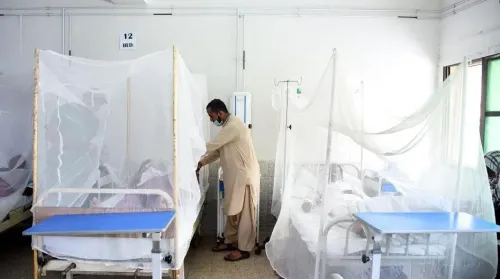
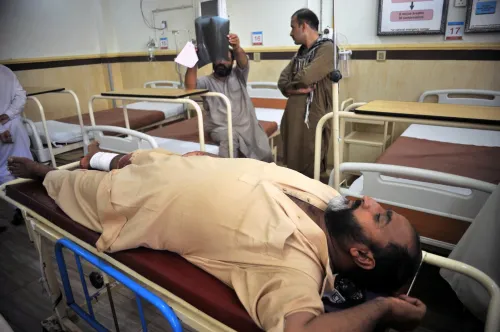
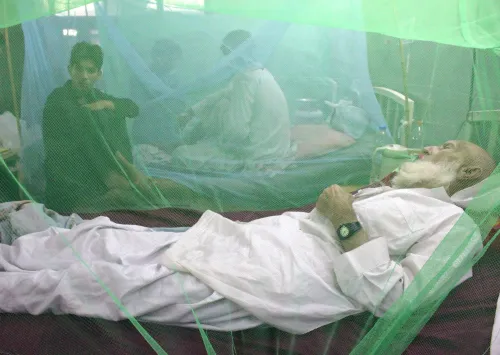
Rawalpindi\'s public hospitals, including Benazir Bhutto Hospital , are operating beyond capacity, with OPDs crowded throughout the day.
A junior doctor at Benazir Bhutto Hospital confirmed a critical shortage of doctors and beds, speaking on condition of anonymity.
Private consultation fees range from Rs 1,500–Rs 3,000 for general physicians and Rs 4,000–Rs 7,000+ for specialists, with no standardised pricing.
Resident Mohammad Azeem reportedly borrowed money to cover his mother\'s kidney infection treatment, citing tests, medicines, and follow-ups as compounding costs.
No regulatory framework for private healthcare pricing exists in Rawalpindi, according to the report.
A deepening healthcare crisis is gripping Rawalpindi, where overcrowded public hospitals, steep treatment costs, and the near-total absence of private-sector regulation are leaving thousands of residents with little access to meaningful medical care, according to a report by Dawn. The situation has deteriorated to the point where patients arrive before dawn simply to secure a place in queue at government facilities.
Public Hospitals Beyond Capacity
At major public facilities, including Benazir Bhutto Hospital, outpatient departments remain packed throughout the day. A junior doctor at the hospital, speaking on condition of anonymity, described conditions that have become routine: 'Our OPD remains crowded every day and we fail to keep count of the number of patients we encounter on a daily basis. There simply aren\'t enough doctors or beds.'
The doctor added that many patients require detailed examinations, diagnostic tests, and follow-up consultations — services the hospital lacks the resources to reliably provide. Increasing population pressure has pushed public infrastructure well beyond its designed capacity, the report noted.
Private Care Out of Reach for Many
While private hospitals and clinics offer shorter waiting times, their costs have become prohibitive for a large section of the city\'s population. Consultation fees for a general physician range from Rs 1,500 to Rs 3,000, while specialist visits can cost anywhere between Rs 4,000 and Rs 7,000 or more. No standard pricing mechanism exists across facilities, according to the report.
Residents say the financial burden extends well beyond consultation fees. Mohammad Azeem, a private-sector employee who reportedly borrowed money to pay for his mother\'s treatment for a kidney infection, described the cumulative strain: 'It\'s not just the fee, it\'s the tests, the medicines and the follow-ups. Health has become a luxury.'
No Regulation, No Accountability
The absence of a standardised pricing or regulatory framework for private healthcare is a central grievance. Azeem noted: 'There is no regulation. Everyone charges what they want and it varies in different parts of the city.' Critics argue that without enforceable standards, private providers face no check on fee escalation, effectively creating a two-tier system where quality care is accessible only to those who can afford it.
What This Means Going Forward
The situation in Rawalpindi reflects a broader strain on Pakistan\'s urban healthcare infrastructure, where population growth has consistently outpaced investment in public health facilities. Without structural intervention — increased public hospital capacity, regulated private pricing, and expanded healthcare staffing — residents are likely to face worsening access conditions. Health policy advocates have long called for a standardised fee structure and independent oversight of private medical establishments, though no such framework has been announced for Rawalpindi as of this report.
Point of View
The market fills the gap left by the state, but only for those who can pay. The accounts of patients borrowing money for basic treatment suggest that out-of-pocket health expenditure is functioning as a regressive tax on low-income households. Without a mandated fee schedule and an independent oversight body for private facilities, the cycle of unaffordability will deepen regardless of how many new public beds are added.
NationPress
28 Jun 2026
Frequently Asked Questions
What is driving Rawalpindi\'s healthcare crisis?
Rawalpindi\'s healthcare crisis is being driven by a combination of overcrowded public hospitals, a shortage of doctors and beds, and unregulated private sector pricing that has made treatment unaffordable for many residents. Increasing population pressure has pushed public facilities beyond their capacity, according to a Dawn report.
How crowded are public hospitals in Rawalpindi?
Facilities such as Benazir Bhutto Hospital see packed outpatient departments throughout the day, with patients reportedly arriving before dawn to secure treatment. A junior doctor at the hospital said staff cannot keep count of the daily patient load given the acute shortage of doctors and beds.
How much does private healthcare cost in Rawalpindi?
A general physician consultation in Rawalpindi\'s private sector costs between Rs 1,500 and Rs 3,000, while specialist consultations range from Rs 4,000 to Rs 7,000 or more. Additional expenses for diagnostic tests, medicines, and follow-up visits add significantly to the total burden, with no standard pricing mechanism in place.
Is there any regulation of private healthcare fees in Rawalpindi?
According to the Dawn report, no standardised pricing or regulatory framework governs private healthcare facilities in Rawalpindi. Residents say fees vary widely across different parts of the city, with providers charging at their own discretion.
Who is most affected by the healthcare crisis in Rawalpindi?
Low- and middle-income residents are most affected, as they cannot afford escalating private sector fees but face long waits and resource shortages at public hospitals. Cases such as that of Mohammad Azeem, who borrowed money for his mother\'s kidney infection treatment, illustrate the financial strain on ordinary families.