Over 80% of Balochistan's Population Denied Basic Healthcare Access
Synopsis
A recent report reveals that over 80% of Balochistan's residents lack access to primary healthcare, highlighting critical challenges in the region's healthcare system. This alarming situation underscores the urgent need for reforms and effective management to ensure health services reach those in need.
Key Takeaways
Over 80% of Balochistan's population lacks primary healthcare access.
Geographic challenges hinder healthcare infrastructure development.
Fifteen reforms have been introduced but require effective implementation.
High maternal and infant mortality rates persist due to inadequate healthcare.
Preventable deaths highlight the urgent need for skilled healthcare professionals.
Quetta, April 13 (NationPress) In a stark revelation regarding the dire health crisis in Pakistan's most expansive province, Balochistan's Health Secretary Mujeebur Rehman has disclosed that over 80% of the population in this region is deprived of essential primary healthcare services.
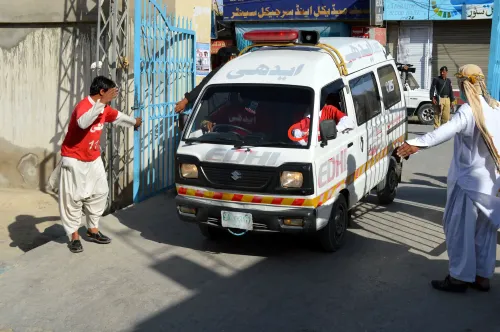
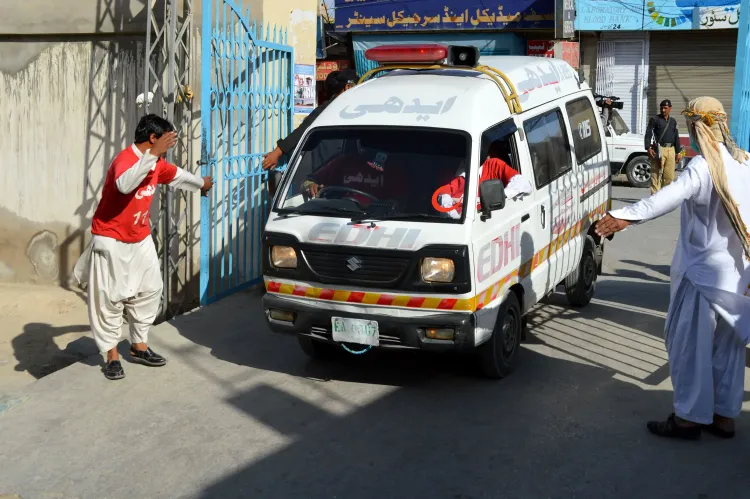
Rehman's observation indicates that fewer than a quarter of Balochistan's residents can access an ambulance for hospital transport, consult a general practitioner for diagnosis, or receive basic outpatient care. An editorial from Pakistan’s prominent newspaper, 'The Express Tribune', elaborates on the various factors that have led to the deterioration of the healthcare system in Balochistan.
According to 'The Express Tribune', "Numerous elements within the province have converged to create a failing healthcare system. A significant factor is the province's geography; its vast land area coupled with a sparse population density makes it challenging to establish effective health infrastructure for widely scattered communities."
The majority of Balochistan's top hospitals are concentrated in Quetta, the region's most populous city, which is a full day's journey by road from Turbat, the province's second largest city. However, geography is not the sole issue.
Balochistan's Health Secretary has noted that in the past eighteen months, 15 significant reforms have been implemented in the healthcare sector. Yet, as highlighted by the newspaper, "One must question whether the initial reform was effectively executed before proceeding with the subsequent fourteen. Until there is rigorous accountability and proficient management, the region risks enduring another decade of superficial progress and false improvement."
A recent media report pointed out that Balochistan continues to grapple with alarmingly high rates of maternal, infant, and neonatal mortality, largely due to insufficient healthcare access, a critical shortage of skilled birth attendants, prevalent malnutrition, early marriages, and inadequate medical facilities.
The majority of these fatalities are preventable, arising from complications such as excessive bleeding, infections, and the absence of timely, appropriate care for mothers and their newborns, as reported by 'Pakistan Today'.
Despite slight improvements in mortality rates in recent years, the situation remains deeply troubling, with many women still giving birth without trained medical support, especially in rural and remote areas where health facilities are either nonexistent or poorly equipped.
Point of View
It is imperative to recognize the critical state of healthcare in Balochistan. The alarming lack of access to primary services poses significant health risks, particularly to vulnerable populations. Accountability and strategic reforms are essential to address these systemic issues and to ensure that the health needs of all citizens are met.
NationPress
20 Sept 2026
Frequently Asked Questions
What percentage of Balochistan's population lacks access to primary healthcare?
Over 80% of Balochistan's population lacks access to primary healthcare services.
What are the main factors contributing to the healthcare crisis in Balochistan?
Key factors include geographic challenges, low population density, inadequate infrastructure, and a shortage of skilled medical professionals.
What reforms have been introduced in Balochistan's healthcare sector?
Fifteen major reforms have been implemented in the healthcare sector over the past one-and-a-half years.
What are the consequences of insufficient healthcare access in Balochistan?
Insufficient healthcare access contributes to high maternal, infant, and neonatal mortality rates, with many deaths being preventable.
How can the healthcare situation in Balochistan be improved?
Improving accountability, enhancing management practices, and increasing healthcare infrastructure are essential steps toward better healthcare access.