Pakistan river crisis deepens as governance failures poison Ravi, Indus systems
Synopsis
Pakistan's river crisis has moved beyond scarcity into something more alarming — systematic poisoning. The Ravi, Sutlej, Kabul, Swat, and Indus systems are contaminated by industrial waste and untreated sewage, while regulators have repeatedly failed to act. With millions at risk of waterborne disease and food insecurity, a Daily Mirror report calls it institutional negligence on a national scale.
Key Takeaways
Pakistan's Ravi , Sutlej , Kabul , Swat , and lower Indus river systems are facing severe contamination from industrial waste, untreated sewage, and chemical discharge.
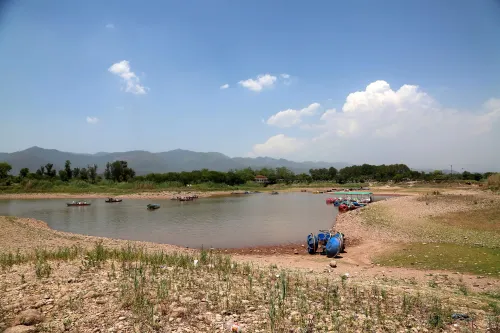
Manchhar Lake in Sindh has become increasingly unfit for drinking, fishing, or irrigation.
The Indus River System Authority (IRSA) has repeatedly warned of deteriorating conditions in the Indus Basin Irrigation System , yet enforcement remains weak.
Public health researchers link contaminated water to outbreaks of diarrhoea, hepatitis, typhoid, and skin diseases, especially in low-income communities.
Experts describe the crisis as a pattern of governance failure, with regulations 'largely confined to paper' and implementation 'inconsistent or politically compromised.' The crisis threatens Pakistan's agriculture, food security, and public health as climate pressures further reduce freshwater availability.
Pakistan's river contamination crisis, spreading across the Ravi, Sutlej, Kabul, Swat, and lower Indus water systems, reflects a compounding failure of environmental oversight, urban planning, and institutional accountability, according to a report by Sri Lankan newspaper Daily Mirror. Millions of Pakistanis are already bearing the consequences — contaminated drinking water, degraded farmland, shrinking fisheries, and mounting public health risks.
Scale of the Crisis
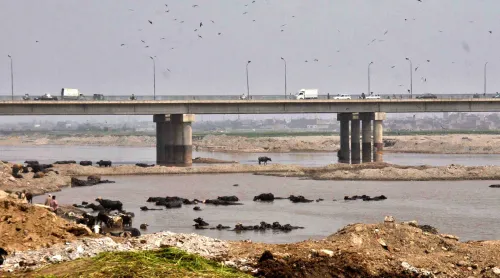
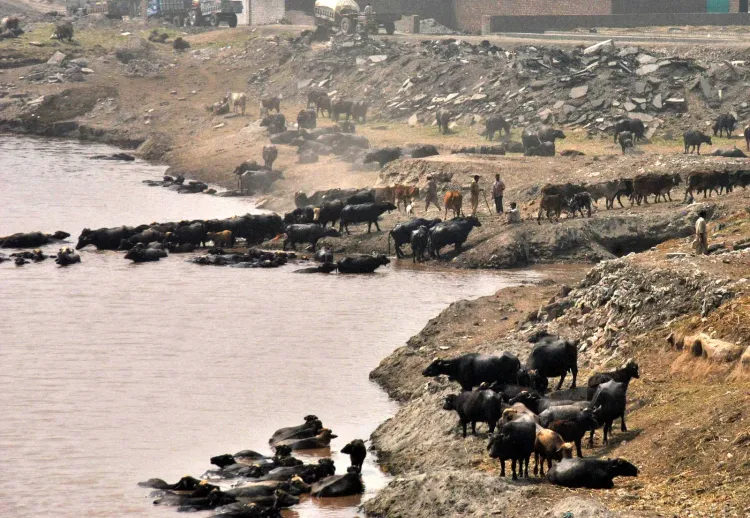
The contamination is not confined to a single basin or region. In parts of Lahore, the Ravi — once a lifeline for agriculture and communities — now runs dark and foaming beneath city bridges. In Sindh, the waters of Manchhar Lake have become increasingly unfit for drinking, fishing, or irrigation. Further north, pollution spreading through the Kabul and Swat rivers threatens public health in densely populated areas of Khyber Pakhtunkhwa.
'Across Pakistan, rivers and lakes that once sustained millions are steadily turning into channels of industrial waste, untreated sewage, and chemical contamination,' the report stated.
Governance Failure at the Core
Experts cited in the report argue that Pakistan's water contamination crisis is the product of years of weak regulation, inconsistent enforcement, and unchecked industrial discharge. The Indus River System Authority (IRSA) has repeatedly issued warnings about the deteriorating condition of the Indus Basin Irrigation System, yet the pollution continues to spread unabated.
According to the report, regulations governing water quality are 'largely confined to paper,' with implementation described as 'inconsistent or politically compromised.' The crisis, experts argue, demonstrates a broader pattern of governance failure that extends well beyond environmental policy.
Public Health Consequences
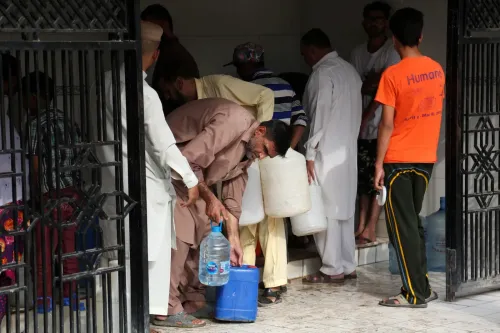
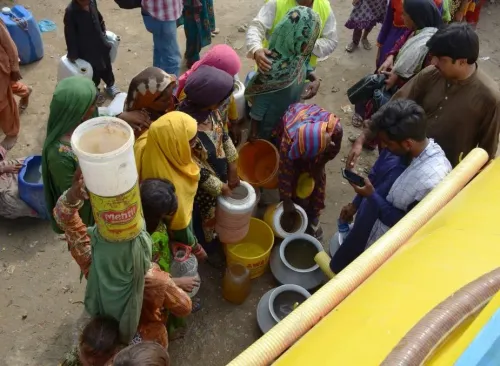
Public health researchers in Pakistan have repeatedly linked contaminated water sources to outbreaks of diarrhoea, hepatitis, typhoid, and skin diseases — particularly in low-income communities with limited access to filtration or healthcare. Environmental experts warn that untreated waste entering river systems threatens millions of residents who rely on river-connected supplies for both domestic and agricultural use.
The report stressed that Pakistan's polluted rivers are no longer solely an environmental concern but have emerged as a direct threat to national public health and food security.
A Crisis Beyond Scarcity
The report drew a sharp distinction between Pakistan's long-discussed water scarcity problem and the now-intensifying contamination emergency. 'Pakistan's water crisis is no longer defined solely by scarcity. It has become a crisis of poisoned water systems, collapsing environmental oversight and institutional negligence on a national scale,' it noted.
While policymakers have focused attention on dams, storage infrastructure, and inter-provincial water distribution disputes, the contamination of remaining freshwater resources has deepened with far less scrutiny. With climate pressures mounting and freshwater availability projected to tighten further, the continued degradation of Pakistan's river systems risks escalating into a crisis with consequences well beyond the environment.
Point of View
At its core, a governance story dressed as an environmental one. IRSA has issued warnings; experts have flagged the risks; the evidence is visible in the Ravi's dark foam and Manchhar Lake's dying fisheries — yet enforcement has not followed. What makes this particularly troubling is the political economy of inaction: water regulation in Pakistan intersects with industrial interests, inter-provincial rivalries, and elite capture of agricultural land, making meaningful enforcement structurally difficult. The public health toll — hepatitis, typhoid, diarrhoea concentrated in low-income communities — is the price being paid by those least responsible for the contamination and least equipped to challenge it.
NationPress
21 Oct 2026
Frequently Asked Questions
Which rivers in Pakistan are affected by the contamination crisis?
The contamination crisis spans the Ravi, Sutlej, Kabul, Swat, and lower Indus river systems, according to a Daily Mirror report. These rivers collectively serve millions of Pakistanis for drinking water, agriculture, and fisheries.
What are the public health risks from Pakistan's contaminated rivers?
Public health researchers in Pakistan have repeatedly linked river contamination to outbreaks of diarrhoea, hepatitis, typhoid, and skin diseases. Low-income communities with limited access to water filtration or healthcare are disproportionately affected.
Why has Pakistan failed to address its river pollution problem?
Experts cited in the report attribute the failure to weak regulation, inconsistent enforcement, and unchecked industrial discharge. Regulations are described as 'largely confined to paper,' with implementation 'inconsistent or politically compromised,' pointing to a systemic governance breakdown rather than a single policy gap.
What is the condition of Manchhar Lake in Sindh?
Manchhar Lake in Sindh has become increasingly unfit for drinking, fishing, or irrigation, according to the report. It is one of several water bodies across Pakistan that have deteriorated sharply due to industrial waste and untreated sewage.
How does Pakistan's water crisis go beyond scarcity?
While Pakistan's water scarcity has long been discussed, the report highlights that the country now faces a parallel crisis of contamination — with remaining freshwater resources being actively poisoned by industrial and sewage discharge. This contamination crisis has received far less policy attention than dam construction or water distribution disputes.