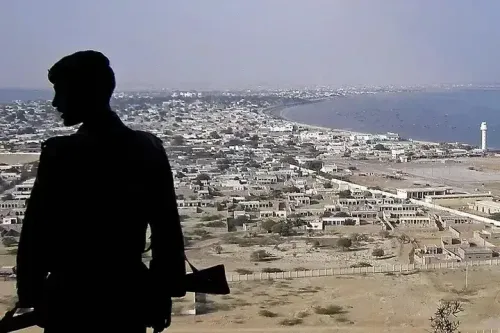
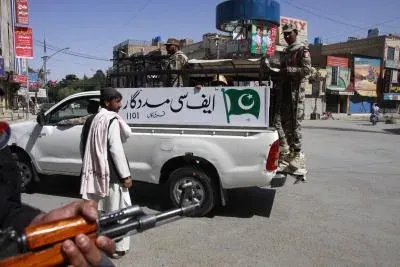
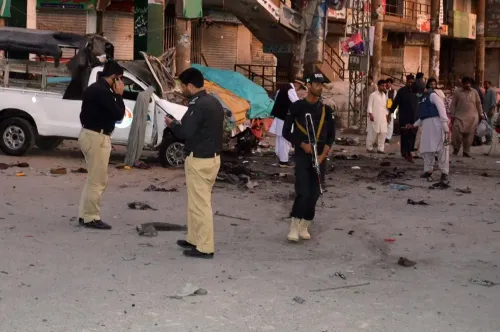
Pakistan security crisis: Retired personnel refuse Balochistan return by Oct 31 deadline
Synopsis
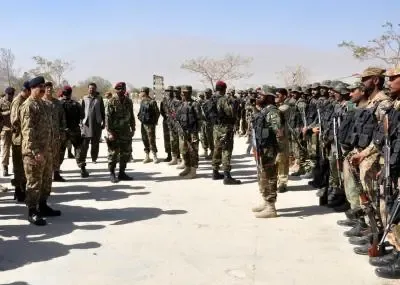
Pakistan's security machine is seizing up at the seams: retired soldiers are ignoring a 31 October Balochistan recall order, over 4,000 KP police officers are AWOL, and the army is now reportedly recruiting Afghan fighters as a stopgap. The TTP, BLA, and BLF have not just stretched Pakistan's forces — they may be breaking them.
Key Takeaways
The Inspector General of Frontier Corps (Balochistan North) issued a recall order for retired personnel with a deadline of 31 October ; response has been near-zero.
More than 4,000 police personnel in Khyber Pakhtunkhwa have not returned from sanctioned leave, defying disciplinary threats from Islamabad .
Officials attribute the mass reluctance to enhanced capabilities of the BLA , BLF , and TTP , which are inflicting heavy operational and morale damage.
Field Marshal Asim Munir has reportedly ordered outreach to former Afghan National Army personnel and warlords to destabilise Taliban -controlled Afghanistan and weaken the TTP .
Reports indicate Afghan fighters are being recruited and trained in Dalbandin , Kuchlak , and Hazarganji near Quetta at salaries of PKR 15,000–20,000 .
Pakistan's security establishment is facing a deepening manpower crisis in Khyber Pakhtunkhwa (KP) and Balochistan, as retired military personnel refuse recall orders and active-duty police officers fail to return from sanctioned leave, according to officials. The twin refusals are exposing the limits of Islamabad's capacity to contain insurgencies mounted by the Tehreek-e-Taliban Pakistan (TTP), the Balochistan Liberation Army (BLA), and the Balochistan Liberation Force (BLF).
The Recall Order and Its Failure
Earlier this month, the Inspector General of Frontier Corps (Balochistan North) issued a non-compulsory order inviting retired personnel to report back to their former units, offering salaries pegged to their completed years of service. The deadline for compliance is 31 October. According to officials, the response has been negligible. 'It appears that there are not many takers for this offer. These retired personnel are not ready to risk their lives in the battle against outfits such as the BLA and BLF,' one official said.
The reluctance, officials note, stems directly from the enhanced operational capabilities of both insurgent groups, which are reportedly inflicting significant damage on Pakistani security forces both on the ground and in terms of morale.
Police Absenteeism in Khyber Pakhtunkhwa
Compounding the crisis, more than 4,000 police personnel in the KP region have failed to return to duty after their sanctioned leave expired. Islamabad has threatened disciplinary action against the absentees, but officials concede the ultimatum has had little effect. According to an Intelligence Bureau official, these officers are unwilling to return to face the TTP in KP — a calculation shaped by what they see as flawed policy from the centre.
'Many personnel have questioned Islamabad's policy decisions concerning Khyber Pakhtunkhwa and Balochistan. These decisions have contributed to growing public support for the TTP, BLA, and BLF. As a result, local intelligence networks have weakened, making the fight against these groups even more difficult for the security forces,' the official said.
Pakistan Army's Afghan Gambit
Facing a recruitment shortfall, Pakistan Army chief Field Marshal Asim Munir has reportedly instructed senior commanders to reach out to former personnel of the Afghan National Army and local warlords. The stated aim, according to officials, is to fuel instability inside Afghanistan and erode Taliban authority there, in the hope that a weakened Afghan Taliban would deprive the TTP of its operational rear base.
A report by Balochistan-based journalist Faiz Baloch states that the Pakistan army is recruiting and training Afghan fighters in the Dalbandin area of Balochistan, with similar camps reportedly operating in Kuchlak and Hazarganji in Quetta. According to the same report, recruits are being offered salaries of PKR 15,000 to 20,000. These claims have not been independently verified.
Widening Strategic Vulnerability
This comes amid a broader pattern of institutional strain within Pakistan's security apparatus. The simultaneous unravelling of police morale in KP and army reserves in Balochistan signals that the insurgency problem is no longer purely tactical — it has acquired an administrative dimension that conventional military operations cannot resolve. Officials familiar with the situation suggest that Islamabad is 'trying every trick in the book' and is 'desperate' to reassert control over both provinces.
The 31 October deadline for retired army personnel represents a critical test of the Pakistan establishment's ability to rebuild frontline strength. Analysts and officials alike appear to expect it will pass without a meaningful turnaround.
Point of View
It reflects a judgment by the rank-and-file that the mission is unwinnable as currently designed. Islamabad's response — recruiting Afghan proxy fighters at PKR 20,000 a month — is an improvisation that risks widening the conflict zone while solving none of the underlying governance failures that have swelled public support for the TTP, BLA, and BLF. The 31 October deadline is less a policy lever than a face-saving exercise; if it passes unmet, as officials expect, Islamabad will face hard questions about whether a military solution in these provinces is viable at all.
NationPress
27 Oct 2026
Frequently Asked Questions
Why are retired Pakistani military personnel refusing to return to Balochistan?
Retired personnel are declining the recall primarily because they are unwilling to risk their lives fighting the BLA and BLF , both of which have significantly upgraded their capabilities and are inflicting serious casualties on Pakistani security forces. The recall order, issued by the Inspector General of Frontier Corps (Balochistan North), was non-compulsory and offered salaries based on years of service, but has found almost no takers ahead of the 31 October deadline.
What is the situation with police personnel in Khyber Pakhtunkhwa?
More than 4,000 police officers in KP have failed to return from sanctioned leave and have not resumed duty. Islamabad has threatened them with disciplinary action, but officials say the threat has not worked because the officers are unwilling to confront the TTP . Many have also reportedly questioned government policy decisions they believe have strengthened the TTP's local support base.
What is Pakistan doing to address the manpower shortfall?
Pakistan Army chief Field Marshal Asim Munir has reportedly instructed commanders to recruit former Afghan National Army personnel and local warlords. According to a report by journalist Faiz Baloch , training camps for Afghan recruits are operating in Dalbandin , Kuchlak , and Hazarganji near Quetta , with salaries of PKR 15,000–20,000 on offer.
What is Pakistan's strategy regarding Afghanistan and the TTP?
According to officials, Islamabad 's game plan is to use Afghan proxies to fuel unrest inside Afghanistan and weaken the Afghan Taliban , in the hope that the TTP — which operates from Afghan territory — will lose its operational support base and run out of momentum. Critics and officials alike have signalled scepticism about whether this approach can succeed.
How serious is Pakistan's security situation in KP and Balochistan?
The situation is described by officials as deeply serious and deteriorating. The BLA , BLF , and TTP have all enhanced their capabilities, local intelligence networks have weakened, and public support for the insurgent groups has reportedly grown. The simultaneous breakdown in military reserves and police attendance suggests the crisis has moved beyond a tactical military challenge into an institutional and governance failure.