Panama urges US to back Latin America for next UN chief as Guterres term ends
Synopsis
Panama has gone directly to Washington, pressing Secretary of State Rubio to back a Latin American candidate for the UN's top job when Guterres steps down on 31 December. The US stayed silent on its position — a silence that matters enormously, given American veto power in the Security Council. With the last Latin American secretary-general leaving office in 1991, the region's push is decades in the making.
Key Takeaways
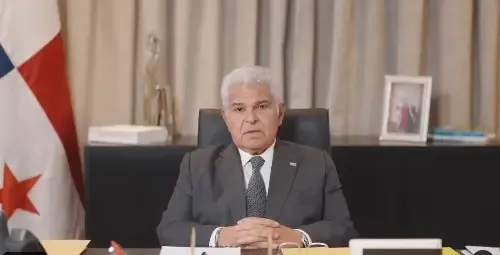
Panamanian President José Raúl Mulino called US Secretary of State Marco Rubio on 28 October 2026 to urge US support for a Latin American or Caribbean candidate as the next UN secretary-general .
António Guterres concludes his second five-year term on 31 December 2026 , triggering a formal succession process.
The US State Department confirmed the discussion but did not disclose Washington's position on regional rotation.
Both governments agreed on the need for broad international consensus on the next UN chief .
The call also addressed Panama's earthquake recovery following the 9 October disaster, with US aid reaching affected areas within 24 hours .
The last Latin American secretary-general was Javier Pérez de Cuéllar , whose tenure ended in 1991 .
Panama has formally pressed the United States to endorse the principle of regional rotation in selecting the next United Nations secretary-general, arguing that the post should go to a candidate from Latin America or the Caribbean when incumbent António Guterres completes his second term on 31 December 2026. The push came during a telephone conversation between Panamanian President José Raúl Mulino and US Secretary of State Marco Rubio on Tuesday, 28 October, according to statements issued by both governments.
What Panama Is Asking For
President Mulino emphasised that Latin American and Caribbean nations want the UN leadership selection process to honour the long-standing, unwritten practice of rotating the organisation's top post among geographical regions. He argued that the region has not held the position in recent decades and that it is now its turn. Panama's Foreign Ministry said the two leaders agreed on the importance of reaching broad international consensus around a candidate capable of leading the multilateral body.
Washington's Position Remains Unclear
The US State Department confirmed that Rubio and Mulino discussed the secretary-general election but stopped short of disclosing Washington's stance on the regional rotation proposal. Neither government announced an endorsement of any specific candidate, nor did they issue a joint position. The ambiguity is notable: US support — or its absence — could carry significant weight in Security Council deliberations, where permanent members hold veto power over the appointment.
Earthquake Relief Also on the Agenda
The diplomatic call covered a second pressing issue: Panama's recovery from the 9 October earthquake. Rubio reaffirmed Washington's commitment to supporting reconstruction efforts, with the State Department noting that American assistance — including food, water, communications equipment, logistical support, and urban search-and-rescue teams — had reached affected communities within 24 hours of the disaster. Mulino thanked the United States for the humanitarian response and the deployment of personnel to assess structural damage.
Broader Diplomatic Context
The conversation also touched on the state of democracy in the region, though neither government disclosed specific concerns or initiatives on that front. The State Department characterised the call as reaffirming a strengthening bilateral partnership between Washington and Panama City. This comes amid wider diplomatic activity as UN member states prepare to navigate what could be a competitive succession process. Latin America and the Caribbean have increasingly sought greater representation in senior international positions, and the region's push for the secretary-general post reflects that longer-running agenda. Notably, the last Latin American to hold the post was Peru's Javier Pérez de Cuéllar, whose tenure ended in 1991 — over three decades ago.
What Comes Next
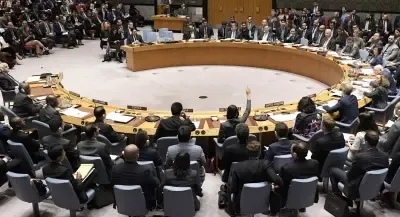
With Guterres's term set to expire at the close of 2026, the Security Council and General Assembly will need to move toward a formal selection in the coming months. Panama's diplomatic outreach to Washington signals that regional blocs are already positioning themselves ahead of that process. Whether the US ultimately backs the rotation principle — or supports a candidate from outside Latin America — will likely shape the trajectory of the contest.
Point of View
American backing is close to essential for any candidate. Washington's refusal to state a position on regional rotation likely means it is keeping options open, potentially for a candidate it prefers on geopolitical rather than geographic grounds. Meanwhile, Latin America's three-decade wait for the UN's top post reflects a broader pattern of the Global South seeking symbolic parity in multilateral institutions while wielding limited structural leverage. The rotation principle has no legal force — it is a convention, and conventions bend when great-power interests diverge.
NationPress
28 Oct 2026
Frequently Asked Questions
Why is Panama pushing for a Latin American UN secretary-general?
Panama argues that the unwritten practice of rotating the UN secretary-general post among world regions means it is now Latin America and the Caribbean's turn. The last Latin American to hold the role was Peru's Javier Pérez de Cuéllar, whose term ended in 1991 — more than three decades ago.
When does António Guterres's term as UN secretary-general end?
Guterres's second five-year term expires on 31 December 2026, making the selection of a successor an urgent diplomatic priority for UN member states. The Security Council must recommend a candidate before the General Assembly can formally appoint one.
What did the US say about backing a Latin American candidate?
The US State Department confirmed that Secretary of State Marco Rubio and President Mulino discussed the secretary-general election, but Washington did not disclose its position on the regional rotation proposal. No endorsement of any candidate was announced.
What else did Rubio and Mulino discuss in their call?
Beyond the UN succession question, the two leaders discussed Panama's recovery from the 9 October earthquake. The US reaffirmed its commitment to reconstruction support, noting that aid — including food, water, communications equipment, and search-and-rescue teams — reached affected communities within 24 hours. The call also briefly touched on the state of democracy in the region.
Does the regional rotation principle carry legal weight at the UN?
No. Regional rotation of the UN secretary-general post is an unwritten convention, not a binding rule. Historically it has influenced selection outcomes, but it is not enforceable, meaning permanent Security Council members can support any candidate regardless of geographic origin.