Philippines rejects China's South China Sea Shoal clash claims as 'false'

Synopsis
Manila isn't just pushing back on Beijing's version of events — it's building a pattern-of-aggression case. By linking the 20 July 2026 baton attack on a Philippine sailor to the June 2024 incident and accusing China of deploying AI-generated disinformation, the AFP is waging a dual battle: on the water and in the information space, with Washington now publicly in its corner.
Key Takeaways
The Armed Forces of the Philippines on 21 July 2026 rejected China Coast Guard claims that Philippine boats rammed a CCG vessel near Second Thomas Shoal as 'false and misleading'.
The AFP said a Philippine sailor was struck with a wooden baton by CCG personnel during the 20 July incident.
Manila accused China of an 'ongoing disinformation campaign', including an AI-generated video by a Chinese state media outlet aimed at distorting the facts.
The AFP drew parallels to a 17 June 2024 incident at the same shoal, characterising both as part of a pattern of Chinese coercion.
US State Department spokesperson Tommy Pigott condemned China's 'dangerous and aggressive actions' and called on Beijing to cease 'destabilising conduct'.
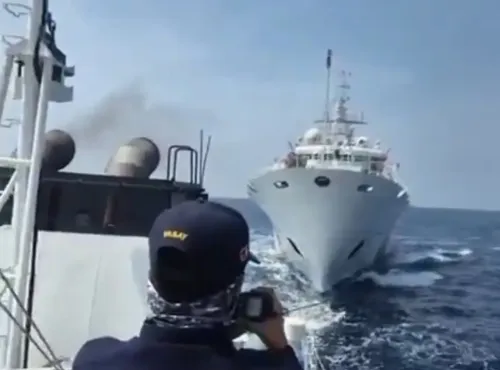
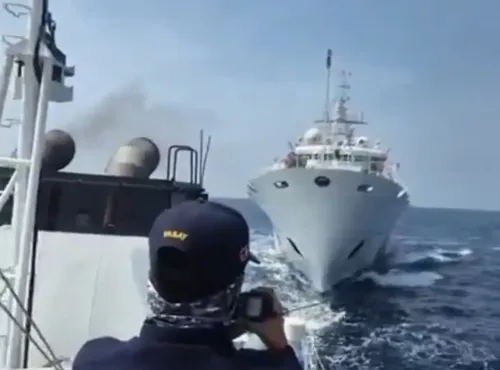
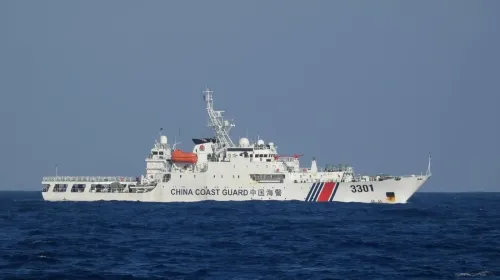
The Armed Forces of the Philippines (AFP) on Tuesday, 21 July 2026, flatly rejected allegations by the China Coast Guard (CCG) that Philippine rubber boats had deliberately rammed a CCG patrol vessel near the Second Thomas Shoal in the South China Sea, calling the claims 'false and misleading'. The rebuttal followed a Monday, 20 July incident in which Beijing alleged two boats from the grounded Philippine vessel LT-57 approached a CCG patrol boat in a 'dangerous manner' and rammed it.
What the Philippines Said Happened
The AFP issued a formal statement squarely shifting the framing of the incident. 'The key issue remains: Why was a China Coast Guard RHIB operating within close proximity of BRP Sierra Madre? Its presence was an unlawful intrusion into an area where the Philippines exercises sovereign rights under international law,' the statement read.
Manila maintained that Philippine Navy personnel acted 'with professionalism and in accordance with the Rules of Engagement', describing the deployment of the two rubber boats as 'a measured, non-confrontational effort to direct the China Coast Guard vessel away.' The AFP stressed that Philippine personnel 'did not initiate any confrontation.'
How the Situation Escalated
According to the AFP, the confrontation intensified only after the CCG ignored repeated instructions to withdraw and carried out what Manila described as 'unlawful actions' — including striking a Philippine sailor with a wooden baton. The AFP said its troops 'exercised restraint and defended themselves within established rules', adding pointedly that 'professionalism should not be mistaken for weakness.'
The AFP drew a direct parallel to the 17 June 2024 incident at the same shoal, where it said 'similar coercive and violent actions were carried out by China Coast Guard personnel.' In both cases, it noted, AFP personnel 'demonstrated discipline despite provocation' — underscoring what Manila characterises as a pattern of Chinese aggression rather than isolated incidents.
Philippines Accuses China of Disinformation
Beyond the physical confrontation, the AFP accused China of running an 'ongoing disinformation campaign', citing an AI-generated video produced by a Chinese state media outlet that it said was 'intended to distort facts and undermine the 2016 Arbitral Award on the South China Sea.' The AFP stated that 'such narratives cannot change reality.'
Manila further alleged that the Chinese Army, CCG, and maritime militia continue to conduct 'coordinated illegal and coercive activities' in the South China Sea, calling these actions the 'source of instability in the region.'
US Condemns China's Actions
The incident drew swift condemnation from Washington. US State Department spokesperson Tommy Pigott said the United States 'condemns China's dangerous and aggressive actions against Philippine navy personnel at Second Thomas Shoal in the South China Sea on 20 July 2026', and called on Beijing to 'immediately cease its destabilising conduct' in one of Asia's most contested waterways.
The AFP reaffirmed its commitment to uphold the Philippines' sovereign rights, protect its military personnel, and maintain its presence at Second Thomas Shoal in accordance with international law. With both sides hardening their positions, the risk of further escalation at the shoal remains elevated.
Point of View
Explicitly citing June 2024, and adds a new front by calling out AI-generated disinformation. That dual-track pushback, physical and informational, signals Manila is no longer treating each shoal incident as isolated. The US condemnation, issued within hours and attributed to a named State Department spokesperson, reflects how tightly the Philippines-US Mutual Defence Treaty now operates in real time. What mainstream coverage often misses is the significance of the BRP Sierra Madre itself: the deliberately grounded ship is Manila's legal anchor for its presence at Second Thomas Shoal, and every CCG intrusion near it is, in Philippine legal framing, a challenge to the 2016 Arbitral Award that China refuses to recognise.
NationPress
21 Jul 2026
Frequently Asked Questions
What happened at Second Thomas Shoal on 20 July 2026?
Philippine rubber boats from the grounded vessel LT-57 were deployed near the Second Thomas Shoal in the South China Sea, where a confrontation with a China Coast Guard patrol boat occurred. The AFP says CCG personnel struck a Philippine sailor with a wooden baton; China alleged the Philippine boats rammed its vessel.
Why does the Philippines say China's account is false?
The AFP argues that its personnel deployed the rubber boats in a 'measured, non-confrontational' effort to direct the CCG vessel away from the BRP Sierra Madre, and that the CCG's presence near the grounded ship was itself an 'unlawful intrusion' under international law. Manila says its sailors acted within established Rules of Engagement and did not initiate confrontation.
What is the significance of the BRP Sierra Madre at Second Thomas Shoal?
The BRP Sierra Madre is a deliberately grounded Philippine Navy vessel that serves as Manila's physical and legal basis for asserting sovereign rights at Second Thomas Shoal. The Philippines maintains a small military detachment on board, and any CCG presence near it is treated by Manila as a challenge to its rights under the 2016 South China Sea Arbitral Award.
How did the United States respond to the incident?
US State Department spokesperson Tommy Pigott condemned China's 'dangerous and aggressive actions against Philippine navy personnel' on 20 July 2026 and called on Beijing to 'immediately cease its destabilising conduct' at Second Thomas Shoal.
Has this kind of incident happened before at Second Thomas Shoal?
Yes. The AFP explicitly linked the 20 July 2026 incident to a 17 June 2024 confrontation at the same location, where it said 'similar coercive and violent actions were carried out by China Coast Guard personnel.' Manila characterises these as part of a sustained pattern of Chinese coercion rather than isolated events.