PoK agitation exposes Pakistan's Kashmir double standard, report finds
Synopsis
Pakistan's mass agitation in PoK has done something no diplomatic communiqué could: it has turned Islamabad's own Kashmir argument against itself. When residents of PoK demand the same dignity Pakistan invokes at the UN, they are reportedly met with crackdowns — exposing a contradiction that critics say defines the Pakistani security state's relationship with its own citizens.
Key Takeaways
A mass agitation in Pakistan-occupied Kashmir (PoK) has exposed a contradiction between Islamabad 's UN rhetoric on Kashmir and its conduct at home.
Protests stem from concrete grievances: rising electricity bills , wheat prices , unemployment , inflation , and marginalisation of local political voices.
Pakistani authorities have reportedly labelled the movement a security threat, a framing sharply criticised in a Kashmir Times report.
The report draws parallels with repression of Pashtun and Baloch communities and supporters of former PM Imran Khan .
Critics argue that public dissent in Pakistan is tolerated only when it aligns with official narratives, pointing to a shrinking space for legitimate political expression.
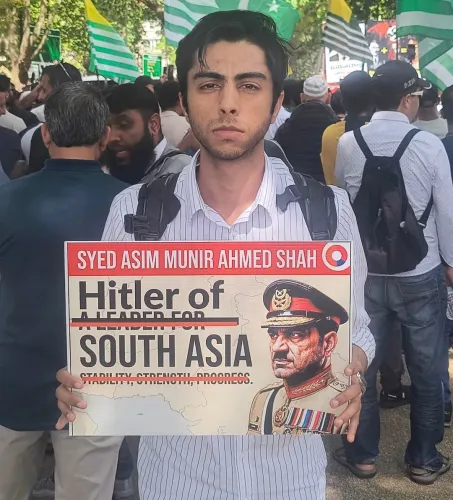
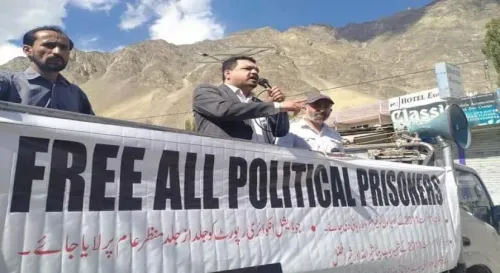
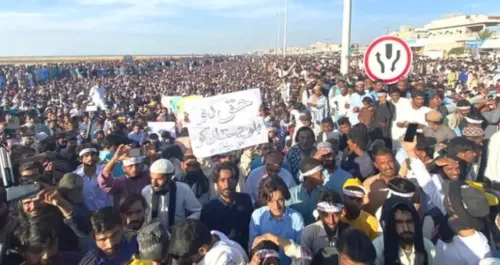
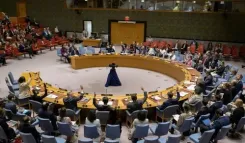
The ongoing mass agitation in Pakistan-occupied Kashmir (PoK) has laid bare a sharp contradiction at the heart of Islamabad's foreign policy: the same calls for dignity, representation, and justice that Pakistan champions for Kashmiris at the United Nations are being met with crackdowns and restrictions when raised by residents of PoK itself, according to a report in Kashmir Times.
Roots of the Unrest
The protests in PoK did not, as the report noted, emerge from abstraction. They are grounded in long-standing, material grievances — spiralling electricity bills, rising wheat prices, unemployment, inflation, and a deep frustration that local political voices remain systematically marginalised. Concerns over constitutional manipulation have added fuel to a movement that analysts describe as a crisis of legitimacy for Islamabad's administration of the region.
How Islamabad Has Responded
Authorities have reportedly framed the agitation in security terms. The Kashmir Times report offered a pointed critique of this approach: 'There is a peculiar genius to Pakistan's ruling order: it can take a people asking for flour, electricity, dignity, representation, and constitutional accountability and, with the dead-eyed solemnity of a clerk stamping a death warrant, declare the whole thing terrorism.' The report argued that the Pakistani security state 'manufactures poverty, strangles politics, humiliates citizens, imprisons the popular, bombs the peripheral, disappears the inconvenient, and then clutches its medals in theatrical astonishment when the governed begin to object.'
A Pattern Across Pakistan's Periphery
The report situated the PoK unrest within a broader national pattern of state repression. Pashtun communities displaced by conflict are reportedly treated as suspects in their own homeland. Baloch families demanding answers about enforced disappearances are, according to the report, 'lectured about national security by the very institutions that made disappearance a language of governance.' Supporters of former Prime Minister Imran Khan are, the report argued, not engaged as citizens with political preferences but treated as threats to be contained.
According to the report, tens of thousands of Pakistanis have come to believe that public expression is tolerated only when it praises those in power, mourns selectively, or criticises external actors in line with official narratives.
The Rhetoric-Reality Gap
What makes the current situation particularly volatile, the report argued, is not repression alone but the wider perception that PoK has become 'one chamber in a larger national anatomy of fear.' The report concluded with a stark framing: 'A Kashmiri resisting India is heroic. A Kashmiri resisting Islamabad is manipulated. A Pashtun mourning a drone strike is suspect. A Baloch mother holding a photograph is a threat… By this logic, Pakistan is not a country. It is a courtroom. The accused are always ordinary citizens. The judge always arrives in uniform.'
As the agitation continues, the gap between Pakistan's international Kashmir narrative and its domestic conduct in PoK is drawing increasing scrutiny — and shows little sign of narrowing.
Point of View
In effect, a stress test of Pakistan's foundational Kashmir argument — and it is failing in real time. Islamabad cannot simultaneously invoke Kashmiri self-determination at the UN and suppress the same impulse in territory it controls without the contradiction becoming the story. What the report captures is not merely a policy failure but a structural one: a security state that has no vocabulary for legitimate grievance, only for threat. The broader pattern — Baloch disappearances, Pashtun displacement, the treatment of Khan's supporters — suggests this is not an aberration in PoK but the default mode of governance. That default is now visible to an international audience in a way it has rarely been before.
NationPress
19 Sept 2026
Frequently Asked Questions
What is the PoK agitation about?
The agitation in Pakistan-occupied Kashmir (PoK) is driven by long-standing grievances including rising electricity bills, high wheat prices, unemployment, inflation, and frustration over the marginalisation of local political voices. Residents have also raised concerns about constitutional manipulation and a lack of accountability from Islamabad.
Why does the PoK agitation embarrass Pakistan internationally?
Pakistan regularly invokes the right to dignity and self-determination for Kashmiris at forums like the United Nations. Critics argue that when residents of PoK — territory Pakistan controls — make the same demands, meeting them with crackdowns exposes a fundamental contradiction in Islamabad's position.
How has Pakistan responded to the PoK protests?
Authorities have reportedly framed the protests in security terms, characterising the movement as a threat rather than engaging with its political and economic demands. A Kashmir Times report described this as a pattern of the Pakistani security state labelling legitimate dissent as terrorism.
Is the repression in PoK an isolated case?
According to the report, it is not. Similar patterns are documented among Pashtun communities, Baloch families seeking information about enforced disappearances, and supporters of former Prime Minister Imran Khan — suggesting a broader national approach to suppressing dissent.
What is the wider significance of the PoK unrest?
The report argues that PoK has become 'one chamber in a larger national anatomy of fear,' making the current situation volatile not just because of local repression but because it reflects a systemic failure of political legitimacy across Pakistan's periphery.